Lehnert Elisa, Tampé Robert
Institute of Biochemistry, Biocenter, Goethe University Frankfurt , Frankfurt , Germany.
Front Immunol. 2017 Jan 30;8:10. doi: 10.3389/fimmu.2017.00010. eCollection 2017.
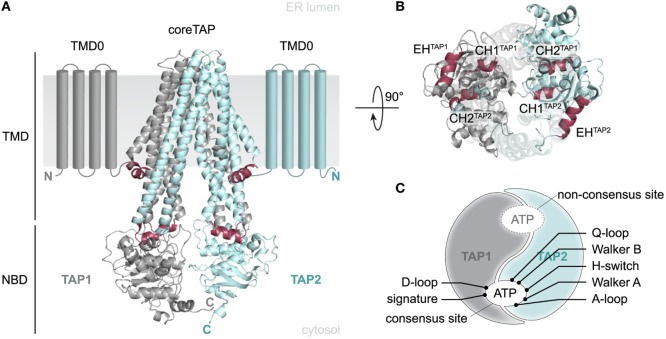
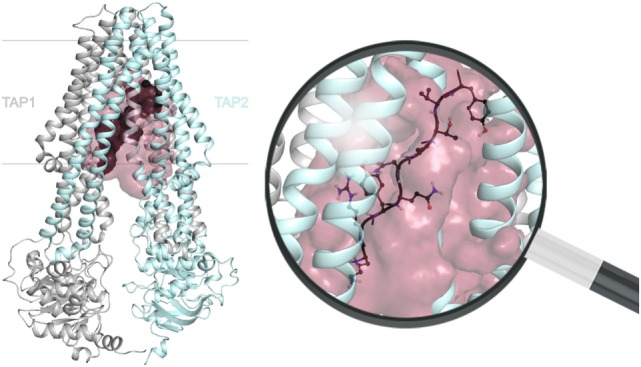
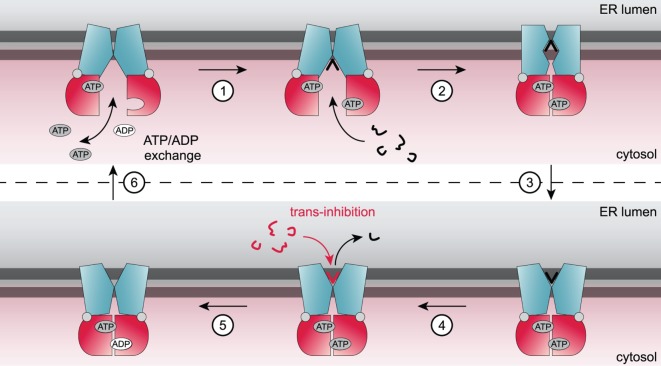
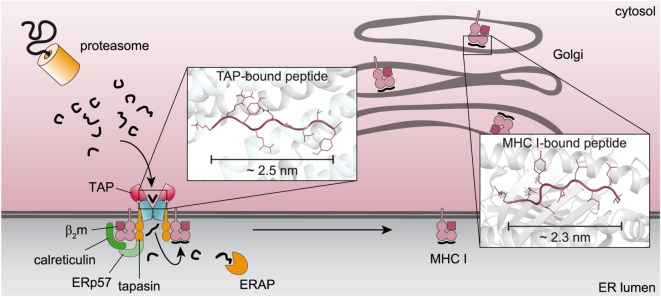
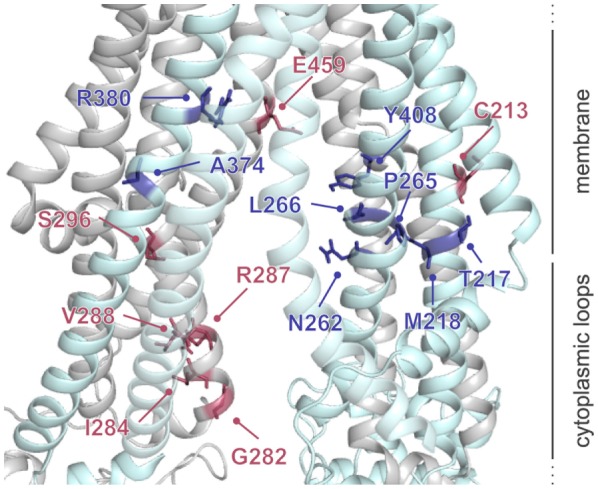
The transporter associated with antigen processing (TAP) selectively translocates antigenic peptides into the endoplasmic reticulum. Loading onto major histocompatibility complex class I molecules and proofreading of these bound epitopes are orchestrated within the macromolecular peptide-loading complex, which assembles on TAP. This heterodimeric ABC-binding cassette (ABC) transport complex is therefore a major component in the adaptive immune response against virally or malignantly transformed cells. Its pivotal role predestines TAP as a target for infectious diseases and malignant disorders. The development of therapies or drugs therefore requires a detailed comprehension of structure and function of this ABC transporter, but our knowledge about various aspects is still insufficient. This review highlights recent achievements on the structure and dynamics of antigenic peptides in complex with TAP. Understanding the binding mode of antigenic peptides in the TAP complex will crucially impact rational design of inhibitors, drug development, or vaccination strategies.
与抗原加工相关的转运体(TAP)可选择性地将抗原肽转运至内质网。在组装于TAP上的大分子肽装载复合物内,抗原肽被加载到主要组织相容性复合体I类分子上,并对这些结合的表位进行校对。因此,这种异二聚体ABC结合盒(ABC)转运复合物是针对病毒感染或恶性转化细胞的适应性免疫反应中的主要成分。其关键作用使TAP成为传染病和恶性疾病的治疗靶点。因此,开发治疗方法或药物需要详细了解这种ABC转运体的结构和功能,但我们在各个方面的知识仍不充分。本综述重点介绍了与TAP复合的抗原肽的结构和动力学方面的最新成果。了解抗原肽在TAP复合物中的结合模式将对抑制剂的合理设计、药物开发或疫苗接种策略产生至关重要的影响。