Doberer Daniel, Trejo Bittar Humberto E, Wenzel Sally E
University of Pittsburgh Asthma Institute at UPMC, Pittsburgh, PA, USA Dept of Internal and Pulmonary Medicine, Wilhelminenspital Wien, Medical University of Vienna, Vienna, Austria
Dept of Pathology, University of Pittsburgh, Pittsburgh, PA, USA.
Eur Respir Rev. 2015 Sep;24(137):525-39. doi: 10.1183/16000617.0045-2015.
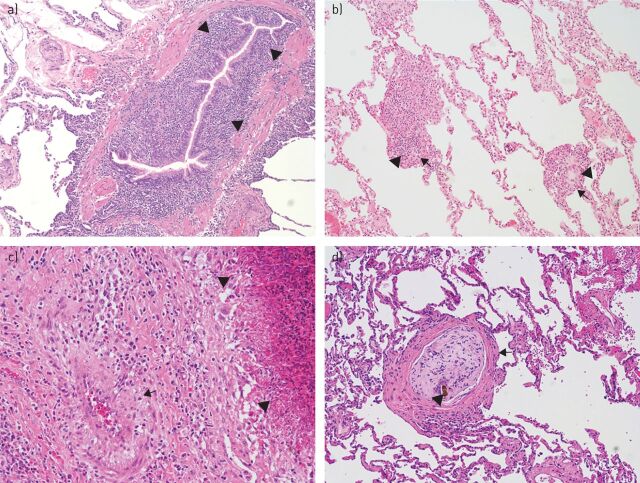
Asthma, and severe asthma, in particular, is increasingly recognised as a heterogeneous disease. Identifying these different phenotypes of asthma and assigning patients to phenotype-specific treatments is one of the current conundrums in respiratory medicine. Any diagnostic procedure in severe asthma (or any disease) should have two aims: 1) better understanding or identifying the diagnosis, and 2) providing information on the heterogeneity of asthma phenotypes to guide therapy with the objective of improving outcomes. Lung biopsies can target the large and small airways as well as the lung parenchyma. All compartments are affected in severe asthma; however, knowledge on the distal lung is limited. At this point, it remains uncertain whether lung specimens routinely add diagnostic information that is unable to be obtained otherwise. Indeed, whether a lung biopsy is indicated in the workup of a patient with severe asthma remains an individual decision. It is hoped this review will support rational decision-making and provide a detailed synopsis of the varied histopathological features seen in biopsies of patients with a diagnosis of severe asthma. Due to limited data on this topic this review is primarily based on opinion with recommendations arising primarily from the personal experience of the authors.
哮喘,尤其是重度哮喘,越来越被认为是一种异质性疾病。识别哮喘的这些不同表型并将患者分配到特定表型的治疗中是呼吸医学当前的难题之一。重度哮喘(或任何疾病)的任何诊断程序都应有两个目标:1)更好地理解或确定诊断,以及2)提供有关哮喘表型异质性的信息,以指导治疗,目标是改善治疗结果。肺活检可以针对大气道和小气道以及肺实质。在重度哮喘中所有部位都会受到影响;然而,关于远端肺的知识有限。此时,肺标本是否常规添加无法通过其他方式获得的诊断信息仍不确定。事实上,在重度哮喘患者的检查中是否进行肺活检仍然是一个个体化的决定。希望这篇综述将支持合理决策,并提供诊断为重度哮喘患者活检中所见各种组织病理学特征的详细概述。由于关于该主题的数据有限,本综述主要基于观点,建议主要来自作者的个人经验。