Yang C, Shirayama Y, Zhang J-c, Ren Q, Yao W, Ma M, Dong C, Hashimoto K
Division of Clinical Neuroscience, Chiba University Center for Forensic Mental Health, Chiba, Japan.
Department of Psychiatry, Teikyo University Chiba Medical Center, Ichihara, Japan.
Transl Psychiatry. 2015 Sep 1;5(9):e632. doi: 10.1038/tp.2015.136.
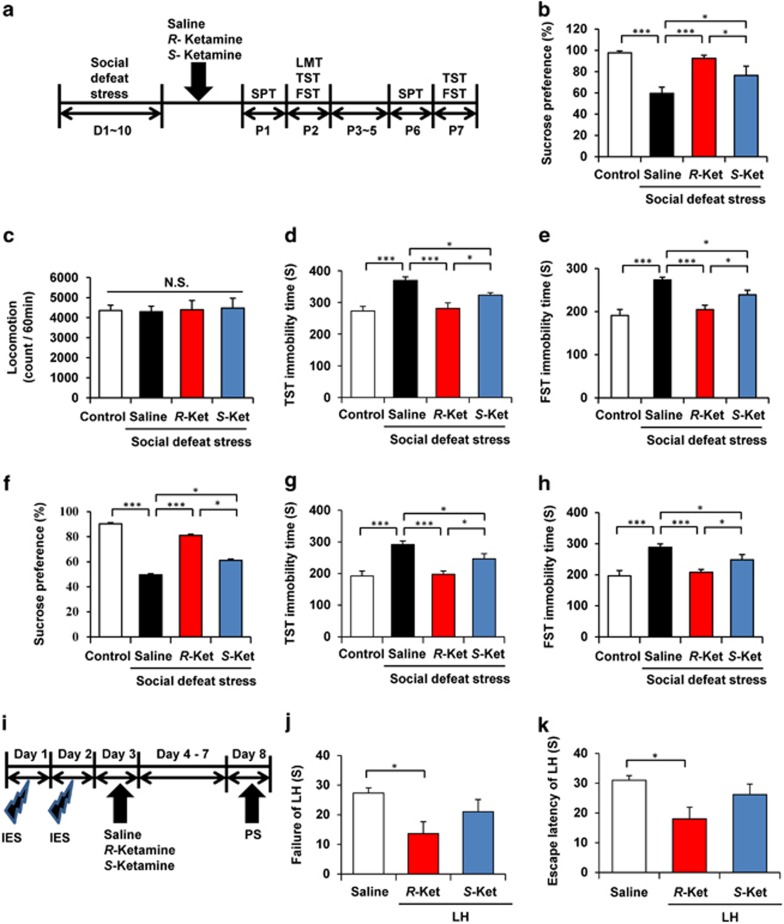
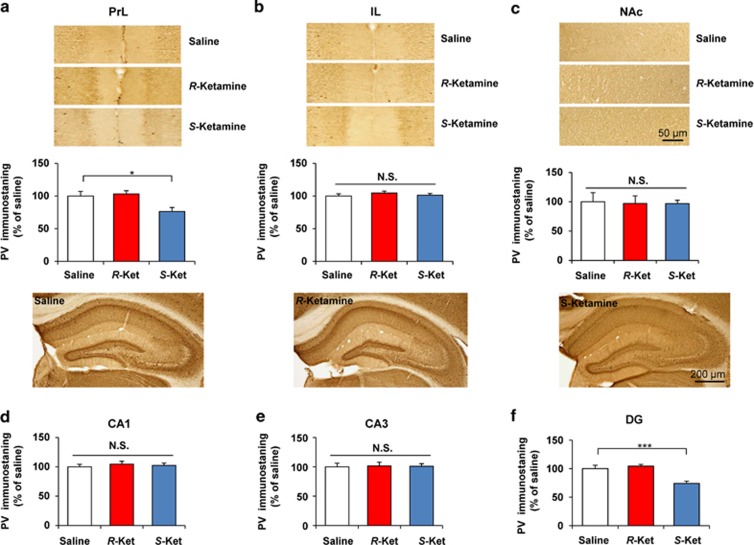
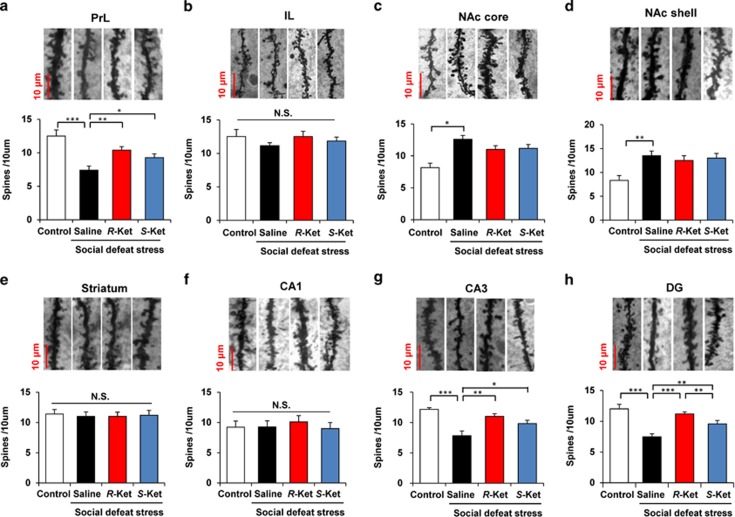
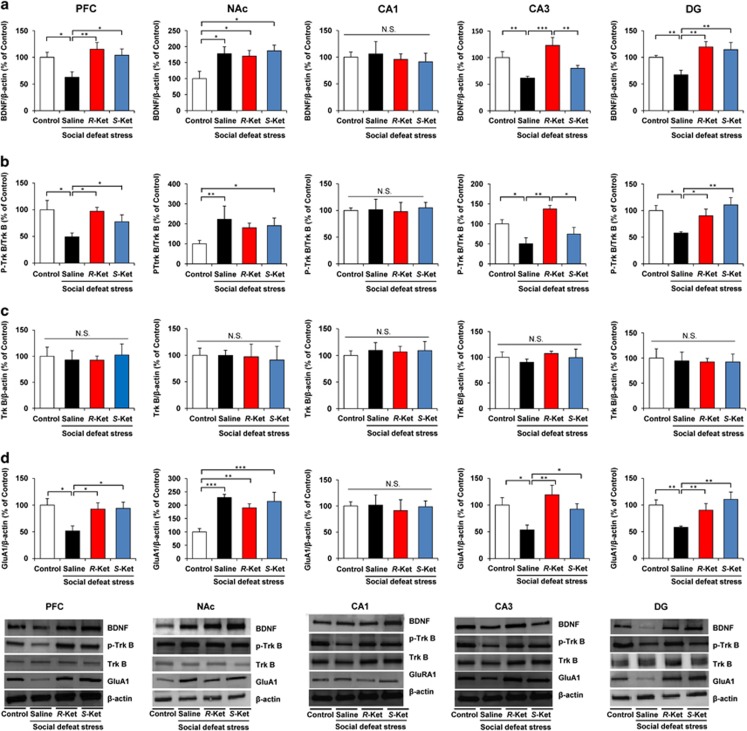
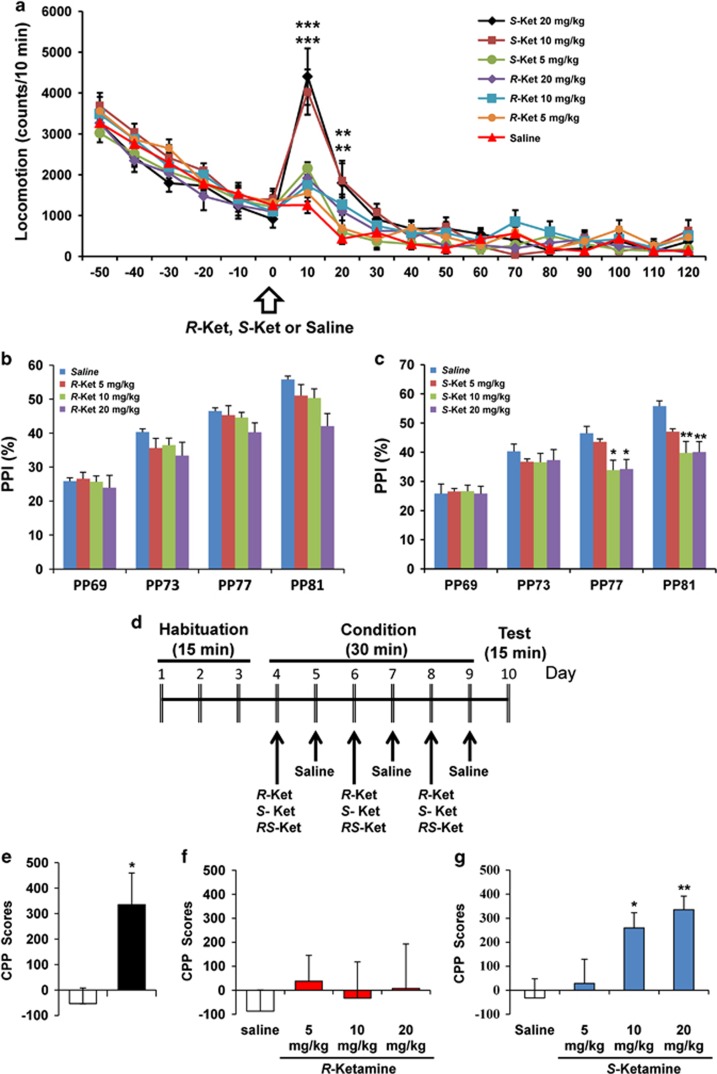
Although the efficacy of racemate ketamine, a rapid onset and sustained antidepressant, for patients with treatment-resistant depression was a serendipitous finding, clinical use of ketamine is limited, due to psychotomimetic side effects and abuse liability. Behavioral and side-effect evaluation tests were applied to compare the two stereoisomers of ketamine. To elucidate their potential therapeutic mechanisms, we examined the effects of these stereoisomers on brain-derived neurotrophic factor (BDNF)-TrkB signaling, and synaptogenesis in selected brain regions. In the social defeat stress and learned helplessness models of depression, R-ketamine showed a greater potency and longer-lasting antidepressant effect than S-ketamine (esketamine). Furthermore, R-ketamine induced a more potent beneficial effect on decreased dendritic spine density, BDNF-TrkB signaling and synaptogenesis in the prefrontal cortex (PFC), CA3 and dentate gyrus (DG) of the hippocampus from depressed mice compared with S-ketamine. However, neither stereoisomer affected these alterations in the nucleus accumbens of depressed mice. In behavioral tests for side effects, S-ketamine, but not R-ketamine, precipitated behavioral abnormalities, such as hyperlocomotion, prepulse inhibition deficits and rewarding effects. In addition, a single dose of S-ketamine, but not R-ketamine, caused a loss of parvalbumin (PV)-positive cells in the prelimbic region of the medial PFC and DG. These findings suggest that, unlike S-ketamine, R-ketamine can elicit a sustained antidepressant effect, mediated by increased BDNF-TrkB signaling and synaptogenesis in the PFC, DG and CA3. R-ketamine appears to be a potent, long-lasting and safe antidepressant, relative to S-ketamine, as R-ketamine appears to be free of psychotomimetic side effects and abuse liability.
尽管消旋氯胺酮(一种起效迅速且作用持久的抗抑郁药)对难治性抑郁症患者的疗效是一个意外发现,但由于其拟精神病副作用和滥用倾向,氯胺酮的临床应用受到限制。我们应用行为和副作用评估测试来比较氯胺酮的两种立体异构体。为了阐明它们潜在的治疗机制,我们研究了这些立体异构体对脑源性神经营养因子(BDNF)-TrkB信号通路以及选定脑区突触形成的影响。在抑郁症的社会挫败应激和习得性无助模型中,R-氯胺酮比S-氯胺酮(艾氯胺酮)表现出更强效、更持久的抗抑郁作用。此外,与S-氯胺酮相比,R-氯胺酮对抑郁小鼠前额叶皮质(PFC)、海马体的CA3和齿状回(DG)中树突棘密度降低、BDNF-TrkB信号通路和突触形成具有更强的有益作用。然而,两种立体异构体均未影响抑郁小鼠伏隔核的这些改变。在副作用行为测试中,S-氯胺酮而非R-氯胺酮引发了行为异常,如运动亢进、前脉冲抑制缺陷和奖赏效应。此外,单剂量的S-氯胺酮而非R-氯胺酮导致内侧PFC边缘前区和DG中小白蛋白(PV)阳性细胞减少。这些发现表明,与S-氯胺酮不同,R-氯胺酮可通过增强PFC、DG和CA3中的BDNF-TrkB信号通路和突触形成来引发持续的抗抑郁作用。相对于S-氯胺酮,R-氯胺酮似乎是一种强效、持久且安全的抗抑郁药,因为R-氯胺酮似乎没有拟精神病副作用和滥用倾向。