Coveney Andrew P, Wang Wei, Kelly Justin, Liu Jing Hua, Blankson Siobhan, Wu Qiong Di, Redmond H Paul, Wang Jiang Huai
Department of Academic Surgery, University College Cork/National University of Ireland, Cork University Hospital, Cork, Ireland.
Department of Pathophysiology, Southern Medical University, Guangzhou 510515, China.
Sci Rep. 2015 Sep 2;5:13694. doi: 10.1038/srep13694.
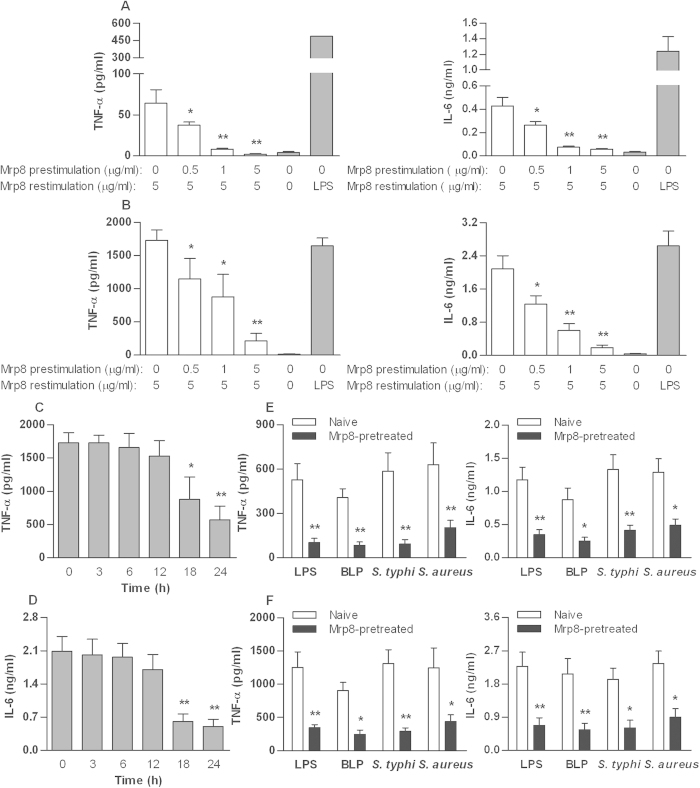
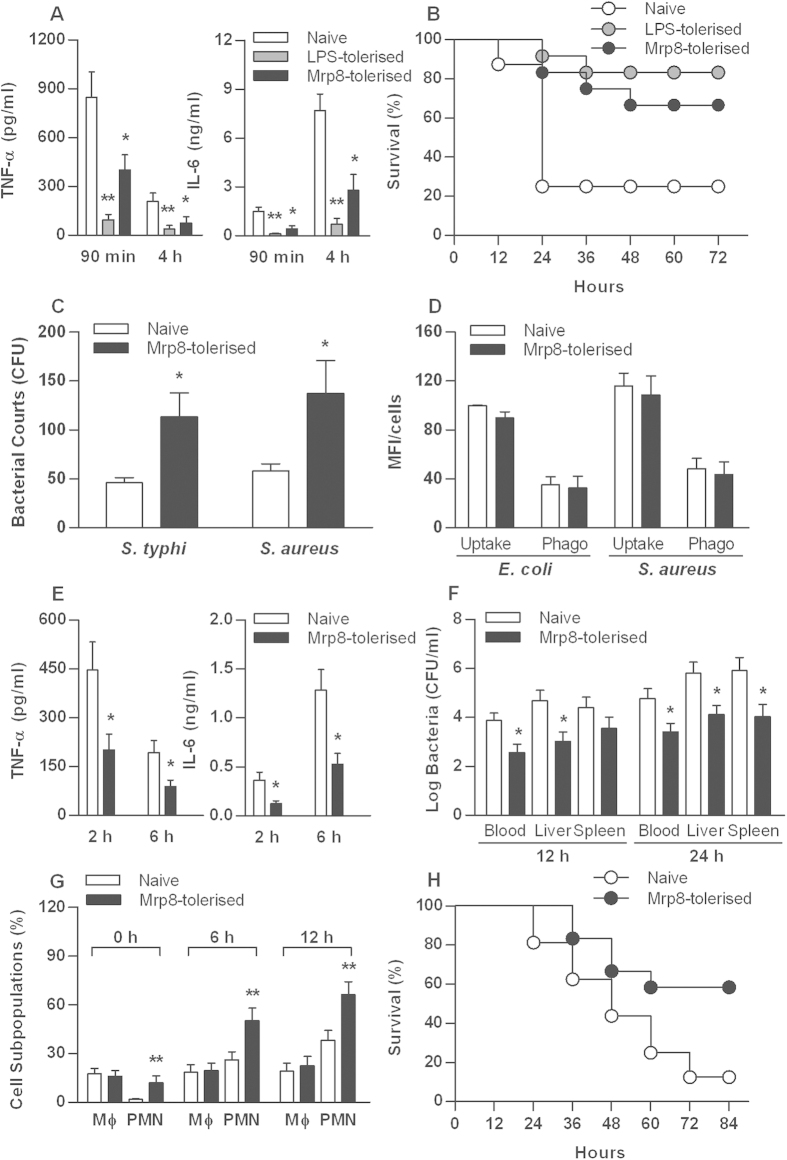
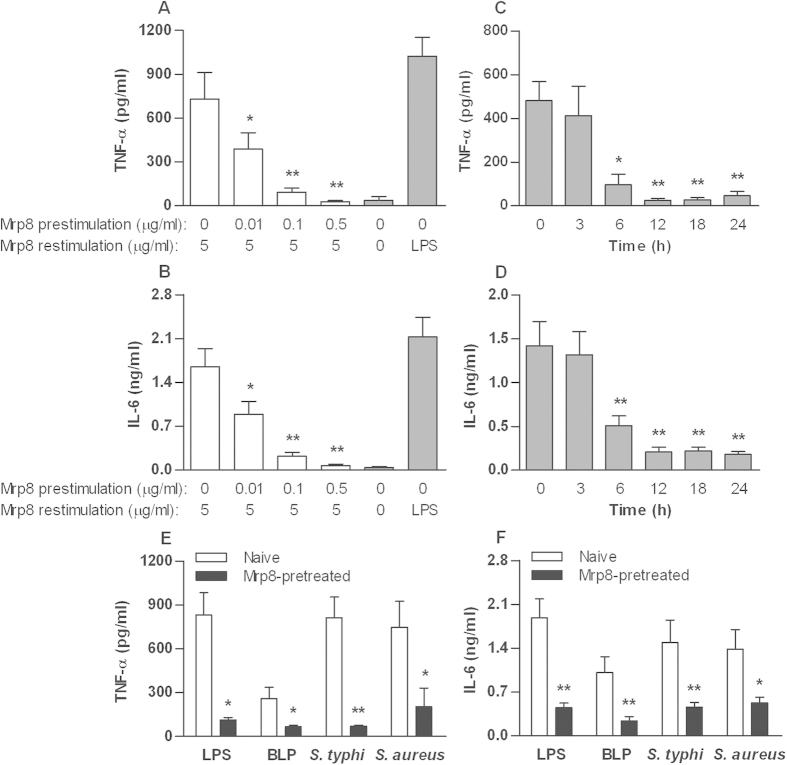
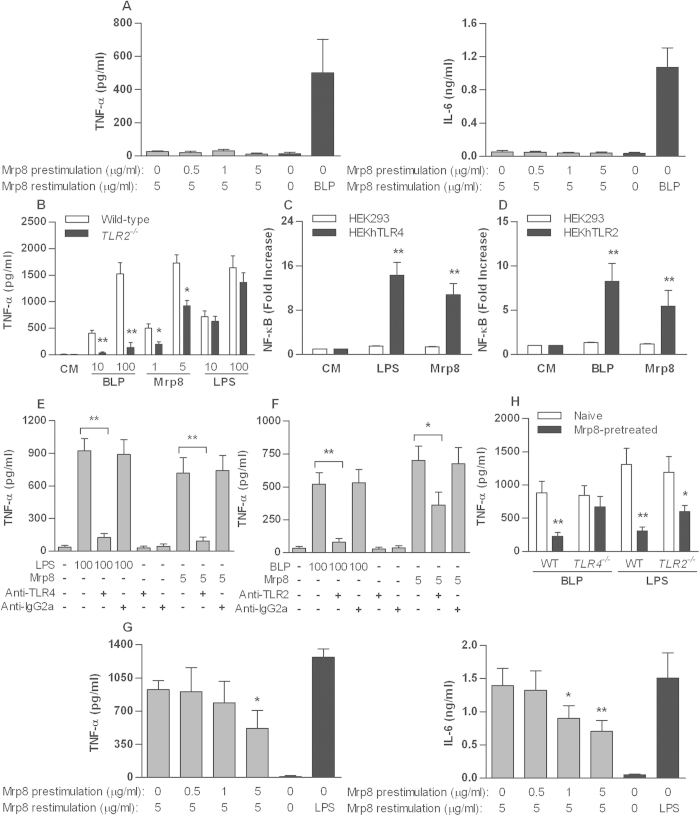
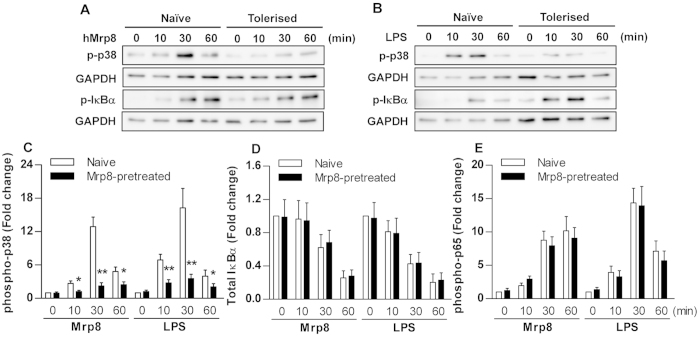
Myeloid-related protein 8 (Mrp8) is the active component of Mrp8/14 protein complex released by phagocytes at the site of infection and stimulates inflammatory responses. However, it is unclear whether Mrp8 could induce self-tolerance and cross-tolerance to bacterial infection. Here we report that Mrp8 triggered TNF-α and IL-6 release via a Toll-like receptor 4 (TLR4)-dependent manner. Pre-stimulation of murine macrophages and human monocytes with Mrp8 induced self-tolerance to Mrp8 re-stimulation and cross-tolerance to lipopolysaccharide (LPS), bacterial lipoprotein (BLP), gram-negative and gram-positive bacterial challenges, with substantially attenuated TNF-α and IL-6 release. Moreover, Mrp8 tolerisation significantly reduced serum TNF-α and IL-6, increased polymorphonuclear neutrophil (PMN) recruitment and accelerated bacterial clearance, thus protecting mice against LPS-induced lethality and cecal ligation and puncture (CLP)-induced polymicrobial sepsis. In addition to TLR4, TLR2 also contributed to Mrp8-induced inflammatory response and tolerance. Down-regulation of phosphorylated p38 by Mrp8 pre-stimulation was predominantly responsible for the intracellular mechanism of Mrp8-induced tolerance. Thus, our findings of Mrp8-induced self-tolerance and cross-tolerance may provide a potential strategy for attenuating an overwhelming proinflammatory cascade and enhancing antimicrobial responses during microbial sepsis.
髓样相关蛋白8(Mrp8)是吞噬细胞在感染部位释放的Mrp8/14蛋白复合物的活性成分,可刺激炎症反应。然而,目前尚不清楚Mrp8是否能诱导自身耐受以及对细菌感染的交叉耐受。在此我们报告,Mrp8通过Toll样受体4(TLR4)依赖的方式触发肿瘤坏死因子-α(TNF-α)和白细胞介素-6(IL-6)的释放。用Mrp8对小鼠巨噬细胞和人单核细胞进行预刺激,可诱导其对Mrp8再刺激产生自身耐受,并对脂多糖(LPS)、细菌脂蛋白(BLP)、革兰氏阴性菌和革兰氏阳性菌攻击产生交叉耐受,同时TNF-α和IL-6的释放显著减弱。此外,Mrp8耐受显著降低血清TNF-α和IL-6水平,增加多形核中性粒细胞(PMN)募集并加速细菌清除,从而保护小鼠免受LPS诱导的致死性和盲肠结扎穿刺(CLP)诱导的多微生物败血症。除了TLR4外,TLR2也参与了Mrp8诱导的炎症反应和耐受。Mrp8预刺激导致磷酸化p38下调,这主要是Mrp8诱导耐受的细胞内机制。因此,我们关于Mrp8诱导自身耐受和交叉耐受的发现,可能为减轻微生物败血症期间过度的促炎级联反应和增强抗菌反应提供一种潜在策略。