von Moos Roger, Body Jean-Jacques, Egerdie Blair, Stopeck Alison, Brown Janet, Fallowfield Lesley, Patrick Donald L, Cleeland Charles, Damyanov Danail, Palazzo Felipe Salvador, Marx Gavin, Zhou Ying, Braun Ada, Balakumaran Arun, Qian Yi
Kantonsspital Graubünden, Loëstrasse 170, CH-7000, Chur, Switzerland.
CHU Brugmann, Université Libre de Bruxelles, Brussels, Belgium.
Support Care Cancer. 2016 Mar;24(3):1327-37. doi: 10.1007/s00520-015-2908-1. Epub 2015 Sep 2.
Bone metastases secondary to solid tumors increase the risk of skeletal-related events (SREs), including the occurrence of pathological fracture (PF), radiation to bone (RB), surgery to bone (SB), and spinal cord compression (SCC). The aim of this study was to evaluate the impact of SREs on patients' pain, analgesic use, and pain interference with daily functioning.
Data were combined from patients with solid tumors and bone metastases who received denosumab or zoledronic acid across three identically designed phase 3 trials (N = 5543). Pain severity (worst pain) and pain interference were assessed using the Brief Pain Inventory at baseline and each monthly visit. Analgesic use was quantified using the Analgesic Quantification Algorithm.
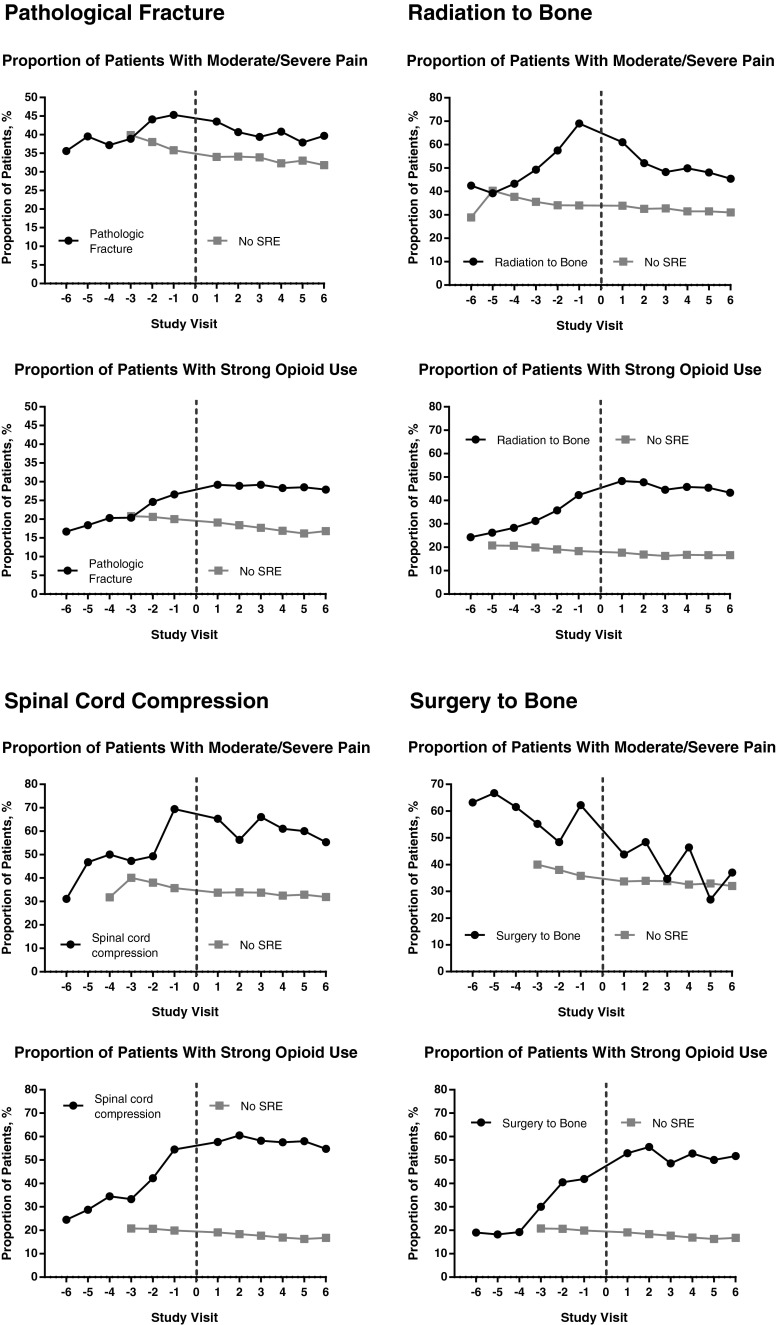
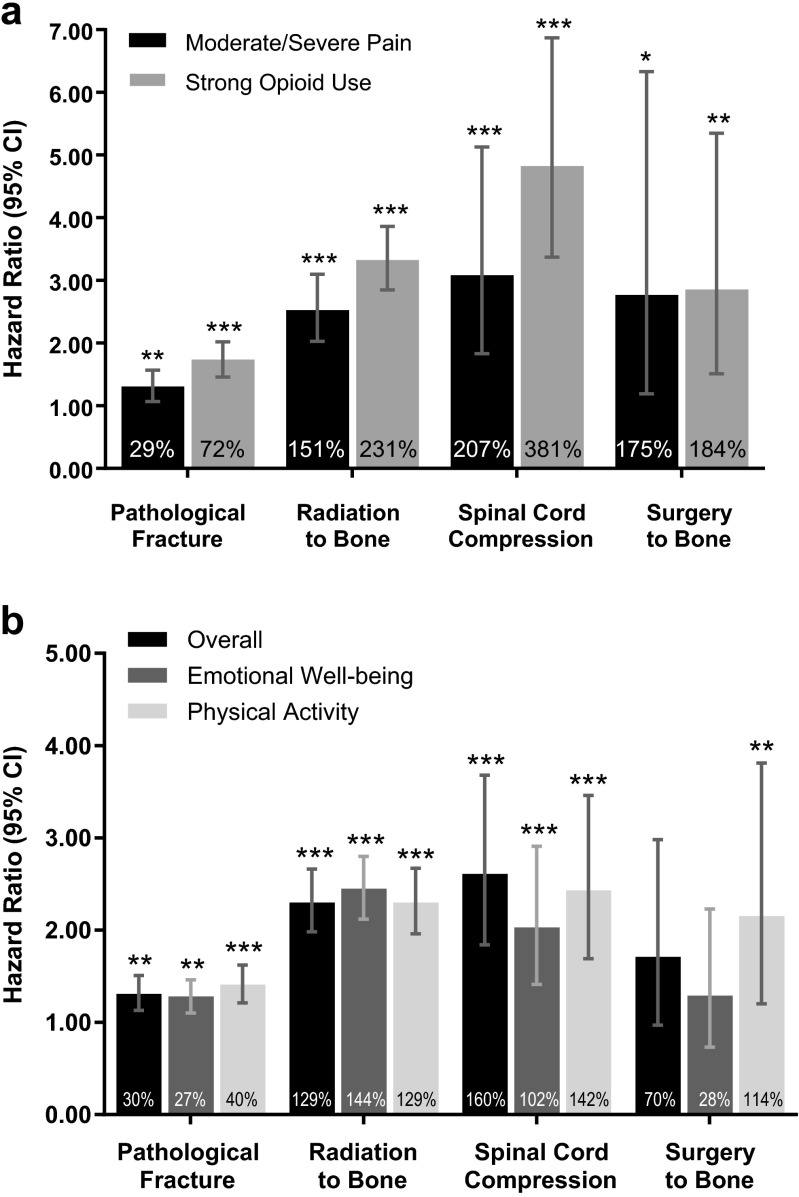
The proportion of patients with moderate/severe pain and strong opioid use generally increased in the 6 months preceding an SRE and remained elevated, while they remained relatively consistent over time in patients without an SRE. Regression analysis indicated that all SRE types were significantly associated with an increased risk of progression to moderate/severe pain and strong opioid use. PF, RB, and SCC were associated with significantly greater risk of pain interference overall. Results were similar for pain interference with emotional well-being. All SRE types were associated with significantly greater risk of pain interference with physical function.
SREs are associated with increased pain and analgesic use in patients with bone metastases. Treatments that prevent SREs may decrease pain and the need for opioid analgesics and reduce the impact of pain on daily functioning.
实体瘤继发的骨转移会增加骨相关事件(SREs)的风险,包括病理性骨折(PF)、骨放疗(RB)、骨手术(SB)和脊髓压迫(SCC)的发生。本研究的目的是评估SREs对患者疼痛、镇痛药物使用以及疼痛对日常功能干扰的影响。
数据来自在三项设计相同的3期试验(N = 5543)中接受地诺单抗或唑来膦酸治疗的实体瘤和骨转移患者。在基线和每月随访时使用简明疼痛量表评估疼痛严重程度(最严重疼痛)和疼痛干扰情况。使用镇痛量化算法对镇痛药物的使用进行量化。
在发生SREs前的6个月内,中度/重度疼痛患者和强效阿片类药物使用者的比例总体上有所增加且持续升高,而在未发生SREs的患者中,这些比例随时间相对保持稳定。回归分析表明,所有类型的SREs均与进展为中度/重度疼痛和使用强效阿片类药物的风险增加显著相关。PF、RB和SCC总体上与疼痛干扰的风险显著增加相关。在对情绪健康的疼痛干扰方面结果相似。所有类型的SREs均与对身体功能的疼痛干扰风险显著增加相关。
SREs与骨转移患者疼痛加剧和镇痛药物使用增加相关。预防SREs的治疗可能会减轻疼痛、减少阿片类镇痛药的需求,并降低疼痛对日常功能的影响。