Diaz Caballero Julio, Clark Shawn T, Coburn Bryan, Zhang Yu, Wang Pauline W, Donaldson Sylva L, Tullis D Elizabeth, Yau Yvonne C W, Waters Valerie J, Hwang David M, Guttman David S
Department of Cell and Systems Biology, University of Toronto, Toronto, Ontario, Canada.
Latner Thoracic Surgery Research Laboratories, University Health Network, University of Toronto, Toronto, Ontario, Canada Department of Laboratory Medicine and Pathobiology, University of Toronto, Toronto, Ontario, Canada.
mBio. 2015 Sep 1;6(5):e00981-15. doi: 10.1128/mBio.00981-15.
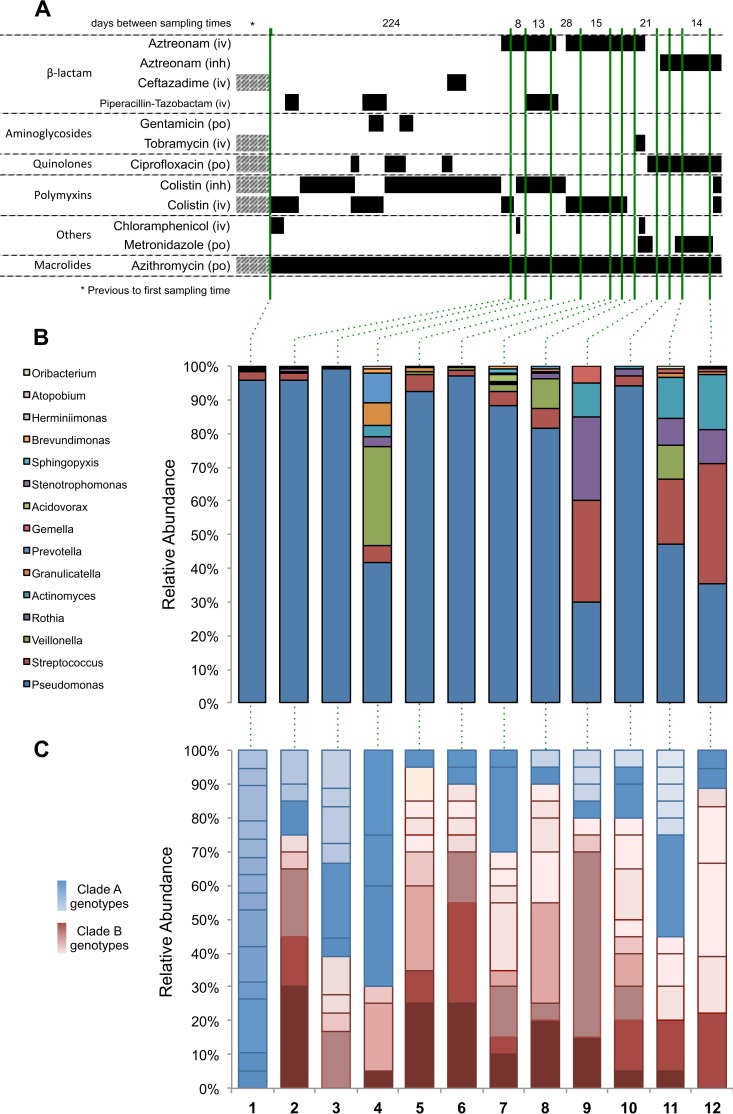
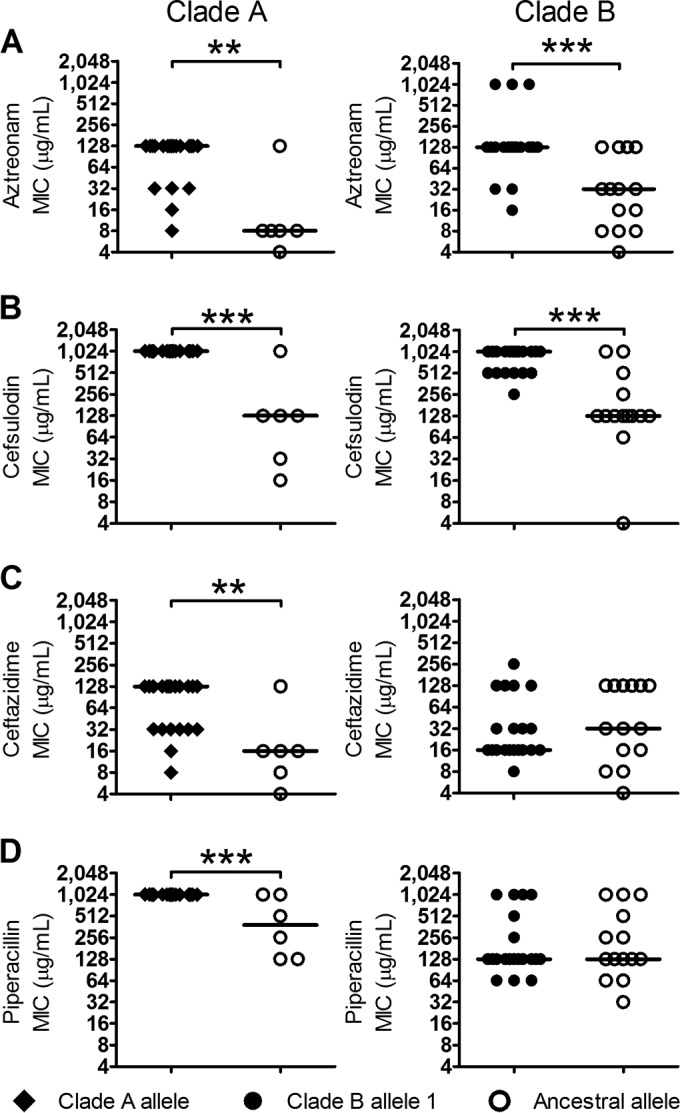
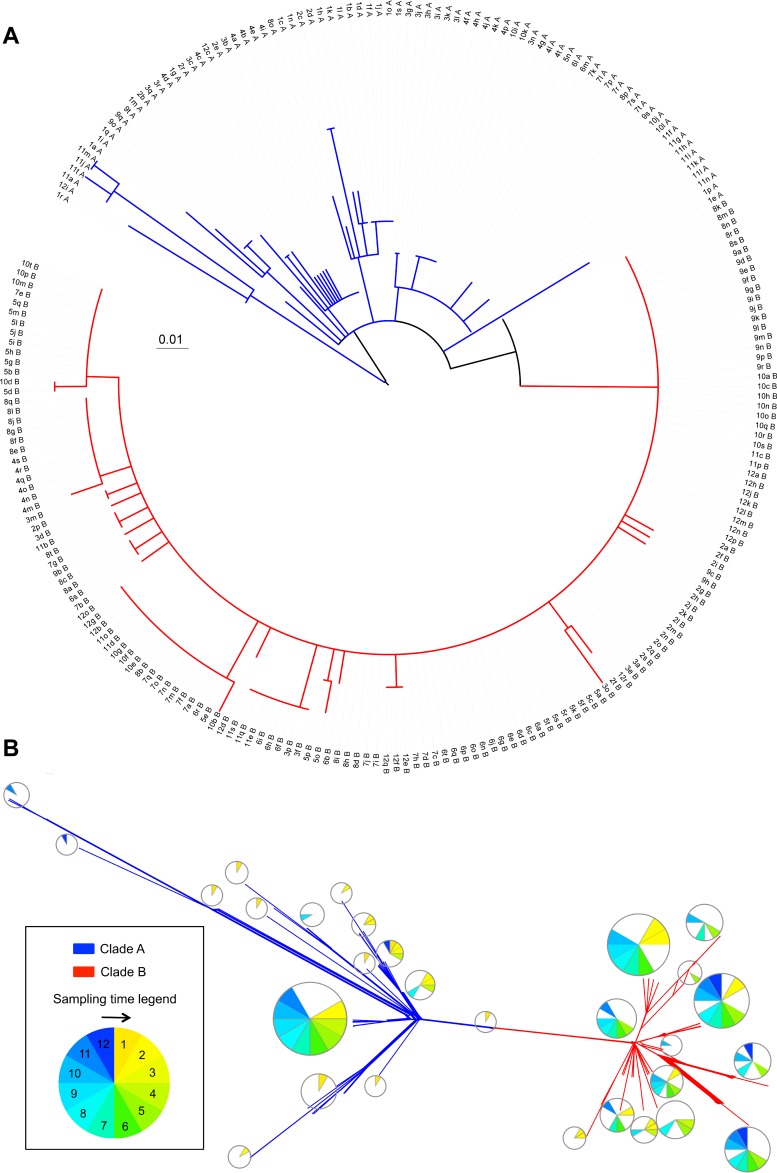
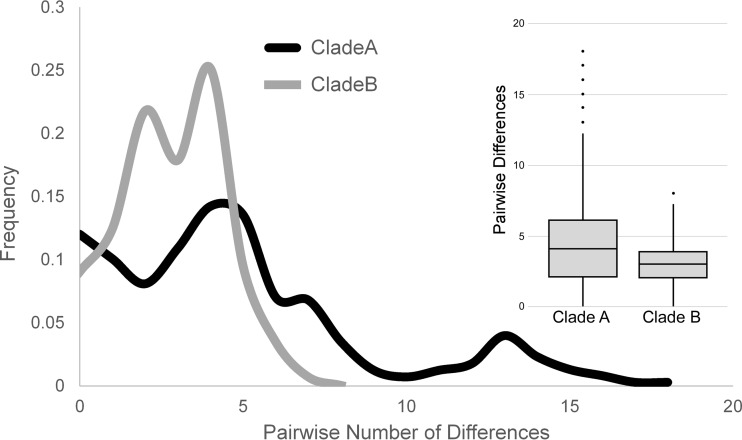
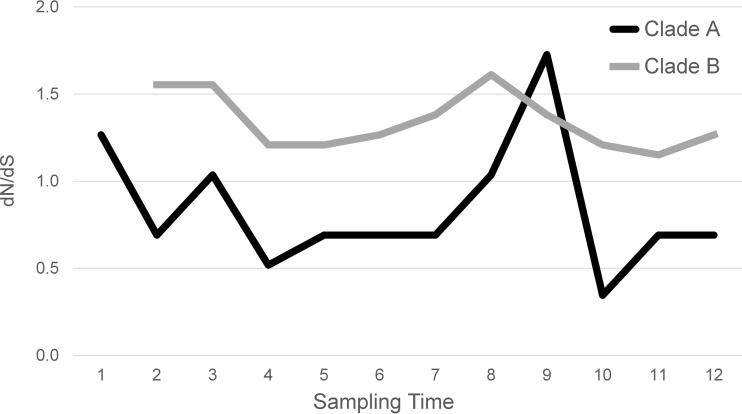
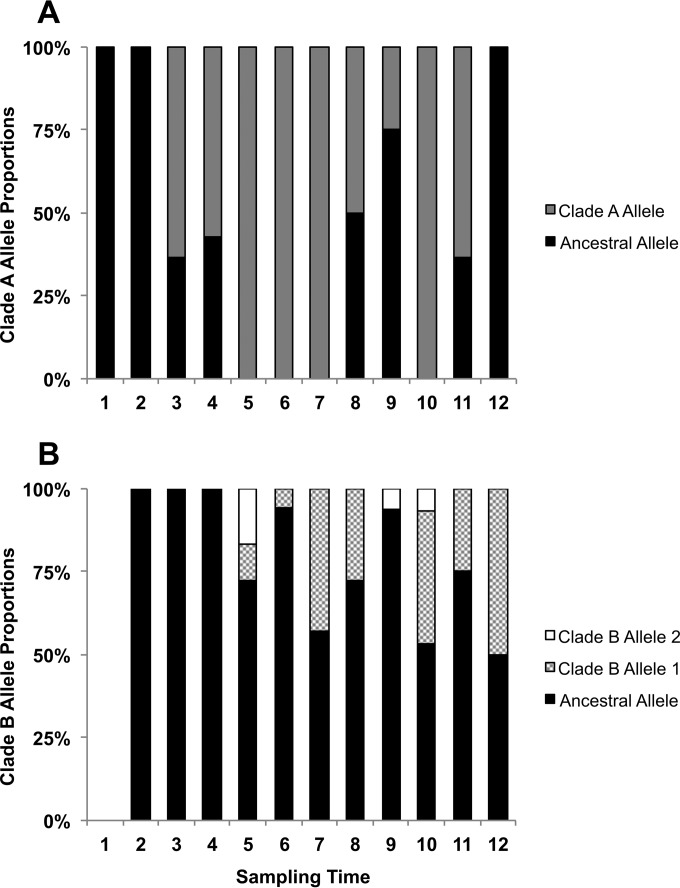
Pulmonary infections caused by Pseudomonas aeruginosa are a recalcitrant problem in cystic fibrosis (CF) patients. While the clinical implications and long-term evolutionary patterns of these infections are well studied, we know little about the short-term population dynamics that enable this pathogen to persist despite aggressive antimicrobial therapy. Here, we describe a short-term population genomic analysis of 233 P. aeruginosa isolates collected from 12 sputum specimens obtained over a 1-year period from a single patient. Whole-genome sequencing and antimicrobial susceptibility profiling identified the expansion of two clonal lineages. The first lineage originated from the coalescence of the entire sample less than 3 years before the end of the study and gave rise to a high-diversity ancestral population. The second expansion occurred 2 years later and gave rise to a derived population with a strong signal of positive selection. These events show characteristics consistent with recurrent selective sweeps. While we cannot identify the specific mutations responsible for the origins of the clonal lineages, we find that the majority of mutations occur in loci previously associated with virulence and resistance. Additionally, approximately one-third of all mutations occur in loci that are mutated multiple times, highlighting the importance of parallel pathoadaptation. One such locus is the gene encoding penicillin-binding protein 3, which received three independent mutations. Our functional analysis of these alleles shows that they provide differential fitness benefits dependent on the antibiotic under selection. These data reveal that bacterial populations can undergo extensive and dramatic changes that are not revealed by lower-resolution analyses.
Pseudomonas aeruginosa is a bacterial opportunistic pathogen responsible for significant morbidity and mortality in cystic fibrosis (CF) patients. Once it has colonized the lung in CF, it is highly resilient and rarely eradicated. This study presents a deep sampling examination of the fine-scale evolutionary dynamics of P. aeruginosa in the lungs of a chronically infected CF patient. We show that diversity of P. aeruginosa is driven by recurrent clonal emergence and expansion within this patient and identify potential adaptive variants associated with these events. This high-resolution sequencing strategy thus reveals important intraspecies dynamics that explain a clinically important phenomenon not evident at a lower-resolution analysis of community structure.
铜绿假单胞菌引起的肺部感染是囊性纤维化(CF)患者面临的一个棘手问题。虽然对这些感染的临床影响和长期进化模式已有充分研究,但对于尽管进行了积极的抗菌治疗,该病原体仍能持续存在的短期种群动态,我们却知之甚少。在此,我们描述了对从一名患者在1年时间内采集的12份痰液标本中分离出的233株铜绿假单胞菌进行的短期种群基因组分析。全基因组测序和抗菌药敏分析确定了两个克隆谱系的扩张。第一个谱系起源于研究结束前不到3年的整个样本的合并,并产生了一个高多样性的祖先种群。第二次扩张发生在2年后,产生了一个具有强烈正选择信号的衍生种群。这些事件显示出与反复选择性清除一致的特征。虽然我们无法确定导致克隆谱系起源的具体突变,但我们发现大多数突变发生在先前与毒力和抗性相关的基因座上。此外,所有突变中约三分之一发生在多次突变的基因座上,突出了平行致病适应的重要性。一个这样的基因座是编码青霉素结合蛋白3的基因,它接受了三个独立的突变。我们对这些等位基因的功能分析表明,它们根据所选择的抗生素提供不同的适应性优势。这些数据表明,细菌种群可以经历广泛而显著的变化,而低分辨率分析无法揭示这些变化。
铜绿假单胞菌是一种机会性病原菌,在囊性纤维化(CF)患者中导致显著的发病率和死亡率。一旦它在CF患者的肺部定植,它就具有高度的弹性,很少被根除。本研究对一名慢性感染CF患者肺部铜绿假单胞菌的精细进化动态进行了深度抽样检查。我们表明铜绿假单胞菌的多样性是由该患者体内反复出现的克隆出现和扩张驱动的,并确定了与这些事件相关的潜在适应性变异。因此,这种高分辨率测序策略揭示了重要的种内动态,解释了一种在较低分辨率的群落结构分析中不明显的临床重要现象。