Wu Jing-Ru, Wang Jie, Zhou Sheng-Kui, Yang Long, Yin Jia-le, Cao Jun-Ping, Cheng Yan-Bo
Jiangsu Province Key Laboratory of Anesthesiology, Xuzhou Medical College, Xuzhou, Jiangsu Province, China.
Jiangsu Key Laboratory of New Drug Research and Clinical Pharmacy, Xuzhou Medical College, Xuzhou, Jiangsu Province, China.
Neural Regen Res. 2015 Jul;10(7):1120-4. doi: 10.4103/1673-5374.160108.
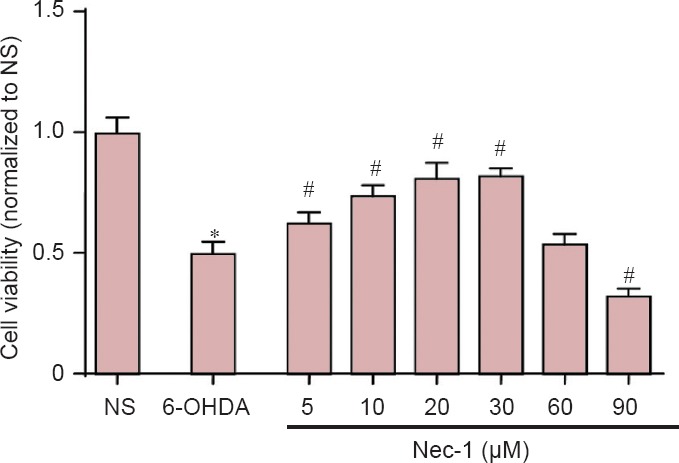
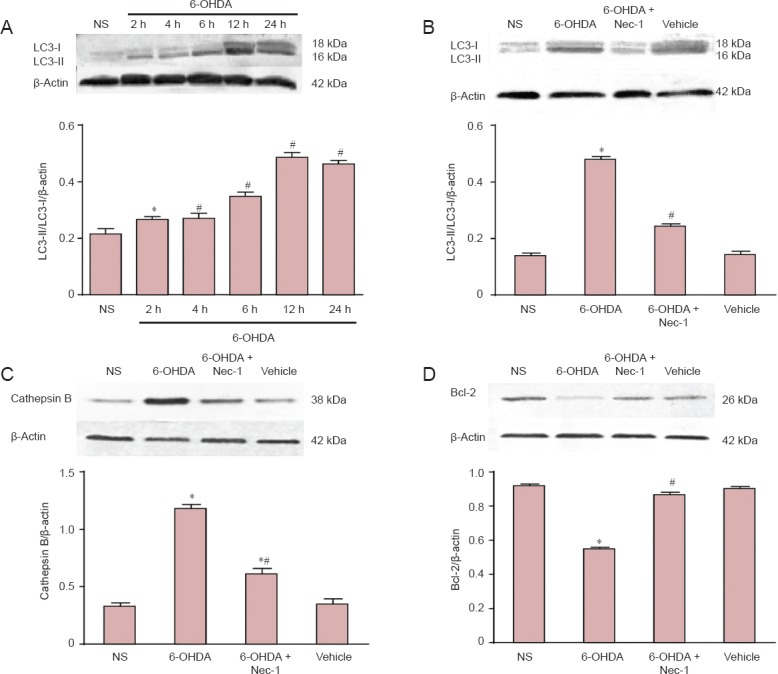
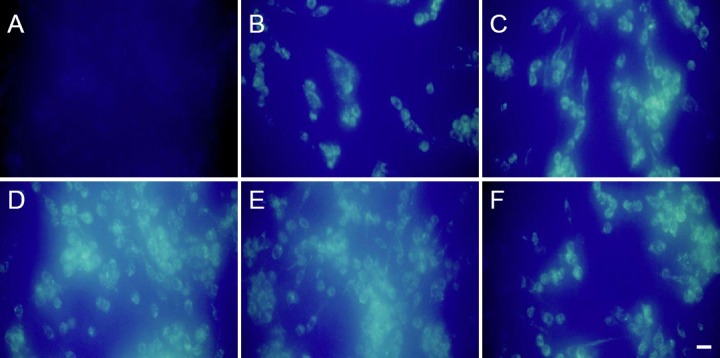
Necroptosis is characterized by programmed necrotic cell death and autophagic activation and might be involved in the death process of dopaminergic neurons in Parkinson's disease. We hypothesized that necrostatin-1 could block necroptosis and give protection to dopaminergic neurons. There is likely to be crosstalk between necroptosis and other cell death pathways, such as apoptosis and autophagy. PC12 cells were pretreated with necroststin-1 1 hour before exposure to 6-hydroxydopamine. We examined cell viability, mitochondrial membrane potential and expression patterns of apoptotic and necroptotic death signaling proteins. The results showed that the autophagy/lysosomal pathway is involved in the 6-hydroxydopamine-induced death process of PC12 cells. Mitochondrial disability induced overactive autophagy, increased cathepsin B expression, and diminished Bcl-2 expression. Necrostatin-1 within a certain concentration range (5-30 μM) elevated the viability of PC12 cells, stabilized mitochondrial membrane potential, inhibited excessive autophagy, reduced the expression of LC3-II and cathepsin B, and increased Bcl-2 expression. These findings suggest that necrostatin-1 exerted a protective effect against injury on dopaminergic neurons. Necrostatin-1 interacts with the apoptosis signaling pathway during this process. This pathway could be a new neuroprotective and therapeutic target in Parkinson's disease.
坏死性凋亡的特征是程序性坏死性细胞死亡和自噬激活,可能参与帕金森病中多巴胺能神经元的死亡过程。我们假设坏死抑制因子-1可以阻断坏死性凋亡并保护多巴胺能神经元。坏死性凋亡与其他细胞死亡途径(如凋亡和自噬)之间可能存在相互作用。在暴露于6-羟基多巴胺前1小时,用坏死抑制因子-1预处理PC12细胞。我们检测了细胞活力、线粒体膜电位以及凋亡和坏死性凋亡死亡信号蛋白的表达模式。结果表明,自噬/溶酶体途径参与了6-羟基多巴胺诱导的PC12细胞死亡过程。线粒体功能障碍诱导自噬过度活跃、组织蛋白酶B表达增加以及Bcl-2表达减少。在一定浓度范围内(5-30μM)的坏死抑制因子-1提高了PC12细胞的活力,稳定了线粒体膜电位,抑制了过度自噬,降低了LC3-II和组织蛋白酶B的表达,并增加了Bcl-2表达。这些发现表明,坏死抑制因子-1对多巴胺能神经元损伤具有保护作用。在此过程中,坏死抑制因子-1与凋亡信号通路相互作用。该通路可能是帕金森病新的神经保护和治疗靶点。