Kim Hee-Kyoung, Jo Seong-Mi, Kim Gi-Yong, Kim Da-Woon, Kim Yeon-Ki, Yun Sung-Hwan
Department of Medical Biotechnology, Soonchunhyang University, Asan, Chungnam, Republic of Korea.
Division of Biosciences and Bioinformatics, Myongji University, Yongin, Gyeonggi-do, Republic of Korea.
PLoS Genet. 2015 Sep 3;11(9):e1005486. doi: 10.1371/journal.pgen.1005486. eCollection 2015 Sep.
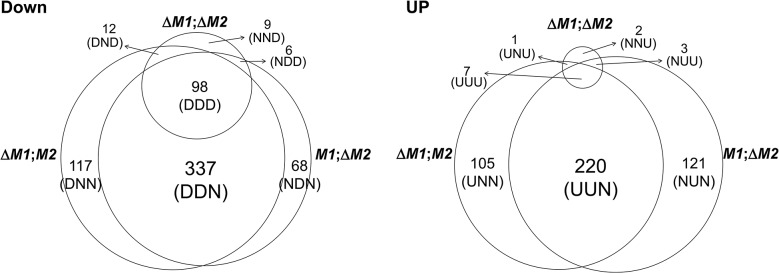
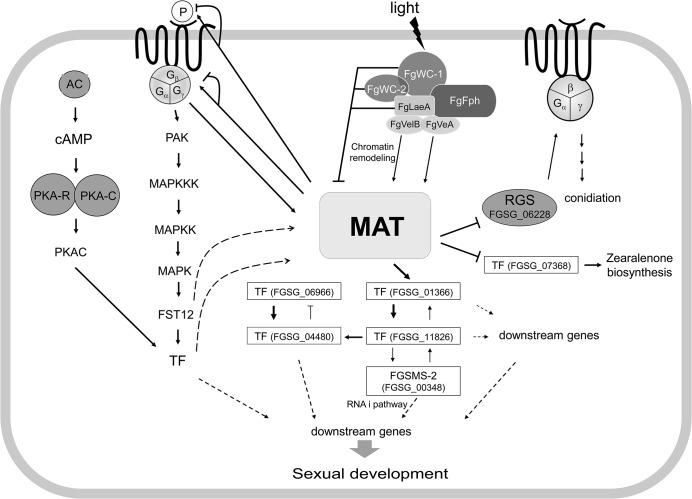
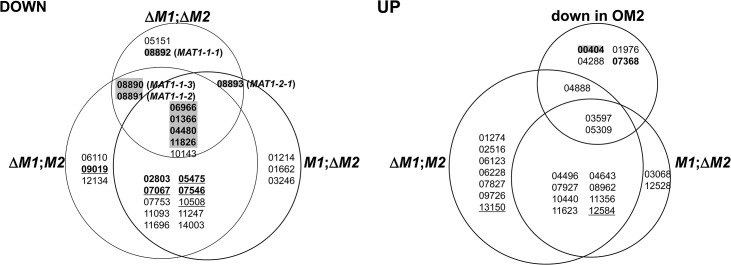
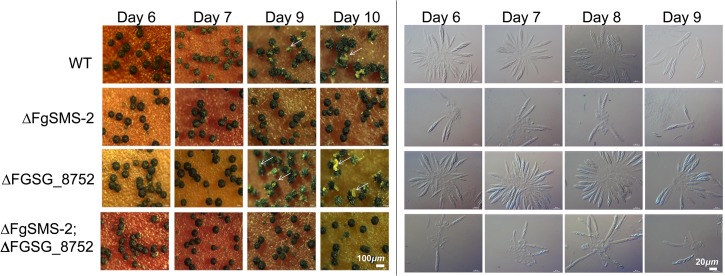
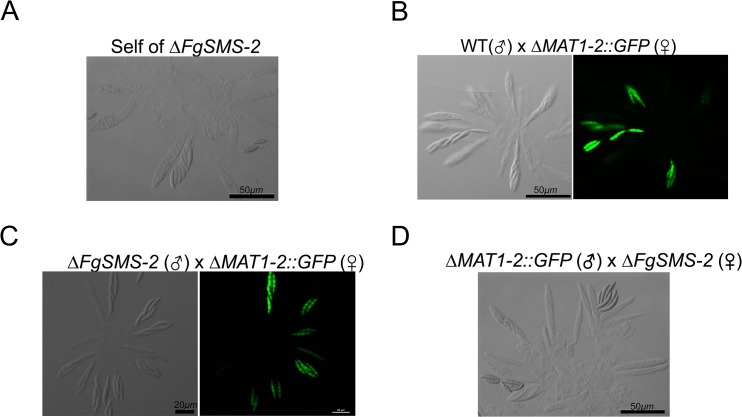
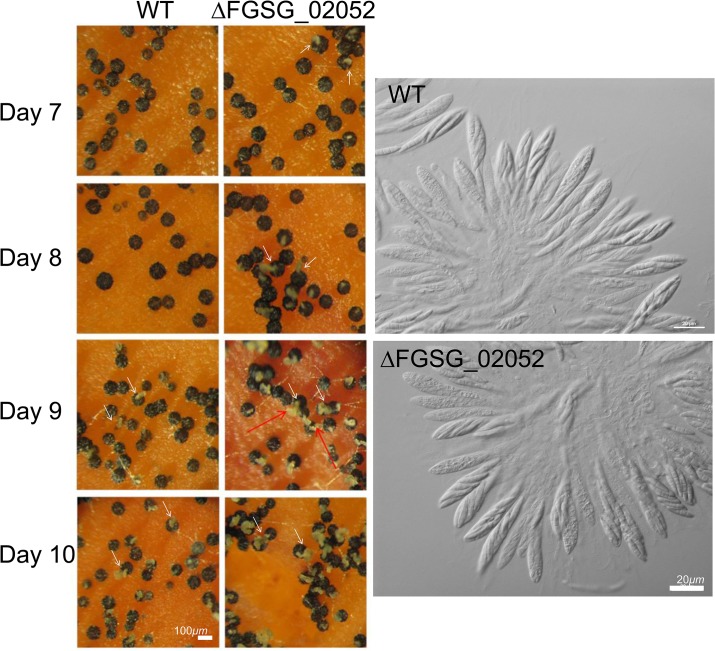
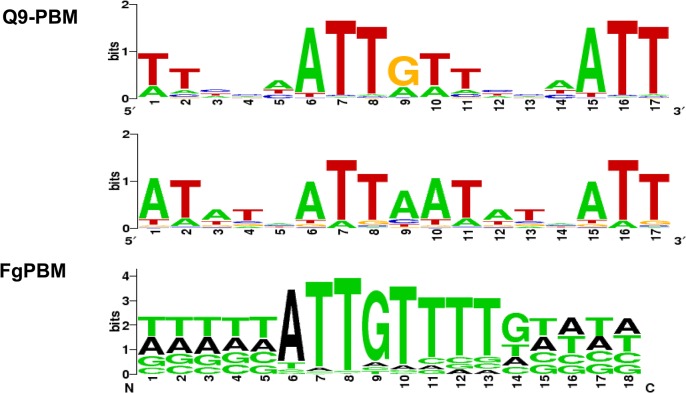
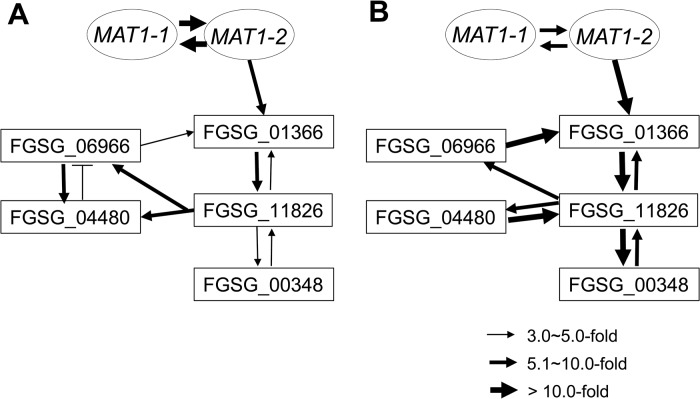
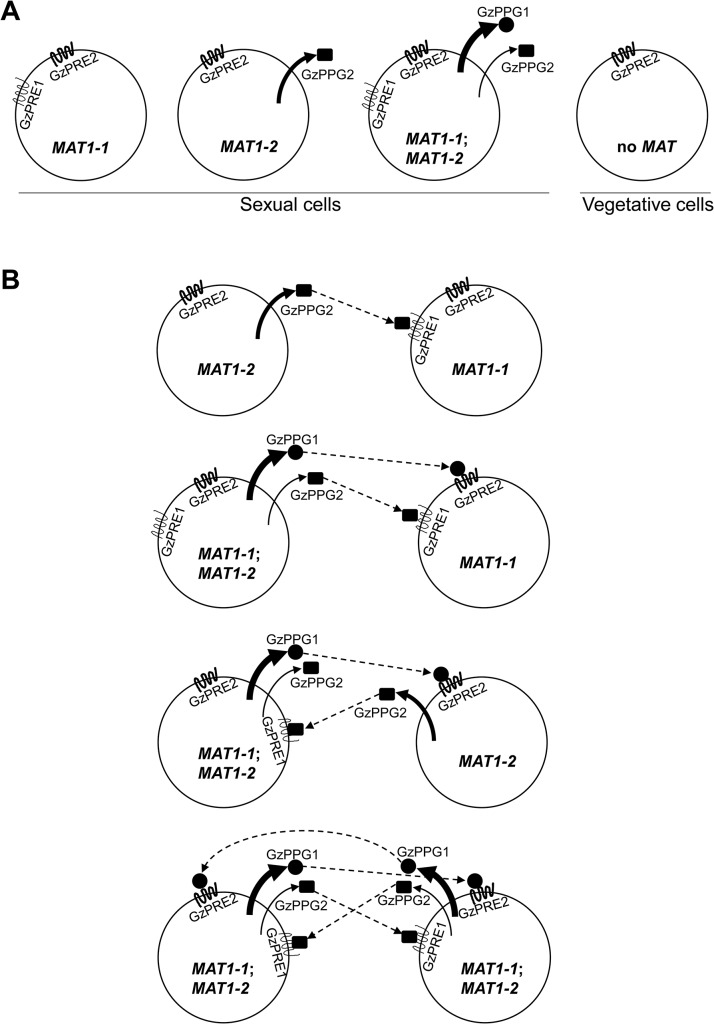
Fusarium graminearum, the causal agent of Fusarium head blight in cereal crops, produces sexual progeny (ascospore) as an important overwintering and dissemination strategy for completing the disease cycle. This homothallic ascomycetous species does not require a partner for sexual mating; instead, it carries two opposite mating-type (MAT) loci in a single nucleus to control sexual development. To gain a comprehensive understanding of the regulation of sexual development in F. graminearum, we used in-depth and high-throughput analyses to examine the target genes controlled transcriptionally by two-linked MAT loci (MAT1-1, MAT1-2). We hybridized a genome-wide microarray with total RNAs from F. graminearum mutants that lacked each MAT locus individually or together, and overexpressed MAT1-2-1, as well as their wild-type progenitor, at an early stage of sexual development. A comparison of the gene expression levels revealed a total of 1,245 differentially expressed genes (DEGs) among all of the mutants examined. Among these, genes involved in metabolism, cell wall organization, cellular response to stimuli, cell adhesion, fertilization, development, chromatin silencing, and signal transduction, were significantly enriched. Protein binding microarray analysis revealed the presence of putative core DNA binding sequences (ATTAAT or ATTGTT) for the HMG (high mobility group)-box motif in the MAT1-2-1 protein. Targeted deletion of 106 DEGs revealed 25 genes that were specifically required for sexual development, most of which were regulated transcriptionally by both the MAT1-1 and MAT1-2 loci. Taken together with the expression patterns of key target genes, we propose a regulatory pathway for MAT-mediated sexual development, in which both MAT loci may be activated by several environmental cues via chromatin remodeling and/or signaling pathways, and then control the expression of at least 1,245 target genes during sexual development via regulatory cascades and/or networks involving several downstream transcription factors and a putative RNA interference pathway.
禾谷镰刀菌是谷类作物赤霉病的病原体,它产生有性后代(子囊孢子)作为完成病害循环的重要越冬和传播策略。这种同宗配合的子囊菌不需要交配伙伴;相反,它在单个细胞核中携带两个相反的交配型(MAT)位点来控制性发育。为了全面了解禾谷镰刀菌有性发育的调控机制,我们采用深入的高通量分析方法,研究由两个连锁的MAT位点(MAT1-1、MAT1-2)转录调控的靶基因。我们将全基因组微阵列与来自禾谷镰刀菌突变体的总RNA进行杂交,这些突变体分别或同时缺失每个MAT位点,并且在有性发育早期过表达MAT1-2-1及其野生型亲本。基因表达水平的比较显示,在所检测的所有突变体中共有1245个差异表达基因(DEG)。其中,参与代谢、细胞壁组织、细胞对刺激的反应、细胞黏附、受精、发育、染色质沉默和信号转导的基因显著富集。蛋白质结合微阵列分析显示,MAT1-2-1蛋白中存在HMG(高迁移率族)盒基序的假定核心DNA结合序列(ATTAAT或ATTGTT)。对106个DEG进行靶向缺失分析,发现25个基因是有性发育所特需的,其中大多数基因受MAT1-1和MAT1-2两个位点的转录调控。结合关键靶基因的表达模式,我们提出了一个MAT介导的有性发育调控途径,其中两个MAT位点可能通过染色质重塑和/或信号通路被多种环境信号激活,然后在有性发育过程中通过涉及多个下游转录因子和假定的RNA干扰途径的调控级联和/或网络来控制至少1245个靶基因的表达。