Möricke Esmé, Buitelaar Jan K, Rommelse Nanda N J
Department of Psychiatry, Nijmegen Centre for Evidence-Based Practice, Radboud University Nijmegen Medical Centre, P.O. Box 9101, 6500 HB, Nijmegen, The Netherlands.
Department of Cognitive Neuroscience, Donders Institute for Brain, Cognition and Behaviour, Radboud University Nijmegen Medical Centre, Nijmegen, The Netherlands.
J Autism Dev Disord. 2016 Jan;46(1):164-175. doi: 10.1007/s10803-015-2562-y.
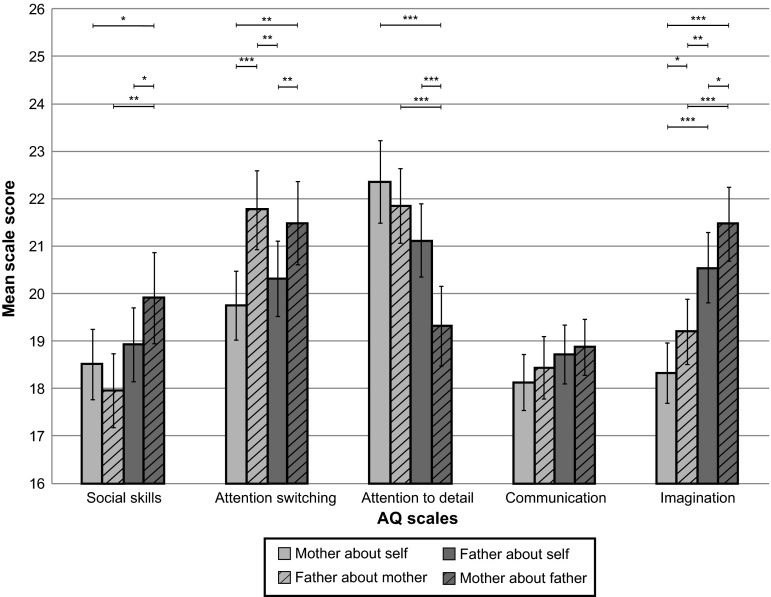
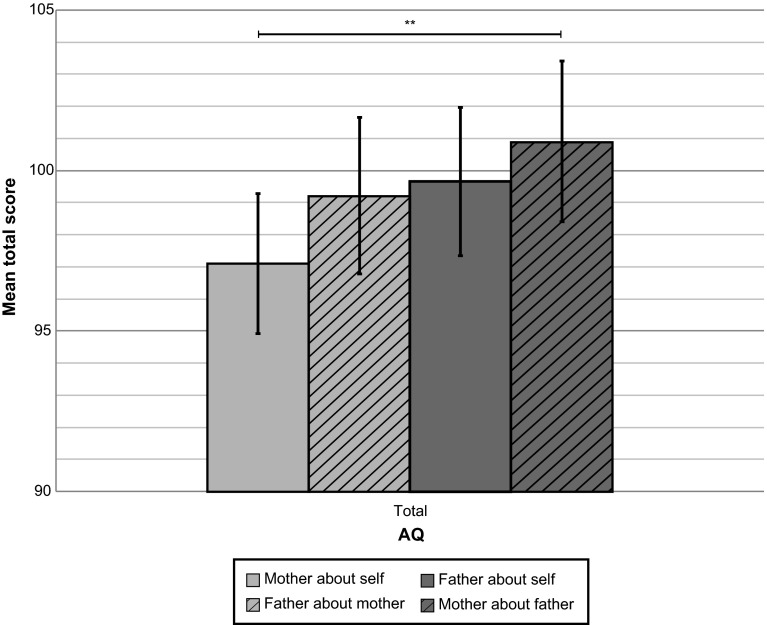
This study focused on the degree of report bias in assessing autistic traits. Both parents of 124 preschoolers completed the Social Communication Questionnaire and the Autism-spectrum Quotient. Acceptable agreement existed between mother and father reports of children's mean scores of autistic traits, but interrater reliability for rank-order correlations was only fair. No evidence was found for report bias regarding parent-offspring autistic traits. However, adult autistic ratings were strongly biased: spouse-ratings were higher than self-ratings, correlations were only fair when both parents reported about the same person, and resemblance was higher for reports from the same person than for spouses' separate self-reports. It is advisable to involve multiple informants when assessing autistic traits, and to use procedural and/or statistical remedies to control for report bias.
本研究聚焦于评估自闭症特征时报告偏差的程度。124名学龄前儿童的父母双方均完成了社会沟通问卷和自闭症谱系商数测试。父母对孩子自闭症特征平均得分的报告之间存在可接受的一致性,但等级相关的评分者间信度仅为一般。未发现亲子自闭症特征报告偏差的证据。然而,成人自闭症评分存在强烈偏差:配偶评分高于自我评分,当父母双方报告同一人时相关性仅为一般,且同一人报告的相似性高于配偶各自的自我报告。在评估自闭症特征时,建议纳入多个信息提供者,并采用程序和/或统计补救措施来控制报告偏差。