He Xiaolong, Yuan Chengfu, Yang Jilai
Department of Biopharmaceutical Sciences, College of Pharmacy-Rockford, The University of Illinois at Chicago, Rockford, IL 61107, USA.
Medical College of China Three Gorges University, Yichang, Hubei, 443002, People's Republic of China.
Oncotarget. 2015 Oct 6;6(30):29651-63. doi: 10.18632/oncotarget.4865.
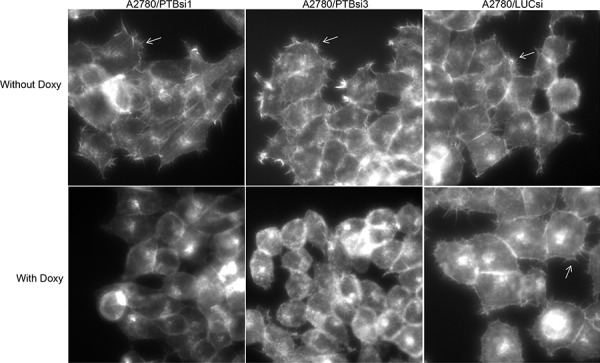
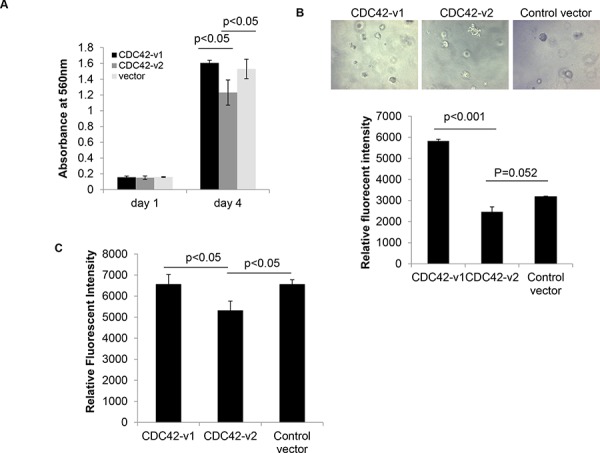
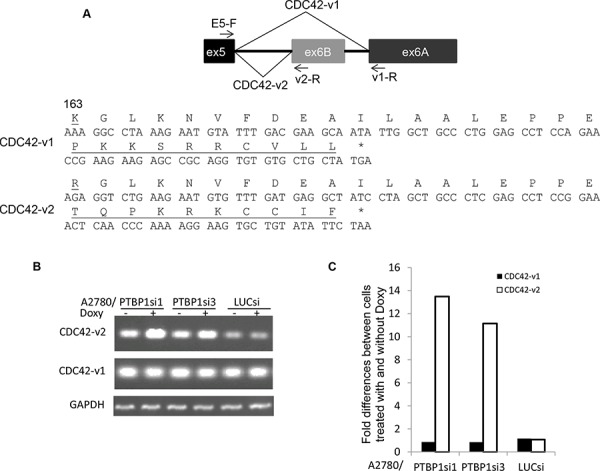
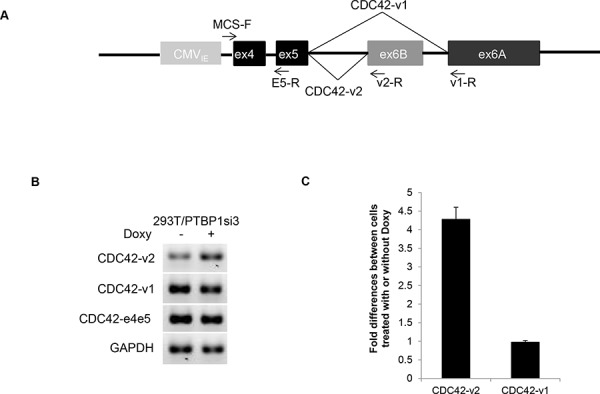
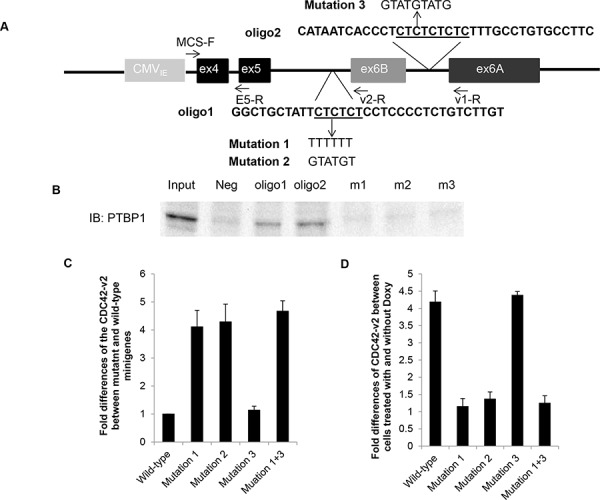
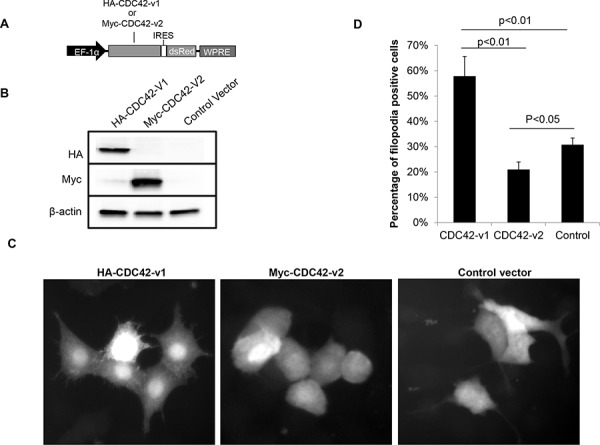
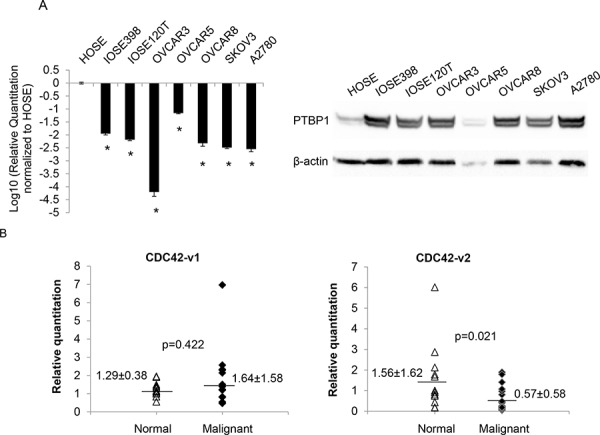
Our previous study found that splicing factor polypyrimidine tract-binding protein 1 (PTBP1) had a role in tumorigenesis but the underlying mechanism remained unclear. In this study, we observed that knockdown of PTBP1 inhibited filopodia formation. Subsequently, we found that PTBP1 regulated the alternative splicing of CDC42, a major regulator of filopodia formation. Two CDC42 variants, CDC42-v1 and CDC42-v2, can be generated through alternative splicing. Knockdown of PTBP1 increased the expression of CDC42-v2. Ectopic expression of individual variants showed that CDC42-v2 suppressed filopodia formation, opposite to the effect of CDC42-v1. Quantitative RT-PCR revealed that CDC42-v2 was expressed at lower levels in ovarian cancer cell lines and ovarian tumor tissues than in normal control cells and tissues. Further, CDC42-v2 was observed to have inhibitory effects on ovarian tumor cell growth, colony formation in soft agar and invasiveness. In contrast, these inhibitory effects were not found with CDC42-v1. Taken together, above results suggest that the role of PTBP1 in tumorigenesis may be partly mediated by its regulation of CDC42 alternative splicing and CDC42-v2 might function as a tumor suppressor.
我们之前的研究发现,剪接因子聚嘧啶序列结合蛋白1(PTBP1)在肿瘤发生中起作用,但其潜在机制仍不清楚。在本研究中,我们观察到敲低PTBP1可抑制丝状伪足的形成。随后,我们发现PTBP1调节丝状伪足形成的主要调节因子CDC42的可变剪接。通过可变剪接可产生两种CDC42变体,即CDC42-v1和CDC42-v2。敲低PTBP1可增加CDC42-v2的表达。单个变体的异位表达表明,CDC42-v2抑制丝状伪足的形成,这与CDC42-v1的作用相反。定量逆转录聚合酶链反应显示,CDC42-v2在卵巢癌细胞系和卵巢肿瘤组织中的表达水平低于正常对照细胞和组织。此外,观察到CDC42-v2对卵巢肿瘤细胞生长、软琼脂中的集落形成和侵袭具有抑制作用。相比之下,CDC42-v1未发现这些抑制作用。综上所述,上述结果表明,PTBP1在肿瘤发生中的作用可能部分是由其对CDC42可变剪接的调节介导的,并且CDC42-v2可能作为一种肿瘤抑制因子发挥作用。