Luo Shen, Zhang Baolin
a Office of Biotechnology Products; Center for Drug Evaluation and Research; Food and Drug Administration ; Silver Spring ; MD 20993 , USA.
MAbs. 2015;7(6):1094-103. doi: 10.1080/19420862.2015.1087636. Epub 2015 Sep 4.
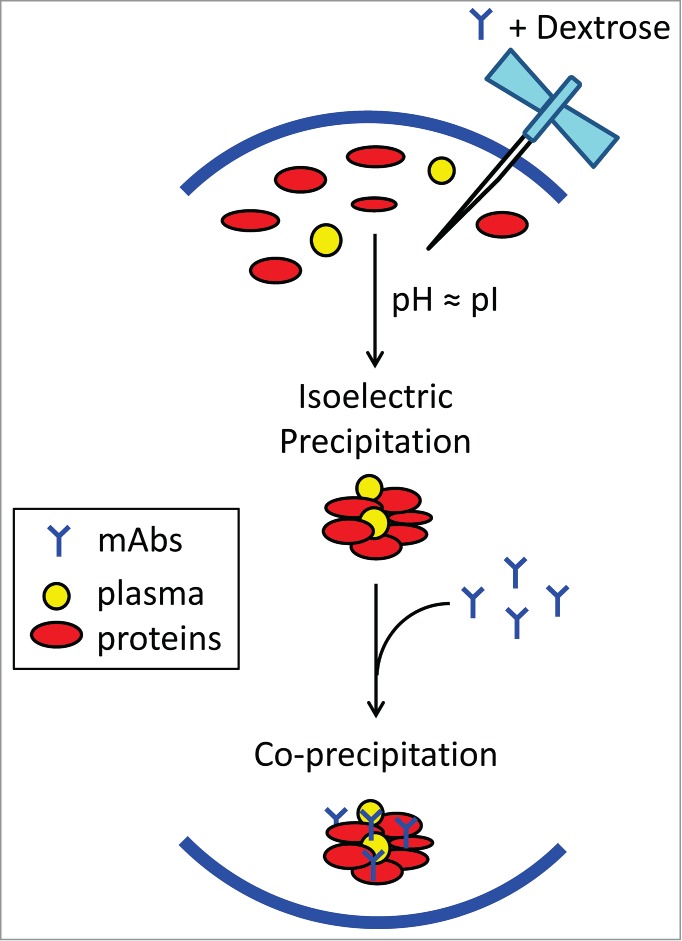
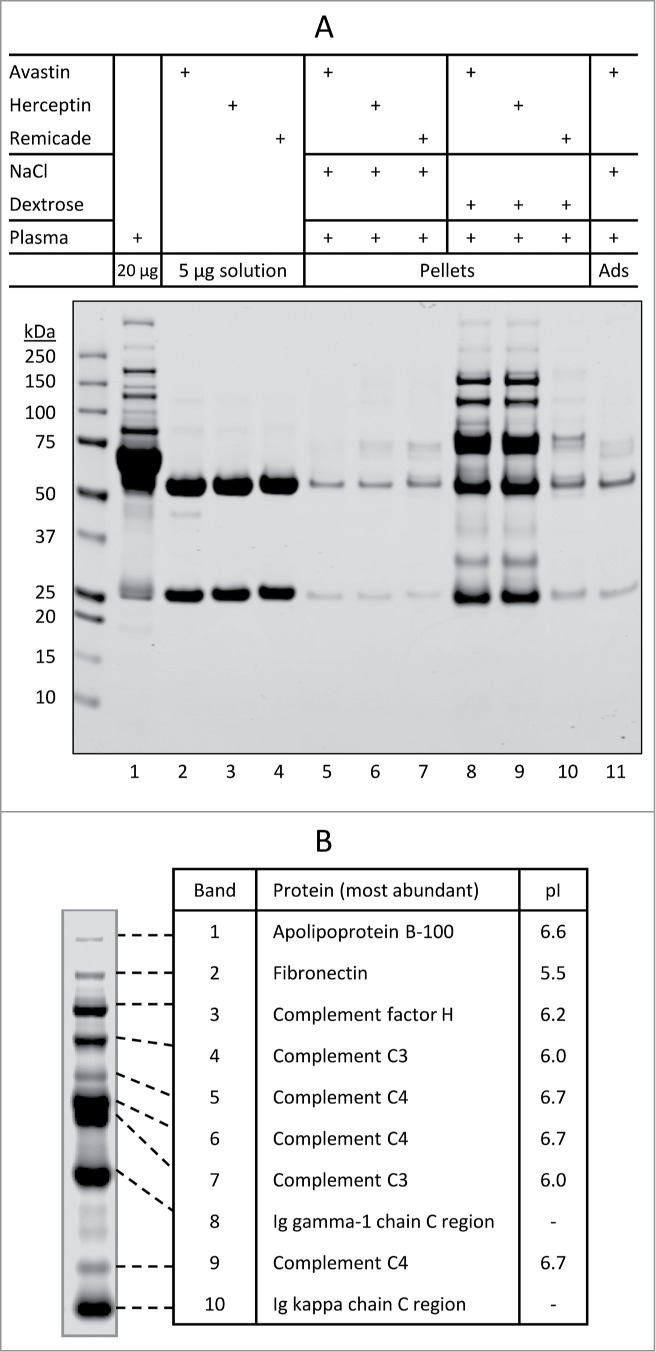
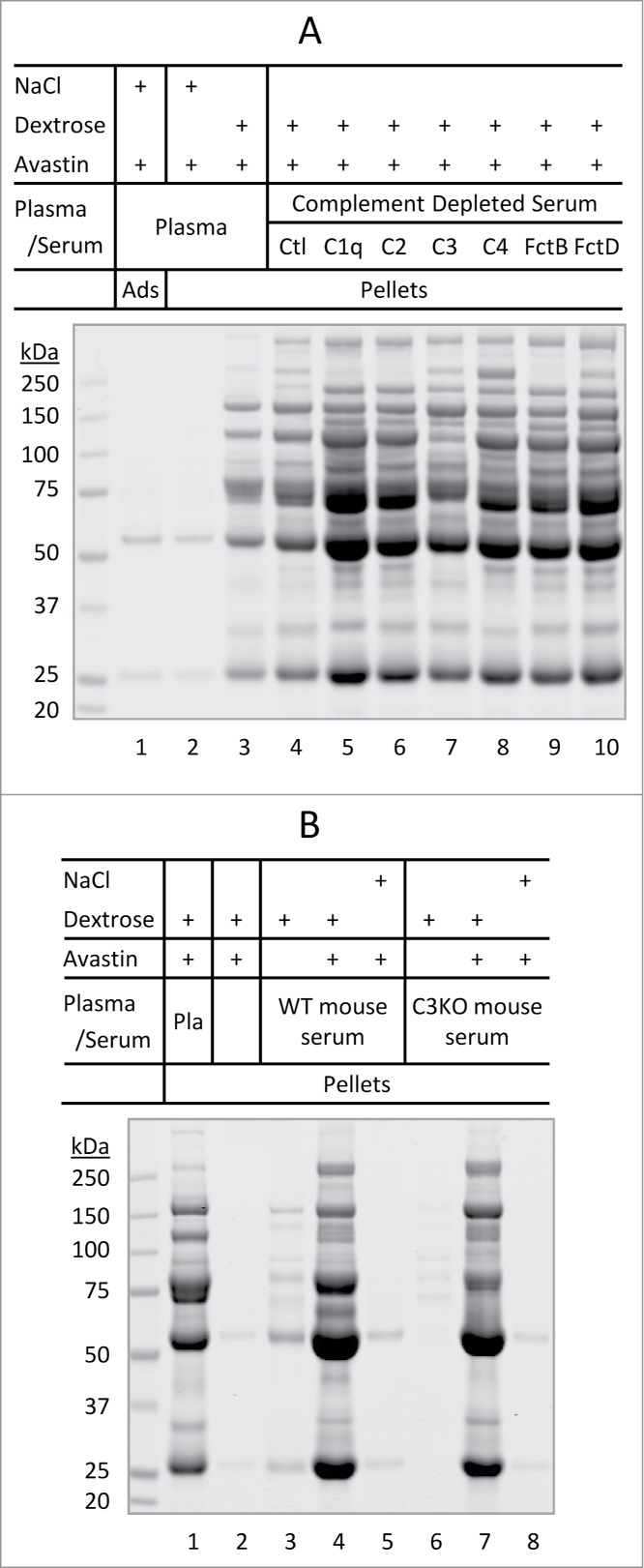
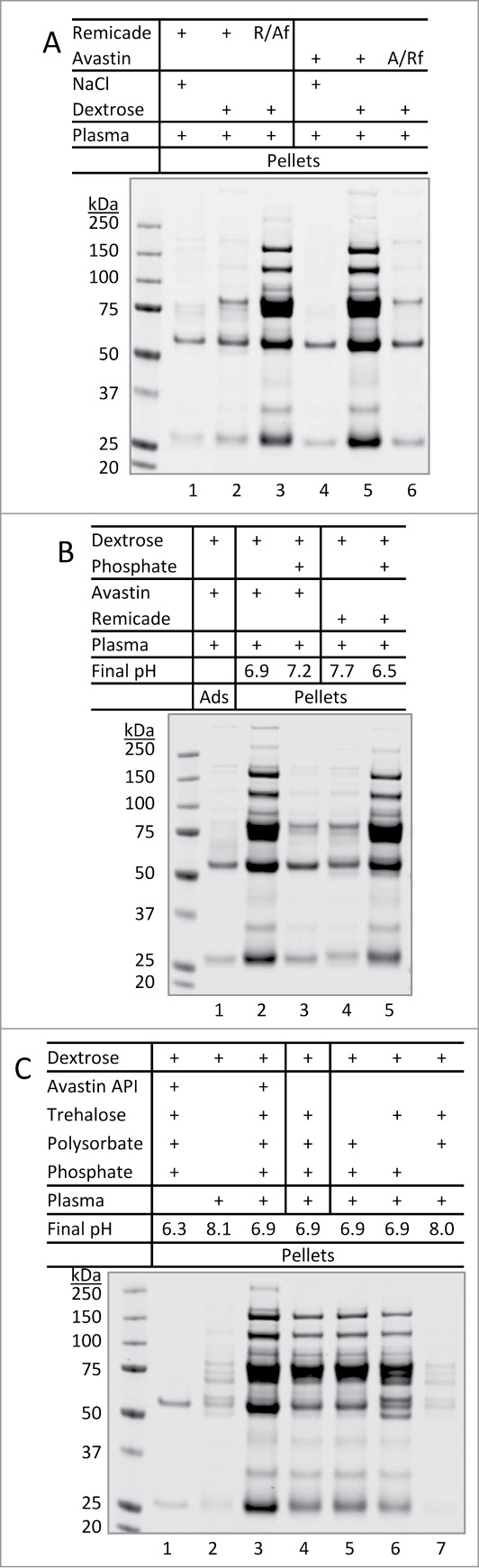
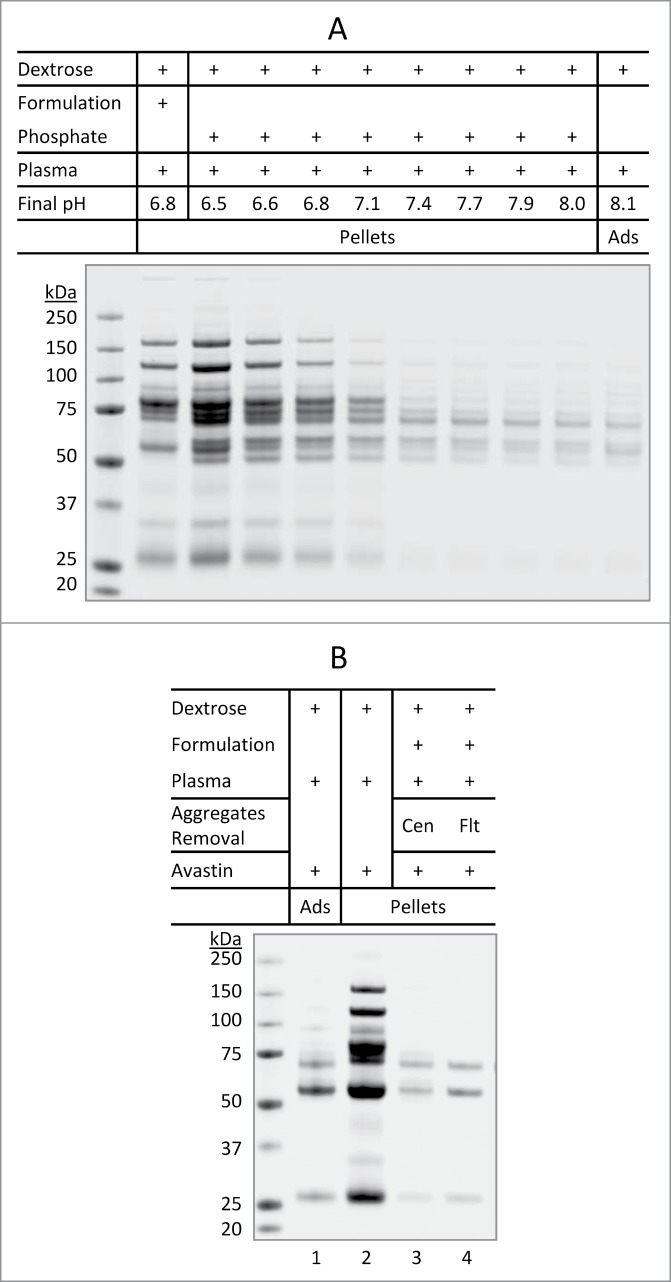
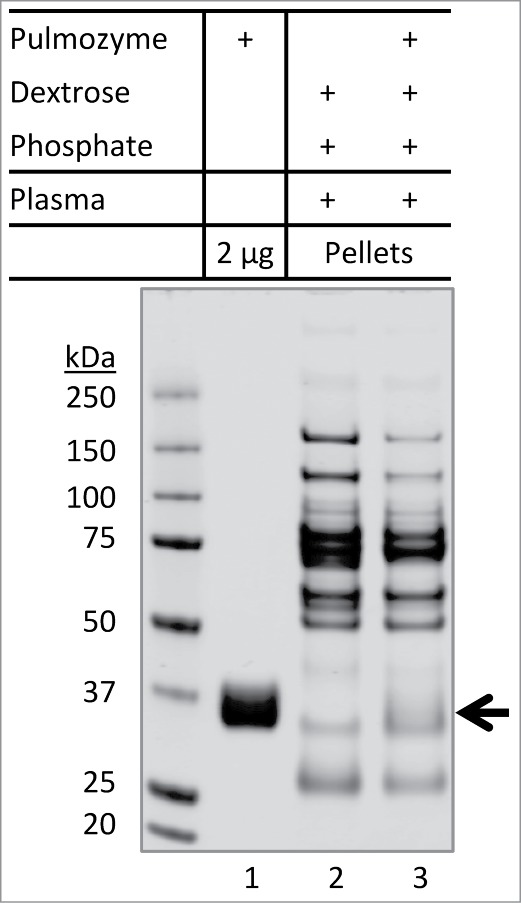
Many therapeutic monoclonal antibodies (mAbs) are clinically administered through intravenous infusion after mixing with a diluent, e.g., saline, 5% dextrose. Such a clinical setting increases the likelihood of interactions among mAb molecules, diluent, and plasma components, which may adversely affect product safety and efficacy. Avastin® (bevacizumab) and Herceptin® (trastuzumab), but not Remicade® (infliximab), were shown to undergo rapid aggregation upon dilution into 5% dextrose when mixed with human plasma in vitro; however, the biochemical pathways leading to the aggregation were not clearly defined. Here, we show that dextrose-mediated aggregation of Avastin or Herceptin in plasma involves isoelectric precipitation of complement proteins. Using mass spectrometry, we found that dextrose-induced insoluble aggregates were composed of mAb itself and multiple abundant plasma proteins, namely complement proteins C3, C4, factor H, fibronectin, and apolipoprotein. These plasma proteins, which are characterized by an isoelectronic point of 5.5-6.7, lost solubility at the resulting pH in the mixture with formulated Avastin (pH 6.2) and Herceptin (pH 6.0). Notably, switching formulation buffers for Avastin (pH 6.2) and Remicade (pH 7.2) reversed their aggregation profiles. Avastin formed little, if any, insoluble aggregates in dextrose-plasma upon raising the buffer pH to 7.2 or above. Furthermore, dextrose induced pH-dependent precipitation of plasma proteins, with massive insoluble aggregates being detected at pH 6.5-6.8. These data show that isoelectric precipitation of complement proteins is a prerequisite of dextrose-induced aggregation of mAb in human plasma. This finding highlights the importance of assessing the compatibility of a therapeutic mAb with diluent and human plasma during product development.
许多治疗性单克隆抗体(mAb)在与稀释剂(如生理盐水、5%葡萄糖)混合后通过静脉输注进行临床给药。这种临床环境增加了mAb分子、稀释剂和血浆成分之间相互作用的可能性,这可能会对产品的安全性和有效性产生不利影响。在体外将阿瓦斯汀(贝伐单抗)和赫赛汀(曲妥珠单抗)与人类血浆混合后稀释到5%葡萄糖中时,它们会迅速聚集,但类克(英夫利昔单抗)则不会;然而,导致聚集的生化途径尚未明确界定。在此,我们表明葡萄糖介导的阿瓦斯汀或赫赛汀在血浆中的聚集涉及补体蛋白的等电沉淀。通过质谱分析,我们发现葡萄糖诱导的不溶性聚集体由mAb本身和多种丰富的血浆蛋白组成,即补体蛋白C3、C4、H因子、纤连蛋白和载脂蛋白。这些血浆蛋白的等电点为5.5 - 6.7,在与配制好的阿瓦斯汀(pH 6.2)和赫赛汀(pH 6.0)混合后的混合液中,在所得pH值下失去溶解性。值得注意的是,更换阿瓦斯汀(pH 6.2)和类克(pH 7.2)的配方缓冲液会逆转它们的聚集情况。将阿瓦斯汀的缓冲液pH提高到7.2或更高时,其在葡萄糖 - 血浆中几乎不形成不溶性聚集体。此外,葡萄糖诱导血浆蛋白的pH依赖性沉淀,在pH 6.5 - 6.8时检测到大量不溶性聚集体。这些数据表明补体蛋白的等电沉淀是葡萄糖诱导的mAb在人血浆中聚集的先决条件。这一发现凸显了在产品开发过程中评估治疗性mAb与稀释剂和人血浆兼容性的重要性。