Borysova Lyudmyla, Burdyga Theodor
Department of Cellular and Molecular Physiology, Institute of Translational Medicine, University of Liverpool, Crown St, L8 7SS, UK.
Department of Cellular and Molecular Physiology, Institute of Translational Medicine, University of Liverpool, Crown St, L8 7SS, UK.
Cell Calcium. 2015 Dec;58(6):535-40. doi: 10.1016/j.ceca.2015.08.006. Epub 2015 Aug 29.
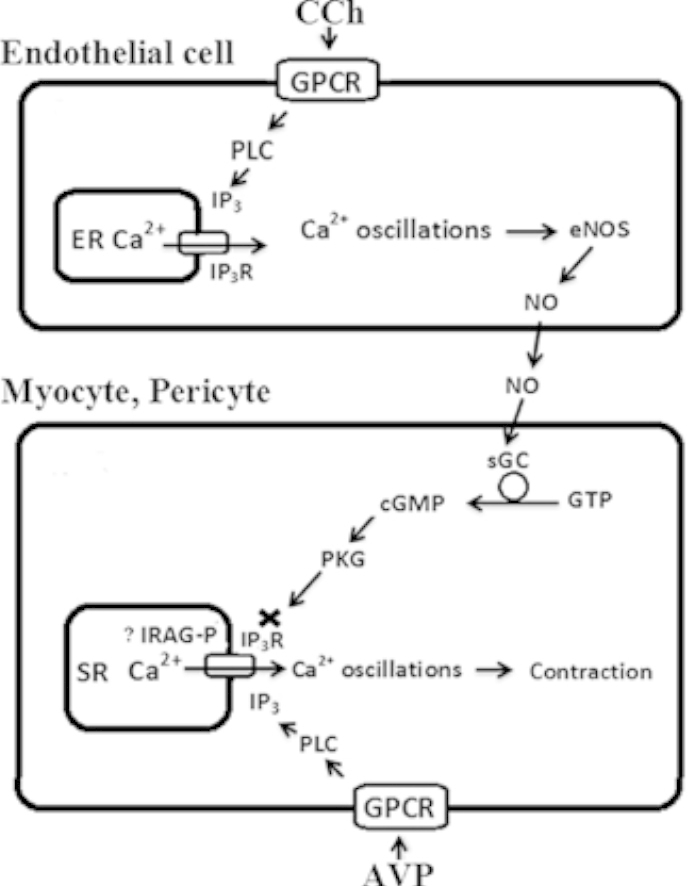
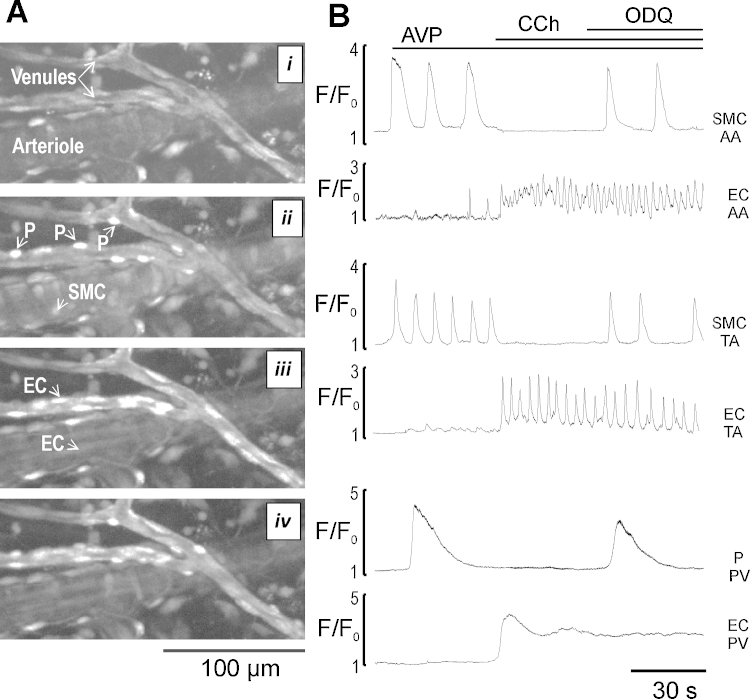
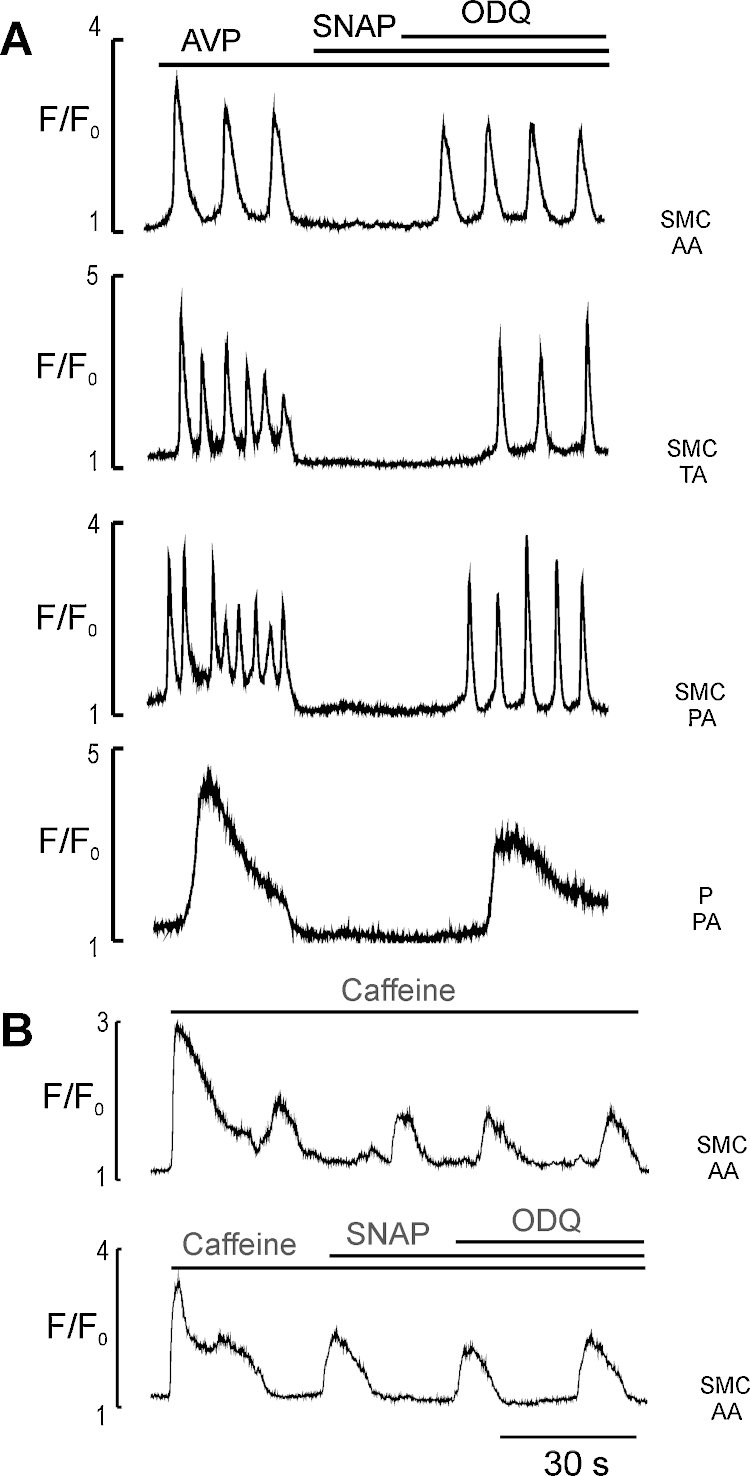
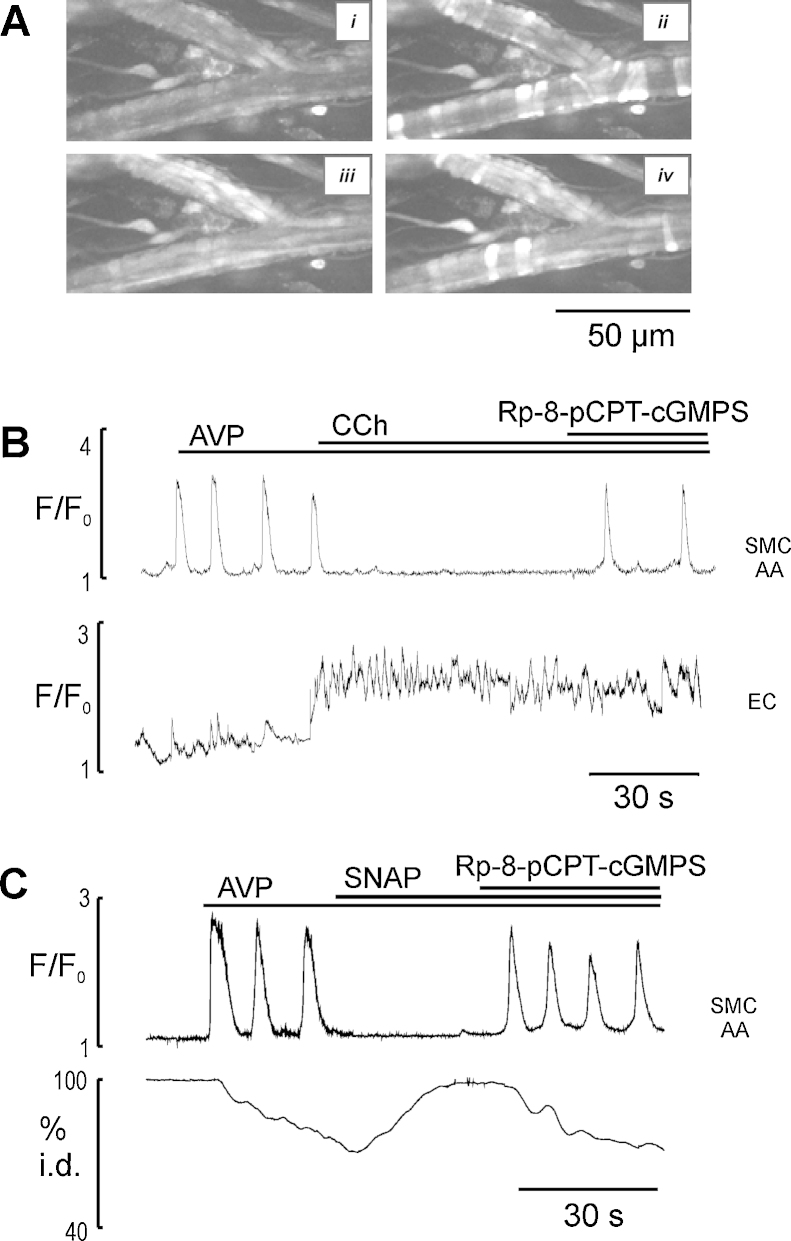
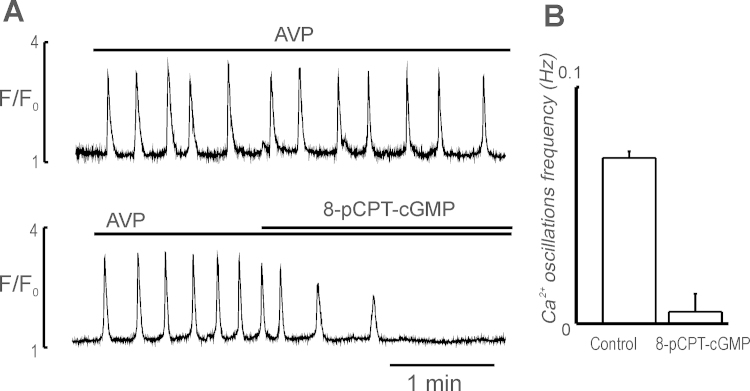
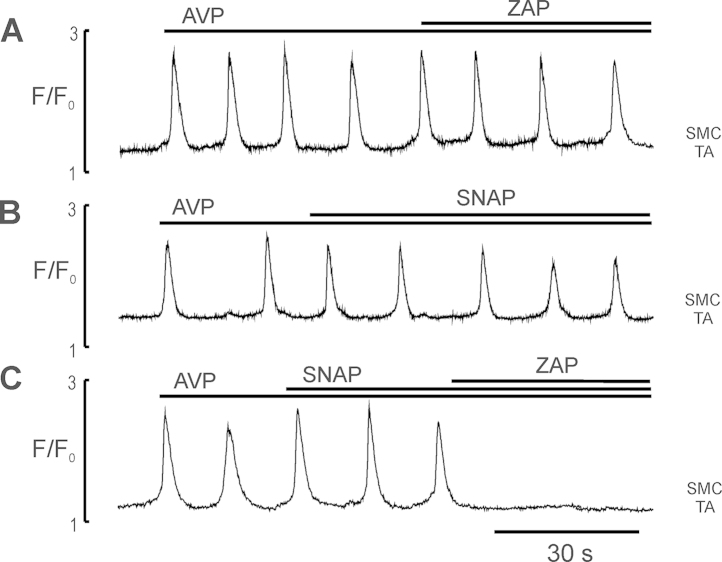
In ureteric microvessels the antagonistic relationship between Ca(2+) signalling in endothelium and Ca(2+) oscillations in myocytes and pericytes of arterioles and venules involves nitric oxide (NO), but the underlying mechanisms are not well understood. In the present study we investigated the effects of carbachol and NO donor SNAP on Ca(2+) signalling and vasomotor responses of arterioles and venules in intact urteric microvascular network in situ using confocal microscopy. Vasomotor responses of arterioles and venules induced by AVP correlated with the occurrence of Ca(2+) oscillations in the myocytes and pericytes and were not abolished by the removal of Ca(2+) from extracellular fluid. Carbachol-induced rise of intracellular Ca(2+) in endothelium was accompanied by the termination of the Ca(2+) oscillations in myocytes and pericytes. This carbachol-induced inhibitory effect on Ca(2+) oscillations in myocytes and pericytes was reversed by ODQ, an inhibitor of soluble guanylyl cyclase (sGC) and by Rp-8-pCPT-cGMPS, an inhibitor of protein kinase G (PKG). Ca(2+) oscillations in myocytes and pericytes were also effectively blocked by NO donor SNAP. An Inhibitory effect of SNAP was markedly enhanced by zaprinast, a selective inhibitor of cGMP-specific phosphodiesterase-5, and reversed by sGC inhibitor, ODQ and PKG inhibitor, Rp-8-pCPT-cGMPS. The cGMP analogue and selective PKG activator 8pCPT-cGMP also induced inhibition of the AVP-induced Ca(2+) oscillations in myocytes and pericytes. SNAP had no effects on Ca(2+) oscillations induced by caffeine in distributing arcade arterioles. Consequently, we conclude that NO- mediated inhibition of Ca(2+) oscillations in myocytes and pericytes predominantly recruits the cGMP/PKG dependent pathway. The inhibitory effect of NO/cGMP/PKG cascade is associated with suppressed Ca(2+) release from the SR of myocytes and pericytes selectively via the inositol triphosphate receptor (IP3R) channels.
在输尿管微血管中,内皮细胞中的Ca(2+)信号与小动脉和小静脉的心肌细胞和周细胞中的Ca(2+)振荡之间的拮抗关系涉及一氧化氮(NO),但其潜在机制尚不清楚。在本研究中,我们使用共聚焦显微镜研究了卡巴胆碱和NO供体SNAP对完整输尿管微血管网络中动脉和静脉的Ca(2+)信号和血管舒缩反应的影响。血管加压素诱导的小动脉和小静脉的血管舒缩反应与心肌细胞和周细胞中Ca(2+)振荡的发生相关,并且不会因从细胞外液中去除Ca(2+)而消除。卡巴胆碱诱导的内皮细胞内Ca(2+)升高伴随着心肌细胞和周细胞中Ca(2+)振荡的终止。这种卡巴胆碱诱导的对心肌细胞和周细胞中Ca(2+)振荡的抑制作用被可溶性鸟苷酸环化酶(sGC)抑制剂ODQ和蛋白激酶G(PKG)抑制剂Rp-8-pCPT-cGMPS逆转。NO供体SNAP也有效地阻断了心肌细胞和周细胞中的Ca(2+)振荡。cGMP特异性磷酸二酯酶-5的选择性抑制剂扎普司特显著增强了SNAP的抑制作用,并被sGC抑制剂ODQ和PKG抑制剂Rp-8-pCPT-cGMPS逆转。cGMP类似物和选择性PKG激活剂8pCPT-cGMP也诱导抑制血管加压素诱导的心肌细胞和周细胞中的Ca(2+)振荡。SNAP对咖啡因诱导的分布拱廊小动脉中的Ca(2+)振荡没有影响。因此,我们得出结论,NO介导的对心肌细胞和周细胞中Ca(2+)振荡的抑制主要通过cGMP/PKG依赖性途径。NO/cGMP/PKG级联的抑制作用与通过肌醇三磷酸受体(IP3R)通道选择性抑制心肌细胞和周细胞的肌浆网中Ca(2+)释放有关。