Iyer Smita S, Amara Rama R
Emory Vaccine Center, Division of Microbiology and Immunology, Yerkes National Primate Research Center, Emory University, Atlanta, GA 30329, USA.
Vaccines (Basel). 2014 Feb 28;2(1):160-78. doi: 10.3390/vaccines2010160.
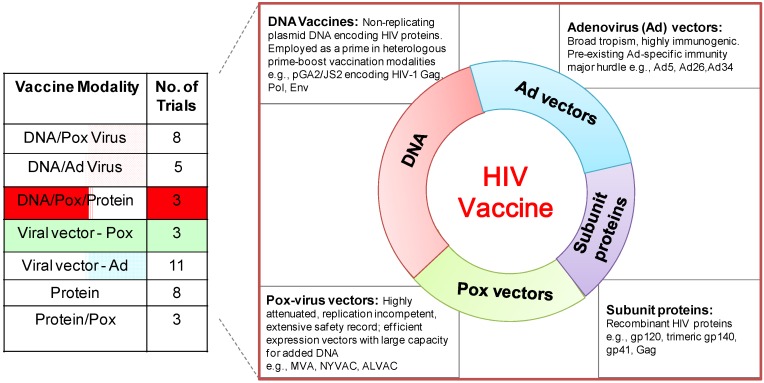
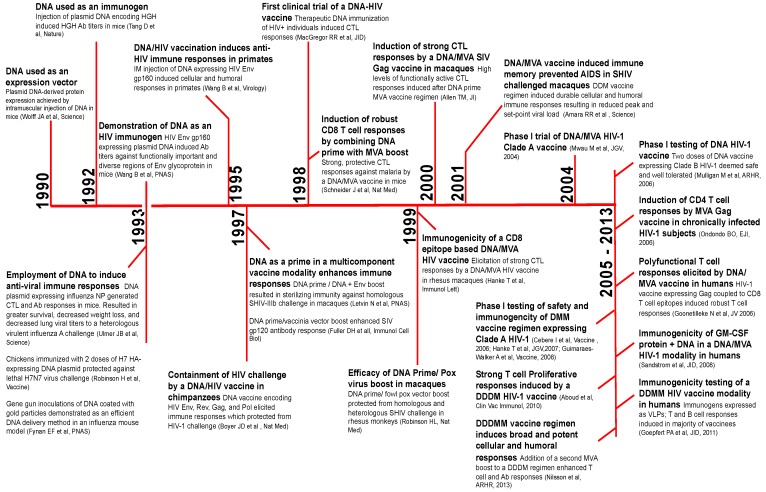
Since the initial proof-of-concept studies examining the ability of antigen-encoded plasmid DNA to serve as an immunogen, DNA vaccines have evolved as a clinically safe and effective platform for priming HIV-specific cellular and humoral responses in heterologous "prime-boost" vaccination regimens. Direct injection of plasmid DNA into the muscle induces T- and B-cell responses against foreign antigens. However, the insufficient magnitude of this response has led to the development of approaches for enhancing the immunogenicity of DNA vaccines. The last two decades have seen significant progress in the DNA-based vaccine platform with optimized plasmid constructs, improved delivery methods, such as electroporation, the use of molecular adjuvants and novel strategies combining DNA with viral vectors and subunit proteins. These innovations are paving the way for the clinical application of DNA-based HIV vaccines. Here, we review preclinical studies on the DNA-prime/modified vaccinia Ankara (MVA)-boost vaccine modality for HIV. There is a great deal of interest in enhancing the immunogenicity of DNA by engineering DNA vaccines to co-express immune modulatory adjuvants. Some of these adjuvants have demonstrated encouraging results in preclinical and clinical studies, and these data will be examined, as well.
自从最初的概念验证研究检验了抗原编码质粒DNA作为免疫原的能力以来,DNA疫苗已发展成为一种临床安全有效的平台,可在异源“初免-加强”疫苗接种方案中引发HIV特异性细胞和体液免疫反应。将质粒DNA直接注射到肌肉中可诱导针对外来抗原的T细胞和B细胞反应。然而,这种反应的强度不足促使人们开发增强DNA疫苗免疫原性的方法。在过去二十年中,基于DNA的疫苗平台取得了重大进展,包括优化质粒构建体、改进递送方法(如电穿孔)、使用分子佐剂以及将DNA与病毒载体和亚单位蛋白相结合的新策略。这些创新为基于DNA的HIV疫苗的临床应用铺平了道路。在此,我们综述了关于HIV的DNA初免/改良痘苗病毒安卡拉(MVA)加强疫苗模式的临床前研究。通过设计DNA疫苗共表达免疫调节佐剂来增强DNA免疫原性引起了广泛关注。其中一些佐剂在临床前和临床研究中已显示出令人鼓舞的结果,这些数据也将进行研究。