Hammer Leslie B, Johnson Ryan C, Crain Tori L, Bodner Todd, Kossek Ellen Ernst, Davis Kelly D, Kelly Erin L, Buxton Orfeu M, Karuntzos Georgia, Chosewood L Casey, Berkman Lisa
Department of Psychology, Portland State University.
Department of Psychology, Ohio University.
J Appl Psychol. 2016 Feb;101(2):190-208. doi: 10.1037/apl0000047. Epub 2015 Sep 7.
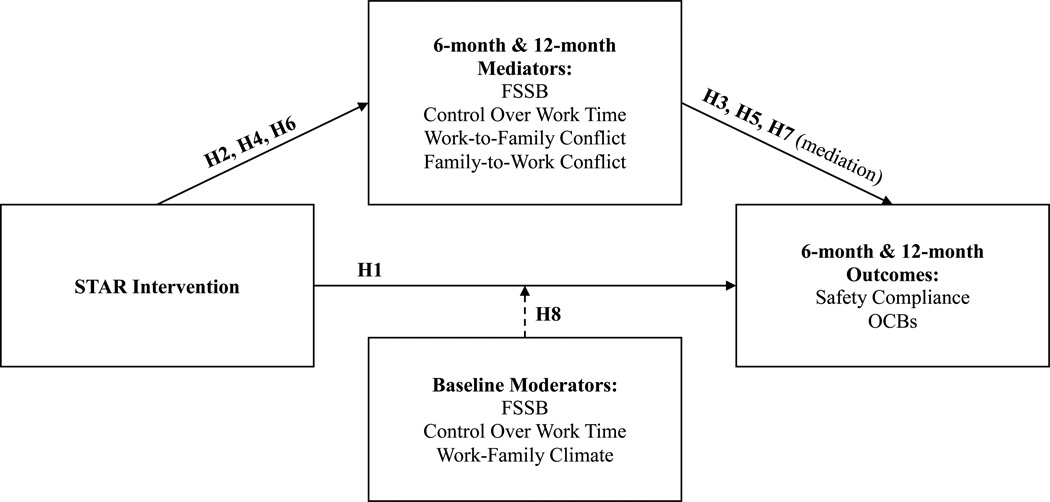
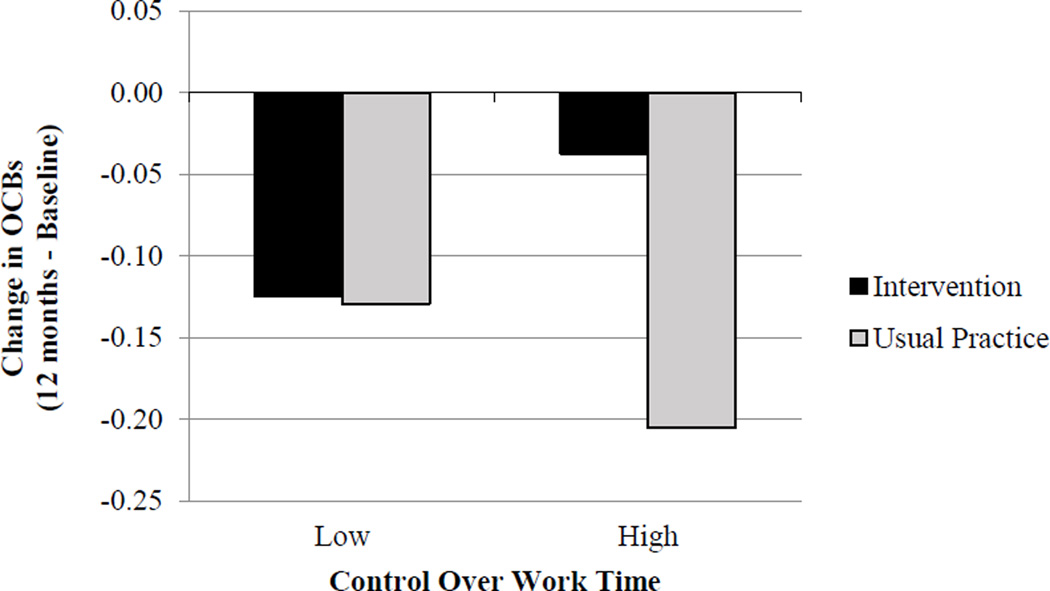
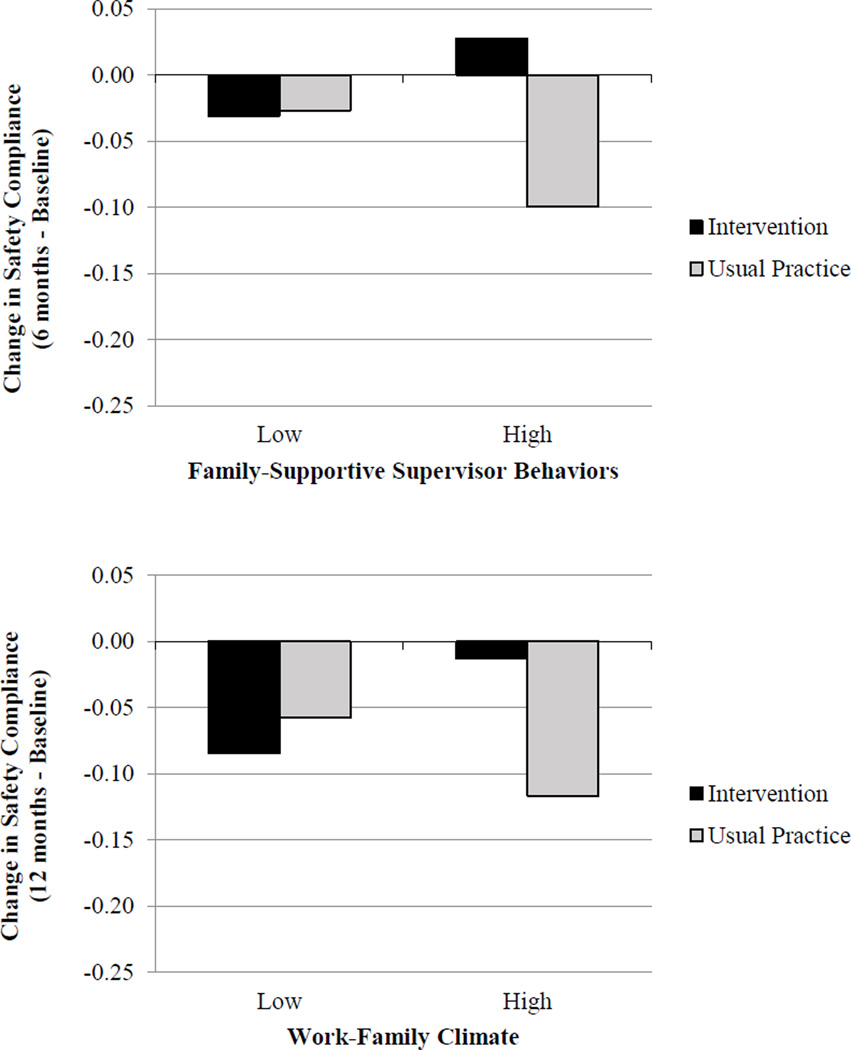
We tested the effects of a work-family intervention on employee reports of safety compliance and organizational citizenship behaviors in 30 health care facilities using a group-randomized trial. Based on conservation of resources theory and the work-home resources model, we hypothesized that implementing a work-family intervention aimed at increasing contextual resources via supervisor support for work and family, and employee control over work time, would lead to improved personal resources and increased employee performance on the job in the form of self-reported safety compliance and organizational citizenship behaviors. Multilevel analyses used survey data from 1,524 employees at baseline and at 6-month and 12-month postintervention follow-ups. Significant intervention effects were observed for safety compliance at the 6-month, and organizational citizenship behaviors at the 12-month, follow-ups. More specifically, results demonstrate that the intervention protected against declines in employee self-reported safety compliance and organizational citizenship behaviors compared with employees in the control facilities. The hypothesized mediators of perceptions of family-supportive supervisor behaviors, control over work time, and work-family conflict (work-to-family conflict, family-to-work conflict) were not significantly improved by the intervention. However, baseline perceptions of family-supportive supervisor behaviors, control over work time, and work-family climate were significant moderators of the intervention effect on the self-reported safety compliance and organizational citizenship behavior outcomes.
我们采用群组随机试验,在30家医疗机构中测试了一项工作-家庭干预措施对员工安全合规报告及组织公民行为的影响。基于资源保存理论和工作-家庭资源模型,我们假设实施一项旨在通过主管对工作和家庭的支持以及员工对工作时间的掌控来增加情境资源的工作-家庭干预措施,将带来个人资源的改善,并以自我报告的安全合规和组织公民行为的形式提高员工的工作绩效。多层次分析使用了1524名员工在基线、干预后6个月和12个月随访时的调查数据。在6个月随访时观察到干预对安全合规有显著影响,在12个月随访时观察到对组织公民行为有显著影响。更具体地说,结果表明,与对照机构的员工相比,该干预措施防止了员工自我报告的安全合规和组织公民行为的下降。干预措施并未显著改善家庭支持型主管行为认知、工作时间掌控以及工作-家庭冲突(工作对家庭的冲突、家庭对工作的冲突)这些假设的中介变量。然而,家庭支持型主管行为的基线认知、工作时间掌控以及工作-家庭氛围是干预对自我报告的安全合规和组织公民行为结果影响的显著调节变量。