D'Abramo Flavio, Schildmann Jan, Vollmann Jochen
Institute for Medical Ethics and History of Medicine, Ruhr-Universität Bochum, Markstraße 258a, D-44799, Bochum, Germany.
Charité Comprehensive Cancer Center, Charité - Universitätsmedizin, Charitéplatz 1, Berlin, D-10117, Germany.
BMC Med Ethics. 2015 Sep 9;16:60. doi: 10.1186/s12910-015-0053-5.
Appropriate information and consent has been one of the most intensely discussed topics within the context of biobank research. In parallel to the normative debate, many socio-empirical studies have been conducted to gather experiences, preferences and views of patients, healthy research participants and further stakeholders. However, there is scarcity of literature which connects the normative debate about justifications for different consent models with findings gained in empirical research. In this paper we discuss findings of a limited review of socio-empirical research on patients' and healthy research participants' experiences and views regarding consent to biobank research in light of ethical principles for appropriate information and consent.
Review question: Which empirical data are available on research participants' perceptions and views regarding information and elicitation of consent for biobank research? Search of articles published till March 1st 2014 in Pubmed. Review of abstracts and potentially relevant full text articles by two authors independently. As categories for content analysis we defined (i) understanding or recall of information, (ii) preferences regarding information or consent, and (iii) research participants' concerns.
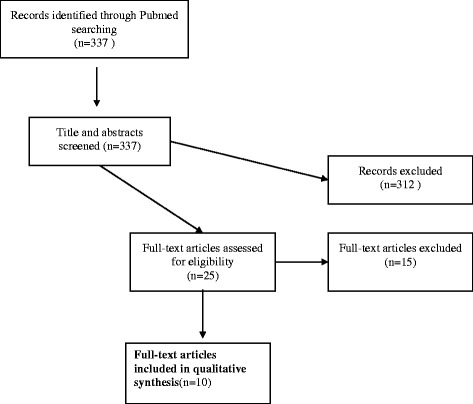
The search in Pubmed yielded 337 abstracts of which 10 articles were included in this study. Approaches to information and consent varied considerably across the selected studies. The majority of research participants opted for some version of limited consent when being informed about such possibility. Among the factors influencing the type of preferred consent were information about sponsoring of biobank research by pharmaceutical industry and participants' trade-off between privacy and perceived utility. Studies investigating research participants' understanding and recall regarding the consent procedure indicated considerable lack of both aspects. Research participants' perceptions of benefits and harms differ across those studies.
The knowledge, perceptions and views of research participants who have undergone a consent procedure within the context of biobank research raise several questions on the issue of how to inform and elicit consent in an ethically acceptable way. In our empirical-ethical analysis we develop suggestions on how the practice of eliciting consent in the biobank context should be improved.
在生物样本库研究背景下,恰当的信息告知与同意一直是讨论最为热烈的话题之一。在规范辩论的同时,开展了许多社会实证研究,以收集患者、健康研究参与者及其他利益相关者的经验、偏好和观点。然而,将关于不同同意模式正当性的规范辩论与实证研究结果联系起来的文献却很匮乏。在本文中,我们根据恰当信息告知与同意的伦理原则,讨论了一项关于患者和健康研究参与者对生物样本库研究同意的社会实证研究的有限综述结果。
综述问题:关于研究参与者对生物样本库研究信息告知及同意征求的认知和观点,有哪些实证数据?检索截至2014年3月1日在PubMed上发表的文章。两位作者独立审查摘要及可能相关的全文文章。作为内容分析的类别,我们定义了:(i)对信息的理解或回忆;(ii)对信息或同意的偏好;(iii)研究参与者的担忧。
在PubMed上的检索得到337篇摘要,其中10篇文章纳入本研究。在所选研究中,信息告知与同意的方式差异很大。大多数研究参与者在得知有限同意的可能性时,选择了某种形式的有限同意。影响首选同意类型的因素包括制药行业对生物样本库研究的资助信息以及参与者在隐私和感知效用之间的权衡。调查研究参与者对同意程序理解和回忆的研究表明,这两个方面都存在严重不足。在这些研究中,研究参与者对益处和危害的认知各不相同。
在生物样本库研究背景下经历过同意程序的研究参与者的知识、认知和观点,就如何以符合伦理的可接受方式进行信息告知和征求同意的问题提出了若干疑问。在我们的实证伦理分析中,我们就如何改进生物样本库背景下征求同意的实践提出了建议。