Mentch Samantha J, Mehrmohamadi Mahya, Huang Lei, Liu Xiaojing, Gupta Diwakar, Mattocks Dwight, Gómez Padilla Paola, Ables Gene, Bamman Marcas M, Thalacker-Mercer Anna E, Nichenametla Sailendra N, Locasale Jason W
Department of Molecular Biology and Genetics, Field of Biochemistry, Molecular, and Cell Biology, Cornell University, Ithaca, NY 14853, USA; Duke Cancer Institute, Duke University School of Medicine, Durham, NC 27710, USA; Duke Molecular Physiology Institute, Duke University School of Medicine, Durham, NC 27710, USA; Department of Pharmacology and Cancer Biology, Duke University School of Medicine, Durham, NC 27710, USA.
Department of Molecular Biology and Genetics, Field of Genomics, Genetics and Development, Cornell University, Ithaca, NY 14853, USA; Duke Cancer Institute, Duke University School of Medicine, Durham, NC 27710, USA; Duke Molecular Physiology Institute, Duke University School of Medicine, Durham, NC 27710, USA; Department of Pharmacology and Cancer Biology, Duke University School of Medicine, Durham, NC 27710, USA.
Cell Metab. 2015 Nov 3;22(5):861-73. doi: 10.1016/j.cmet.2015.08.024. Epub 2015 Sep 24.
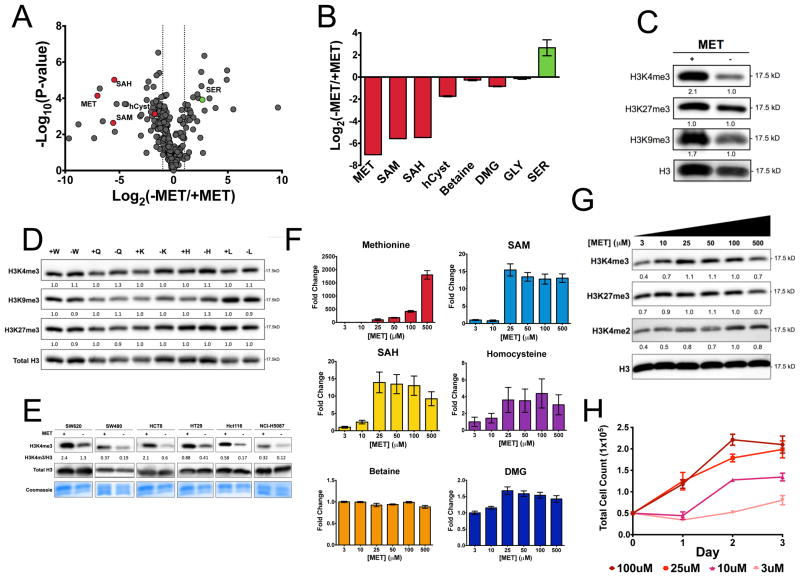
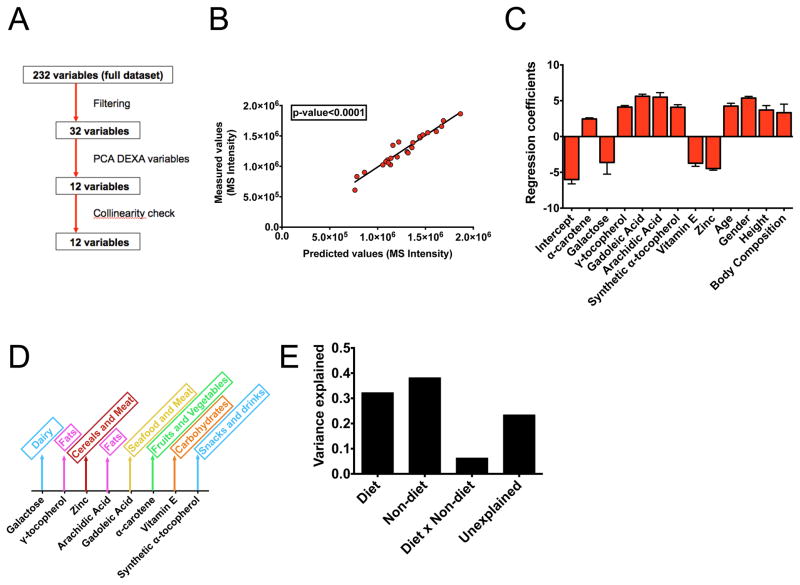
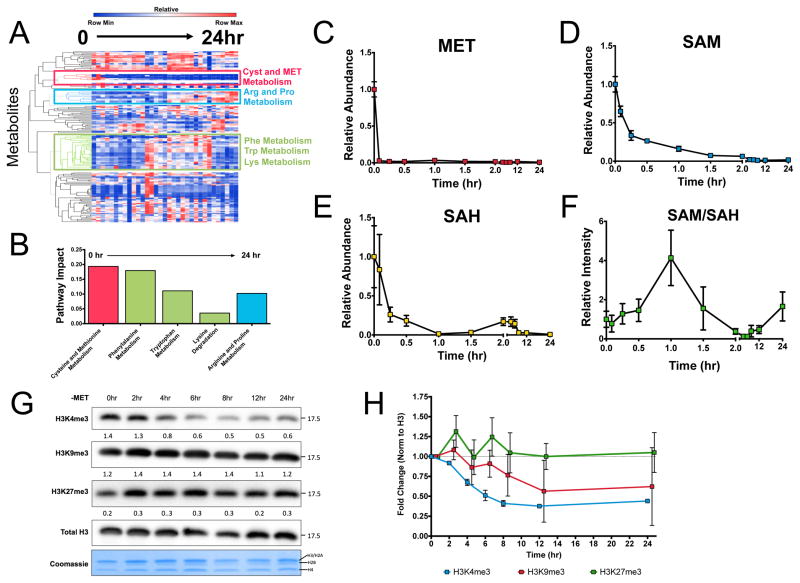
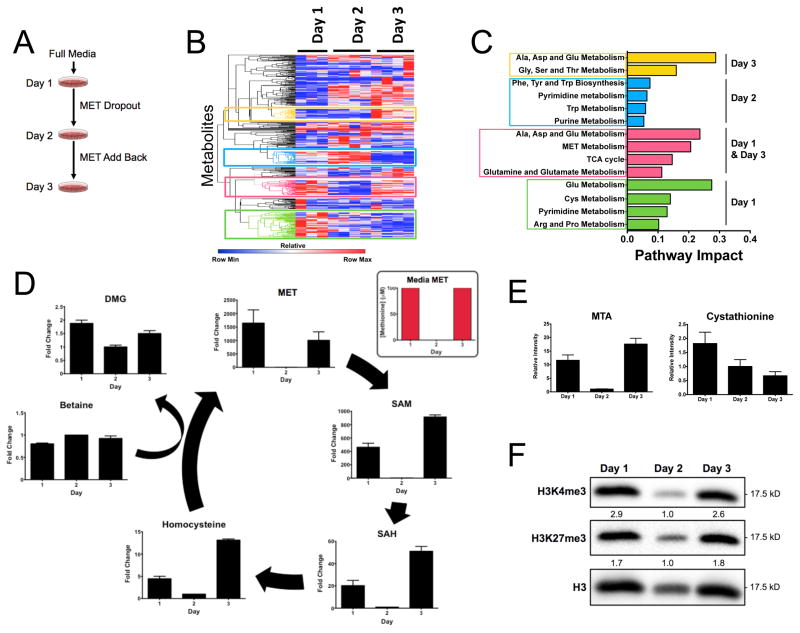
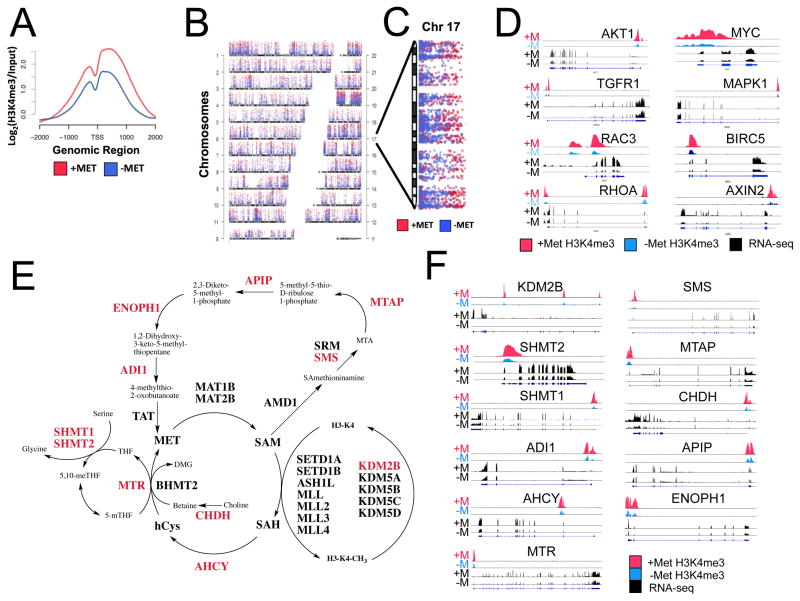
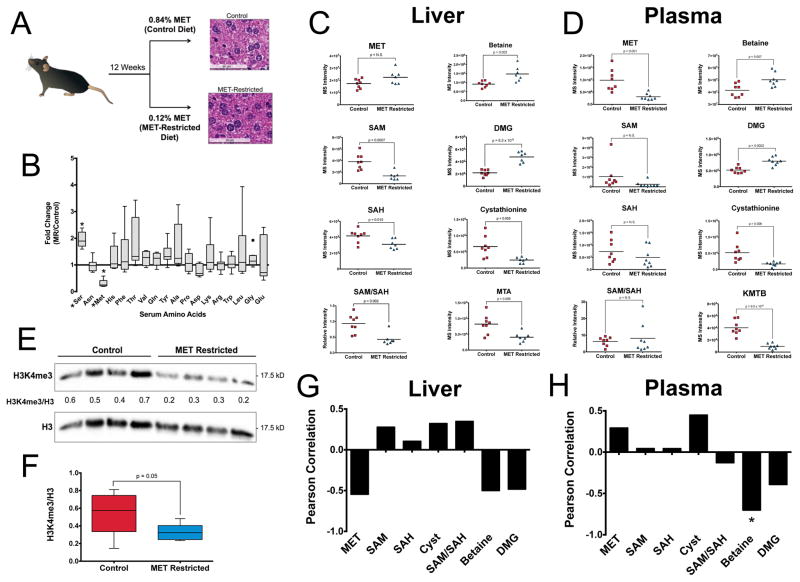
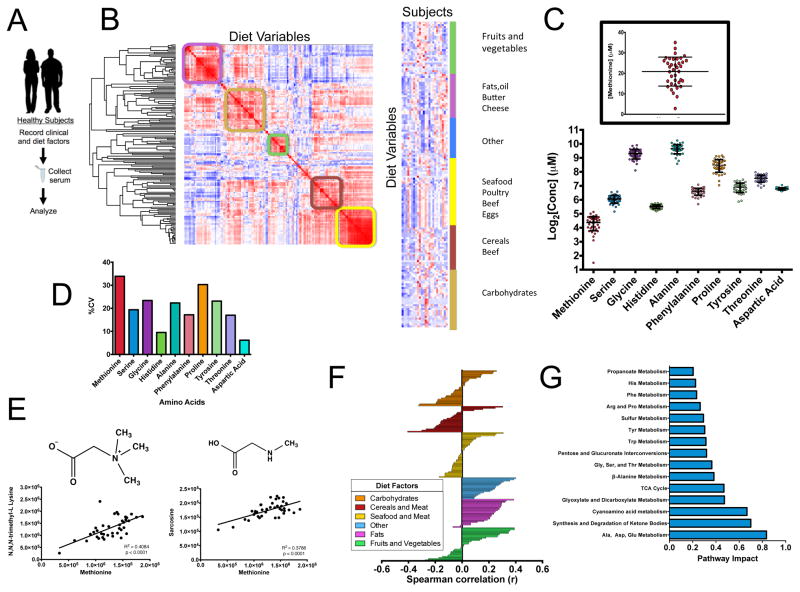
S-adenosylmethionine (SAM) and S-adenosylhomocysteine (SAH) link one-carbon metabolism to methylation status. However, it is unknown whether regulation of SAM and SAH by nutrient availability can be directly sensed to alter the kinetics of key histone methylation marks. We provide evidence that the status of methionine metabolism is sufficient to determine levels of histone methylation by modulating SAM and SAH. This dynamic interaction led to rapid changes in H3K4me3, altered gene transcription, provided feedback regulation to one-carbon metabolism, and could be fully recovered upon restoration of methionine. Modulation of methionine in diet led to changes in metabolism and histone methylation in the liver. In humans, methionine variability in fasting serum was commensurate with concentrations needed for these dynamics and could be partly explained by diet. Together these findings demonstrate that flux through methionine metabolism and the sensing of methionine availability may allow direct communication to the chromatin state in cells.
S-腺苷甲硫氨酸(SAM)和S-腺苷高半胱氨酸(SAH)将一碳代谢与甲基化状态联系起来。然而,尚不清楚营养物质可用性对SAM和SAH的调节是否能被直接感知,从而改变关键组蛋白甲基化标记的动力学。我们提供的证据表明,甲硫氨酸代谢状态足以通过调节SAM和SAH来决定组蛋白甲基化水平。这种动态相互作用导致H3K4me3快速变化,改变基因转录,为一碳代谢提供反馈调节,并且在甲硫氨酸恢复后可完全恢复。饮食中甲硫氨酸的调节导致肝脏代谢和组蛋白甲基化的变化。在人类中,空腹血清中甲硫氨酸的变异性与这些动态变化所需的浓度相当,并且部分可以由饮食来解释。这些发现共同表明,甲硫氨酸代谢通量和甲硫氨酸可用性的感知可能允许与细胞中的染色质状态进行直接通信。