Tauchi Ryoji, Imagama Shiro, Muramoto Akio, Tsuboi Masaki, Ishiguro Naoki, Hasegawa Yukiharu
Department of Orthopaedic Surgery, Nagoya University Graduate School of Medicine, Nagoya, Japan.
Department of Orthopaedic Surgery, Yoshida Orthopaedic Hospital, Toyota, Japan.
Nagoya J Med Sci. 2015 Aug;77(3):329-37.
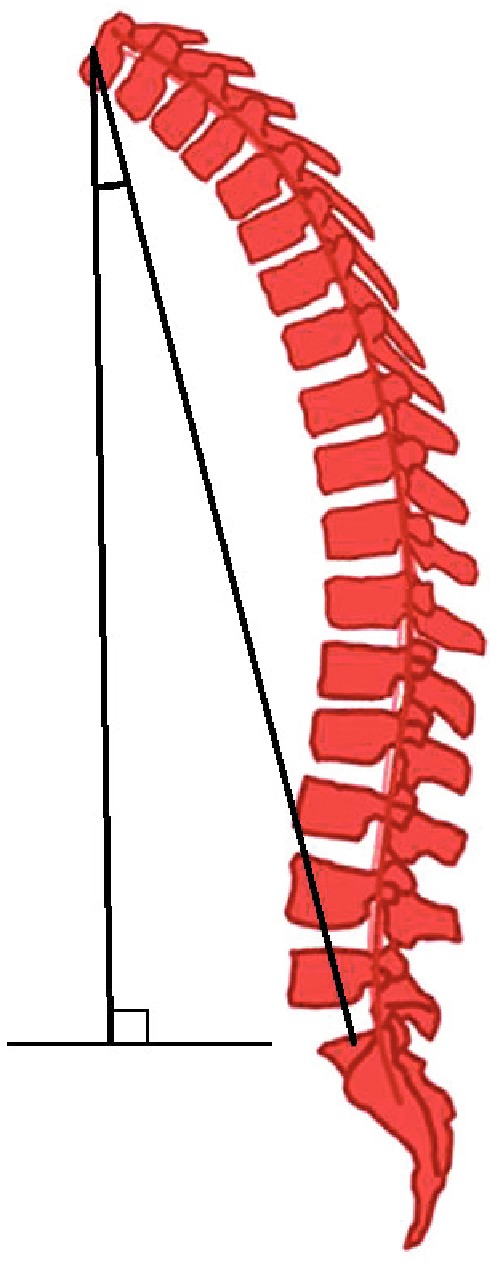
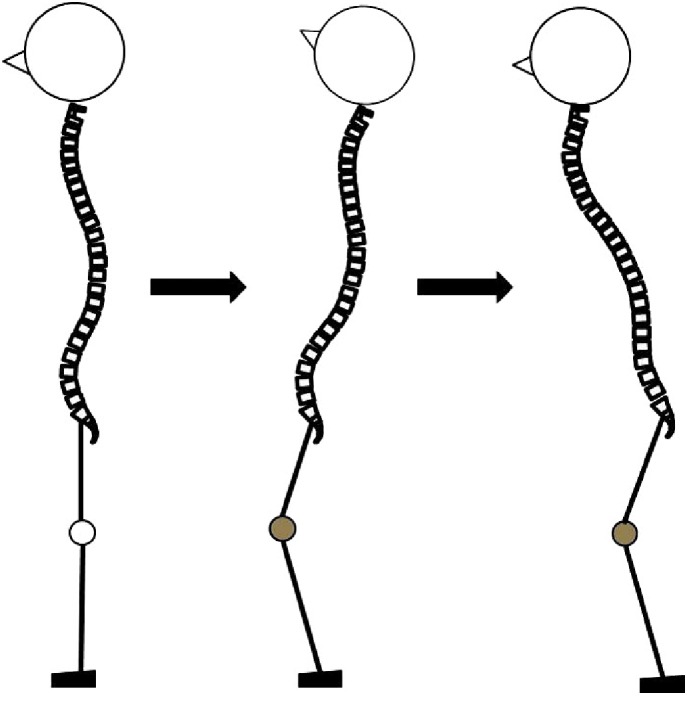
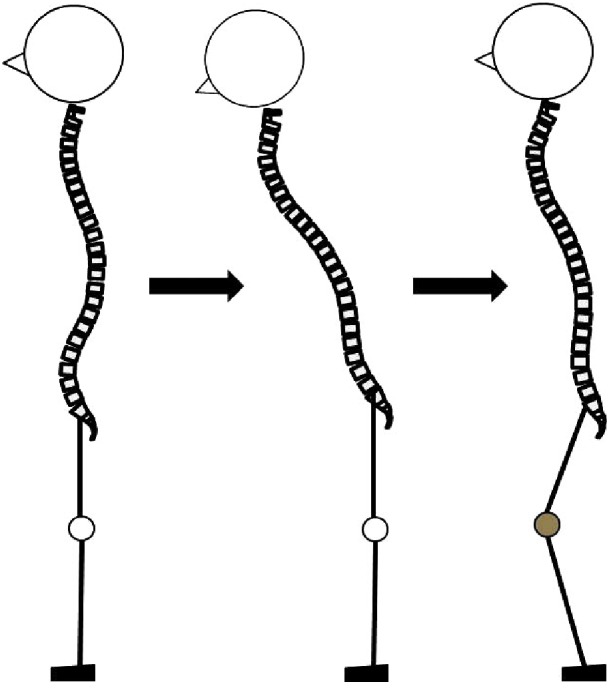
Previous studies evaluated various risk factors for knee OA; however, no study has examined the association between spinal factors, such as total spinal alignment and spinal range of motion (ROM), with knee OA. The purpose of this study was to examine the influence of spinal factors including total spinal alignment and spinal ROM on knee OA in community-living elderly subjects. A total of 170 subjects ≥60 years old (mean age 69.4 years, 70 males and 100 females) enrolled in the study (Yakumo study) and underwent a basic health checkup. We evaluated A-P knee radiographs, sagittal parameters (thoracic kyphosis angle, lumbar lordosis angle, and spinal inclination angle) and spinal mobility (thoracic spinal ROM, lumbar spinal ROM and total spinal ROM) as determined with SpinalMouse(®). The radiological assessment of knee OA was based on the Kellgren and Lawrence classification, and the knee flexion angle was measured while the subject was standing. Spinal inclination angle and thoracic spinal ROM correlated significantly with knee OA on univariate analyses. Multivariate logistic regression analysis indicated that an increase in spinal inclination angle (OR 1.073, p<0.05) was significantly associated with knee OA. Spinal inclination angle had significant positive correlation with knee flexion angle (r=0.286, p<0.001). The spinal inclination angle is the most important factor associated with knee OA.
以往的研究评估了膝关节骨关节炎的各种风险因素;然而,尚无研究探讨脊柱因素,如脊柱整体排列和脊柱活动度(ROM)与膝关节骨关节炎之间的关联。本研究的目的是探讨包括脊柱整体排列和脊柱ROM在内的脊柱因素对社区居住老年受试者膝关节骨关节炎的影响。共有170名年龄≥60岁(平均年龄69.4岁,男性70名,女性100名)的受试者纳入本研究(八云研究)并接受了基本健康检查。我们评估了膝关节前后位X线片、矢状面参数(胸椎后凸角、腰椎前凸角和脊柱倾斜角)以及使用SpinalMouse(®)测定的脊柱活动度(胸椎ROM、腰椎ROM和脊柱整体ROM)。膝关节骨关节炎的影像学评估基于Kellgren和Lawrence分类,且在受试者站立时测量膝关节屈曲角度。单因素分析显示脊柱倾斜角和胸椎ROM与膝关节骨关节炎显著相关。多因素logistic回归分析表明,脊柱倾斜角增加(OR 1.073,p<0.05)与膝关节骨关节炎显著相关。脊柱倾斜角与膝关节屈曲角度呈显著正相关(r=0.286,p<0.001)。脊柱倾斜角是与膝关节骨关节炎相关的最重要因素。