Department of Nursing, Chang Gung University of Science and Technology, 261 Wen-Hwa 1st Road, Kwei-Shan, Taoyuan, Taiwan.
Department of Nutrition and Health Sciences, Chang Gung University of Science and Technology, 261 Wen-Hwa 1st Road, Kwei-Shan, Taoyuan, Taiwan ; Graduate Institute of Health Industry Technology, Chang Gung University of Science and Technology, Kwei-Shan, Taoyuan, Taiwan.
Evid Based Complement Alternat Med. 2015;2015:298635. doi: 10.1155/2015/298635. Epub 2015 Aug 30.
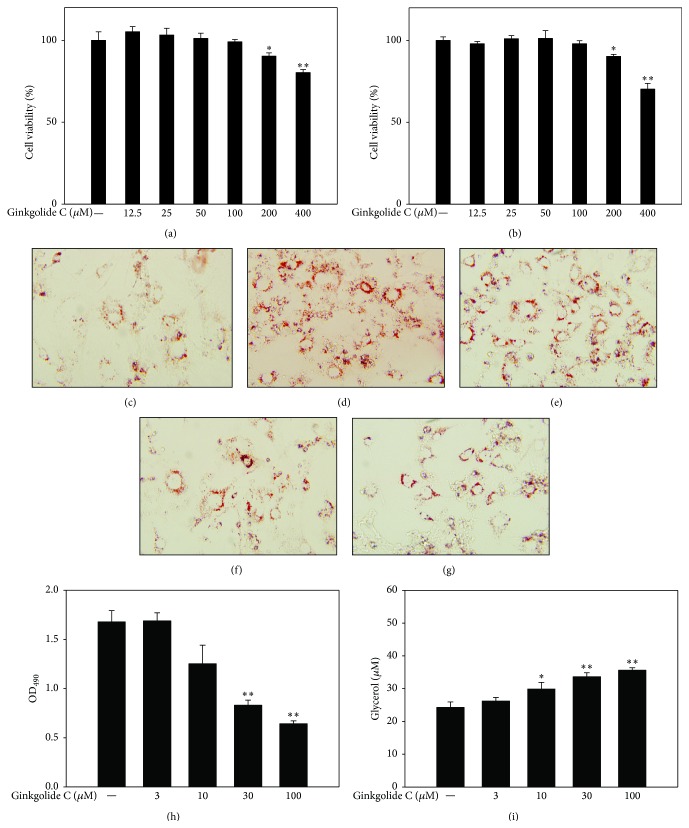
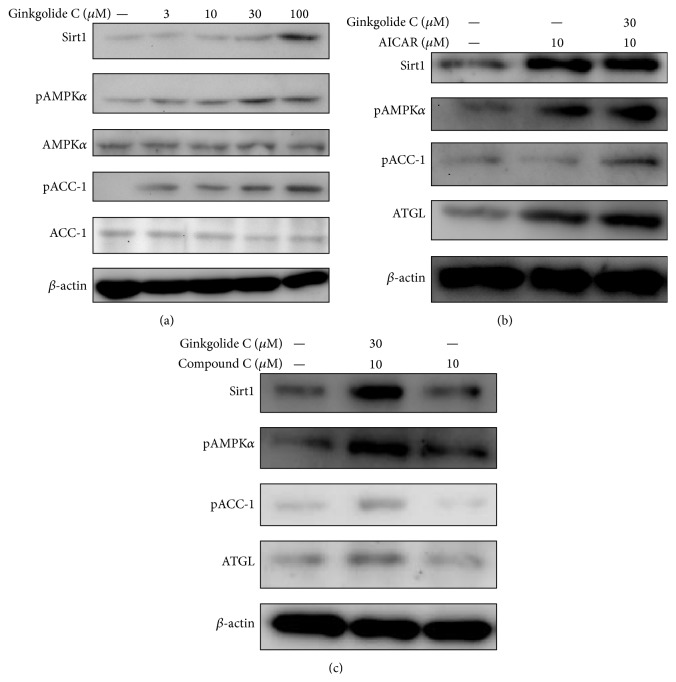
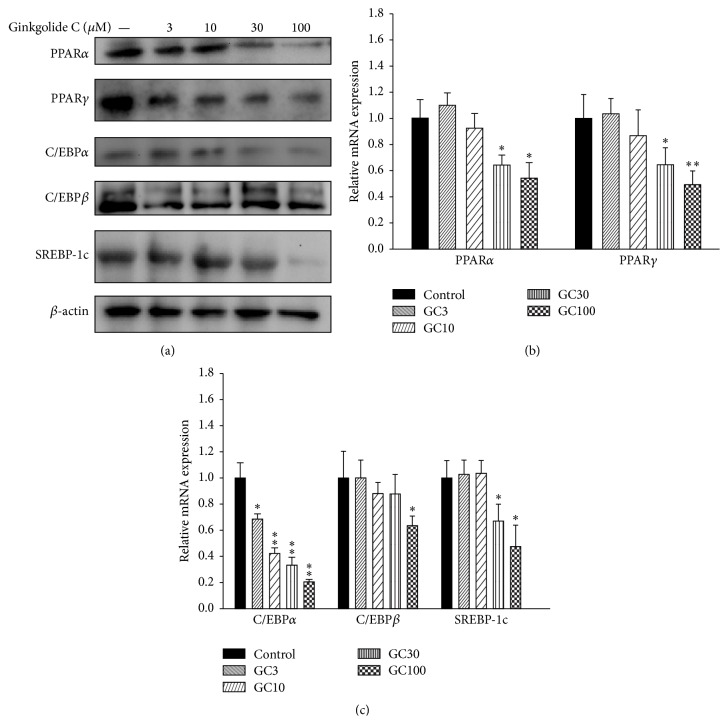
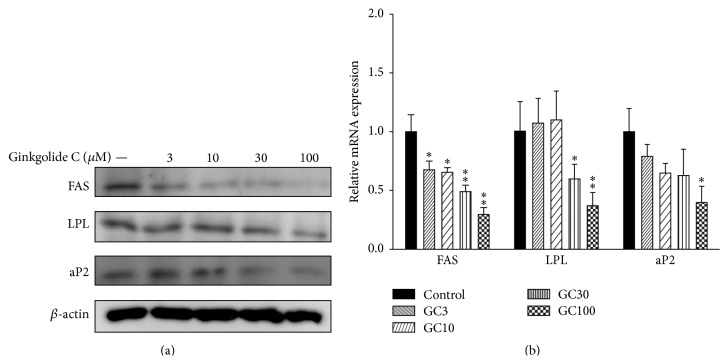
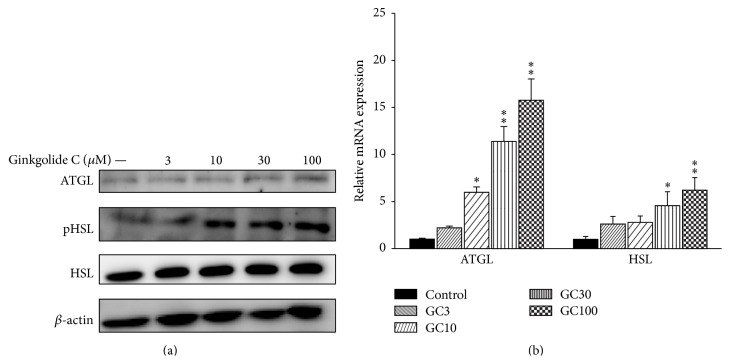
Ginkgolide C, isolated from Ginkgo biloba leaves, is a diterpene lactone derivative [corrected] reported to have multiple biological functions, from decreased platelet aggregation to ameliorating Alzheimer disease. The study aim was to evaluate the antiadipogenic effect of ginkgolide C in 3T3-L1 adipocytes. Ginkgolide C was used to treat differentiated 3T3-L1 cells. Cell supernatant was collected to assay glycerol release, and cells were lysed to measure protein and gene expression related to adipogenesis and lipolysis by western blot and real-time PCR, respectively. Ginkgolide C significantly suppressed lipid accumulation in differentiated adipocytes. It also decreased adipogenesis-related transcription factor expression, including peroxisome proliferator-activated receptor and CCAAT/enhancer-binding protein. Furthermore, ginkgolide C enhanced adipose triglyceride lipase and hormone-sensitive lipase production for lipolysis and increased phosphorylation of AMP-activated protein kinase (AMPK), resulting in decreased activity of acetyl-CoA carboxylase for fatty acid synthesis. In coculture with an AMPK inhibitor (compound C), ginkgolide C also improved activation of sirtuin 1 and phosphorylation of AMPK in differentiated 3T3-L1 cells. The results suggest that ginkgolide C is an effective flavone for increasing lipolysis and inhibiting adipogenesis in adipocytes through the activated AMPK pathway.
银杏内酯 C 是从银杏叶中分离得到的二萜内酯衍生物[已更正],具有多种生物学功能,可降低血小板聚集,改善阿尔茨海默病。本研究旨在评估银杏内酯 C 对 3T3-L1 脂肪细胞的抗脂肪生成作用。银杏内酯 C 用于处理分化的 3T3-L1 细胞。收集细胞上清液以测定甘油释放量,并用裂解液通过 Western blot 和实时 PCR 分别测定与脂肪生成和脂肪分解相关的蛋白和基因表达。银杏内酯 C 显著抑制分化脂肪细胞中的脂质积累。它还降低了脂肪生成相关转录因子的表达,包括过氧化物酶体增殖物激活受体和 CCAAT/增强子结合蛋白。此外,银杏内酯 C 增加了脂肪甘油三酯脂肪酶和激素敏感脂肪酶的产生以进行脂肪分解,并增加了 AMP 激活蛋白激酶 (AMPK) 的磷酸化,从而减少了乙酰辅酶 A 羧化酶的活性用于脂肪酸合成。在与 AMPK 抑制剂(化合物 C)共培养时,银杏内酯 C 还改善了分化的 3T3-L1 细胞中 SIRT1 的激活和 AMPK 的磷酸化。结果表明,银杏内酯 C 是一种有效的黄酮类化合物,可通过激活的 AMPK 途径增加脂肪分解并抑制脂肪生成。