López Orellana Paulina
Escuela de Obstetricia y Puericultura, Universidad de Valparaíso, Valparaíso, Chile.
Biomed Res Int. 2015;2015:845968. doi: 10.1155/2015/845968. Epub 2015 Aug 27.
Universally mothers at 35 years or more have had higher maternal and perinatal risks. This study analyzed the trend of this group in maternal population and determined their risk of having premature children, during the demographic transition period in Chile.
Epidemiological study conducted in the population of simple live births registered in the Chilean National Database Births of 1991-2012. Analyses were performed in three categories of maternal age: 35 or more, under 35, and 20 to 29 years. The risk of prematurity was measured by crude and Adjusted Odds Ratio from logistic regression model.
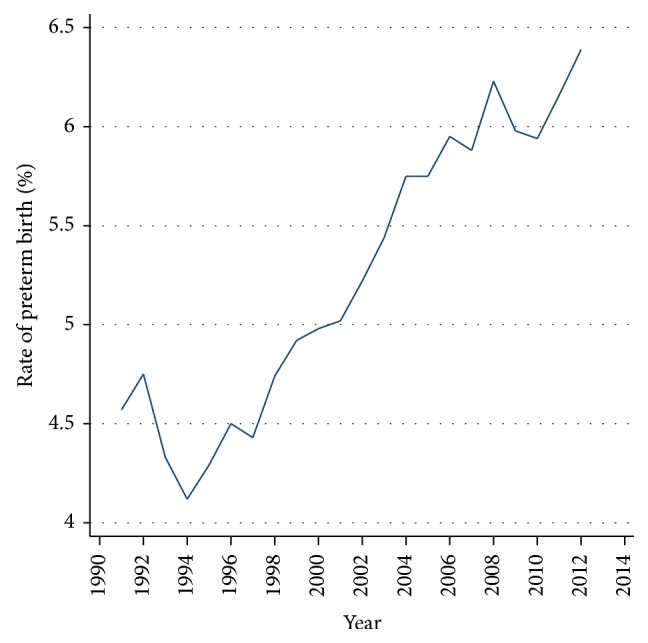
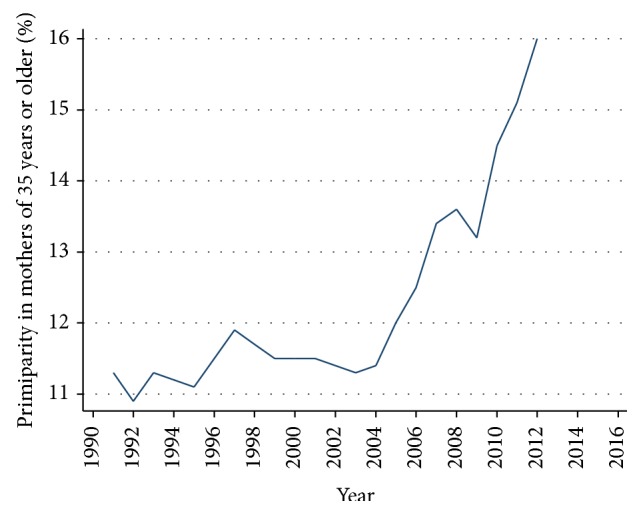
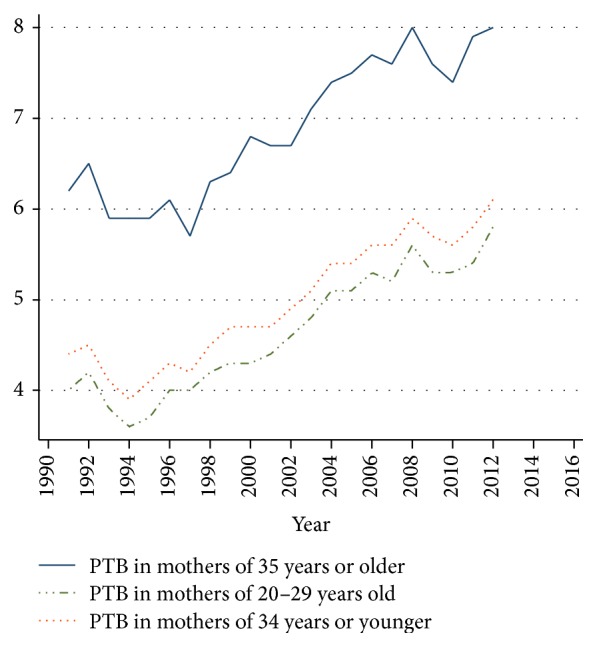
Mothers aged 35 and older increased in population from 10.6% in 1991 to 16.7% in 2012 and presented an overall prevalence of preterm delivery of 6.7%, higher prevalence than 20-29 age group (4.7%). In aging mothers, the Odds Ratio for preterm birth adjusted for education, marital status, and parity was 1.68 (95% CI (1.66-1.70)) compared to mothers aged 20-29. All differences were significant (p < 0.001).
During Chilean demographic transition, mothers aged 35 or older increased steadily and significantly maintaining higher risks of preterm births. Policies to prevent and monitor the late motherhood could contribute to stopping the current trend.
普遍而言,35岁及以上的母亲面临更高的孕产妇和围产期风险。本研究分析了智利人口转变时期该群体在孕产妇群体中的趋势,并确定了她们生育早产儿童的风险。
对1991 - 2012年智利国家数据库出生登记中的单胎活产人群进行流行病学研究。分析按三类孕产妇年龄进行:35岁及以上、35岁以下以及20至29岁。早产风险通过逻辑回归模型的粗比值比和调整后比值比来衡量。
35岁及以上的母亲在人口中的比例从1991年的10.6%增至2012年的16.7%,早产总体患病率为6.7%,高于20 - 29岁年龄组(4.7%)。在年龄较大的母亲中,经教育、婚姻状况和产次调整后的早产比值比为1.68(95%置信区间(1.66 - 1.70)),而20 - 29岁母亲的该比值比为参照值。所有差异均具有统计学意义(p < 0.001)。
在智利人口转变期间,35岁及以上的母亲数量稳步且显著增加,她们早产的风险持续较高。预防和监测高龄产妇的政策可能有助于遏制当前趋势。