Deng Yang, Ediriwickrema Asiri, Yang Fan, Lewis Julia, Girardi Michael, Saltzman W Mark
Department of Biomedical Engineering, Yale University, 55 Prospect Street, New Haven, Connecticut 06511, USA.
Department of Dermatology, Yale University, 333 Cedar Street, New Haven, Connecticut 06520, USA.
Nat Mater. 2015 Dec;14(12):1278-85. doi: 10.1038/nmat4422. Epub 2015 Sep 28.
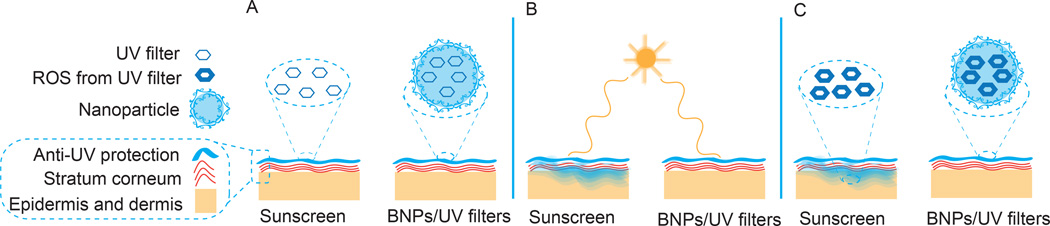
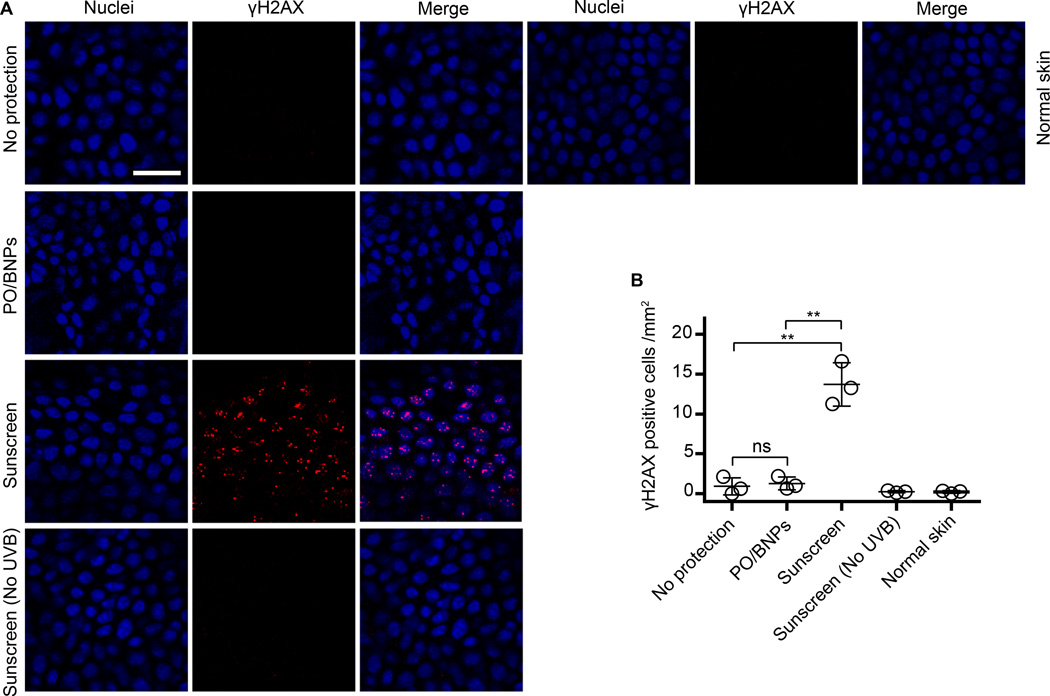
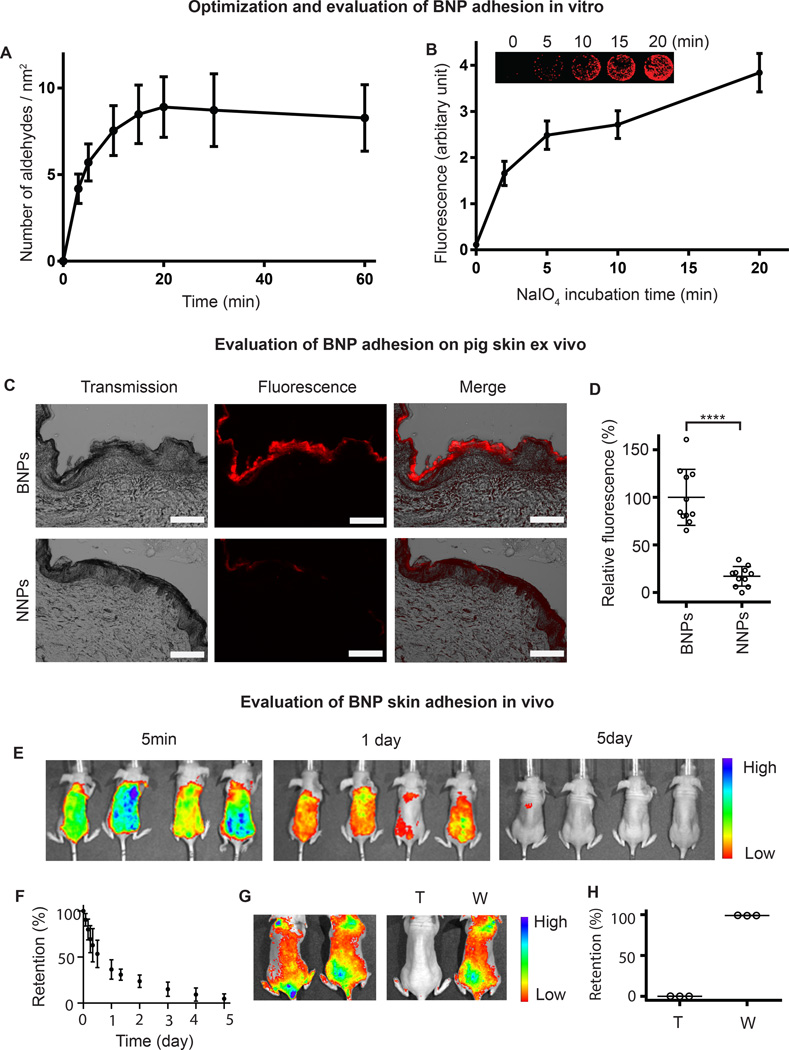
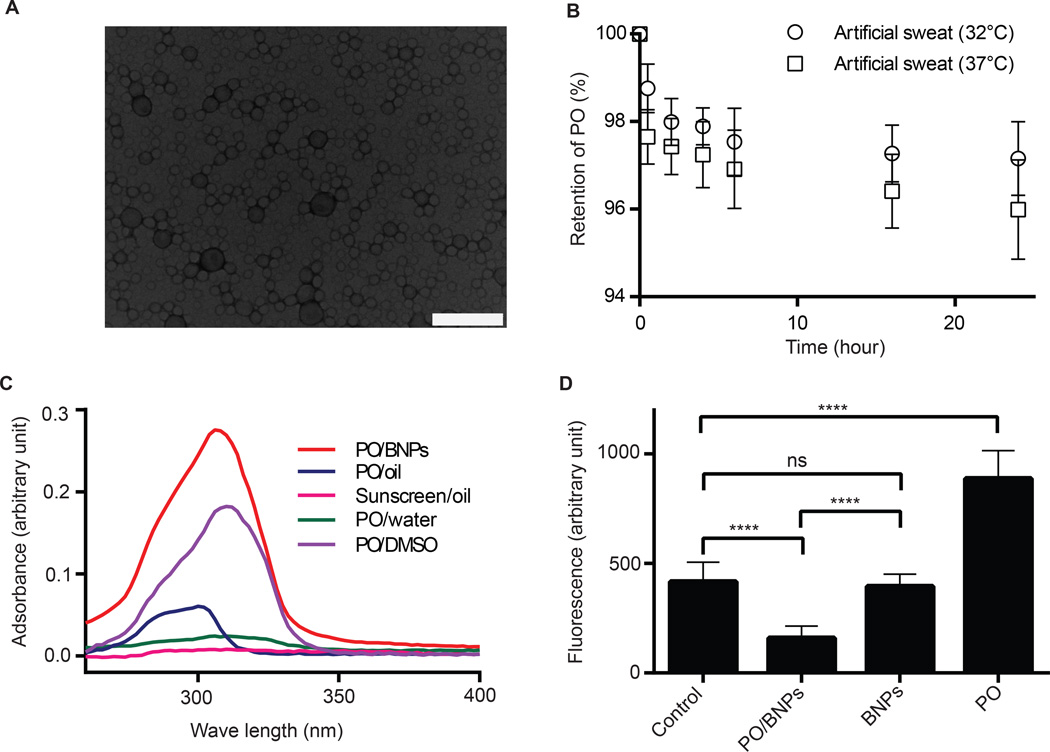
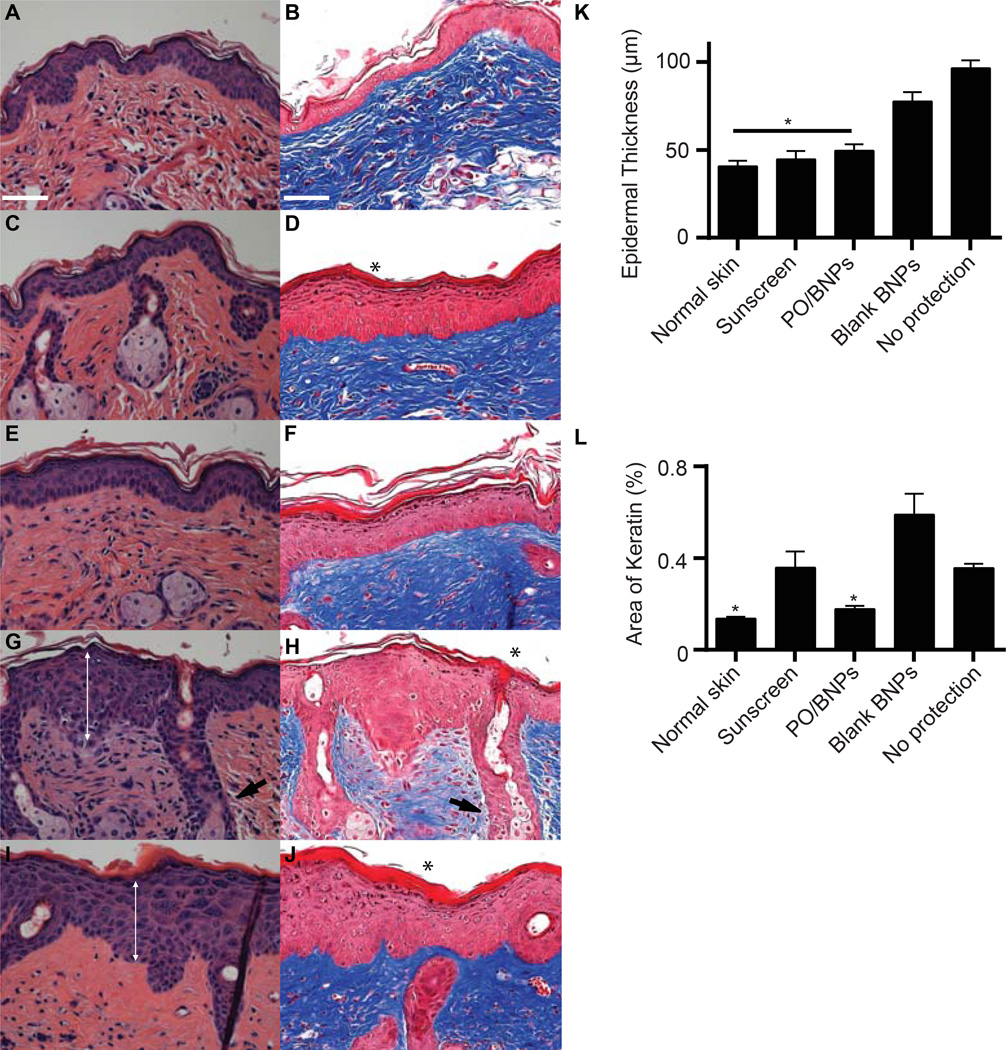
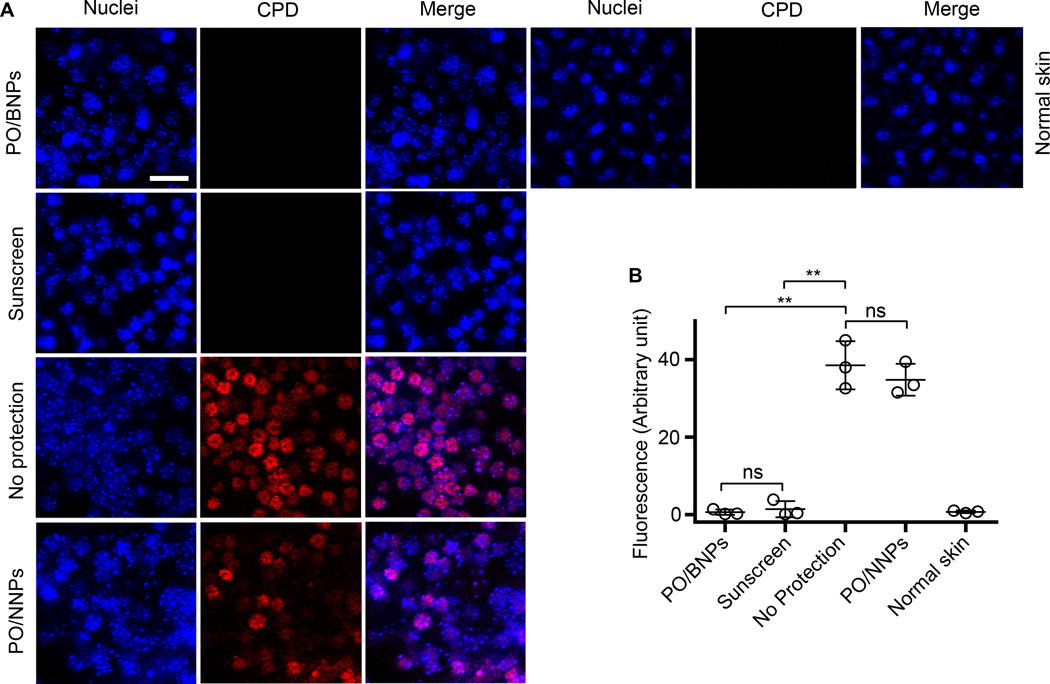
The majority of commercial sunblock preparations use organic or inorganic ultraviolet (UV) filters. Despite protecting against cutaneous phototoxicity, direct cellular exposure to UV filters has raised a variety of health concerns. Here, we show that the encapsulation of padimate O (PO)--a model UV filter--in bioadhesive nanoparticles (BNPs) prevents epidermal cellular exposure to UV filters while enhancing UV protection. BNPs are readily suspended in water, facilitate adherence to the stratum corneum without subsequent intra-epidermal or follicular penetration, and their interaction with skin is water resistant yet the particles can be removed via active towel drying. Although the sunblock based on BNPs contained less than 5 wt% of the UV-filter concentration found in commercial standards, the anti-UV effect was comparable when tested in two murine models. Moreover, the BNP-based sunblock significantly reduced double-stranded DNA breaks when compared with a commercial sunscreen formulation.
大多数商业防晒制剂使用有机或无机紫外线(UV)过滤剂。尽管能防止皮肤光毒性,但紫外线过滤剂直接接触细胞引发了各种健康问题。在此,我们表明,将帕地马酯O(PO)——一种典型的紫外线过滤剂——封装在生物粘附纳米颗粒(BNP)中,可防止表皮细胞接触紫外线过滤剂,同时增强紫外线防护效果。BNP易于悬浮在水中,有助于附着在角质层上,随后不会穿透表皮或毛囊,并且它们与皮肤的相互作用具有防水性,但颗粒可通过用毛巾主动擦干去除。尽管基于BNP的防晒霜中紫外线过滤剂的浓度低于商业标准中的5 wt%,但在两种小鼠模型中测试时,其抗紫外线效果相当。此外,与市售防晒配方相比,基于BNP的防晒霜显著减少了双链DNA断裂。