Xu Li, Zhang Qing, Zhang Qing-Song, Li Qian, Han Ji-Yuan, Sun Peng
Department of Emergency, Union Hospital, Tongji Medical College, Huazhong University of Science and Technology, Wuhan, Hubei 430022, China.
Chin Med J (Engl). 2015 Oct 5;128(19):2646-51. doi: 10.4103/0366-6999.166024.
Toll-like receptor 4 (TLR4) is a crucial receptor in the innate immune system and noninfectious immune responses. It has been reported that TLR4 participates in the pathological course of ischemia/reperfusion (I/R) injury. However, the role of TLR4 in the process of I/R injury after cardiac arrest (CA) and cardiopulmonary resuscitation (CPR) is still unknown. In this study, we investigated the effects of TLR4 mutation on survival and neurological outcome in a mouse model of CA/CPR.
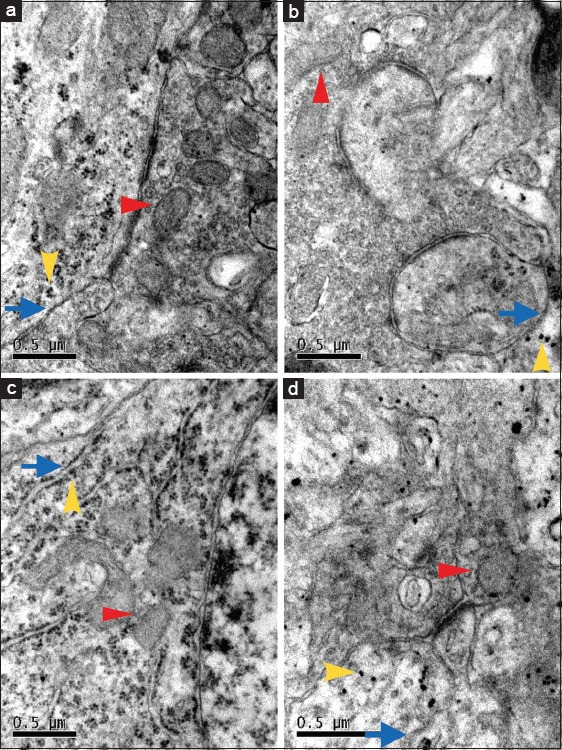
A model of potassium-induced CA was performed on TLR4-mutant mice (C3H/HeJ) and wild-type mice (C3H/HeN). After 3 min of untreated CA, resuscitation was attempted with chest compression, ventilation, and intravenous epinephrine. Behavioral tests were performed on mice on day 3 after CPR. The morphological changes in hippocampal neurons were assessed by light and electron microscopy. Expressions of TLR4 and intercellular adhesion molecule-1 (ICAM-1) were detected by Western blot. Levels of tumor necrosis factor-α (TNF-α) and myeloperoxidase (MPO) were measured with enzyme-linked immunosorbent assay (ELISA).
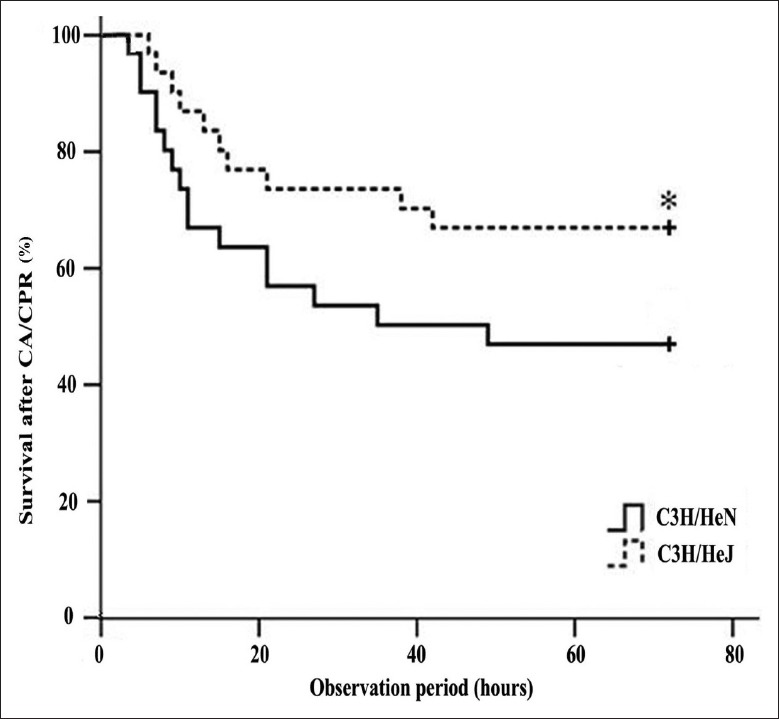
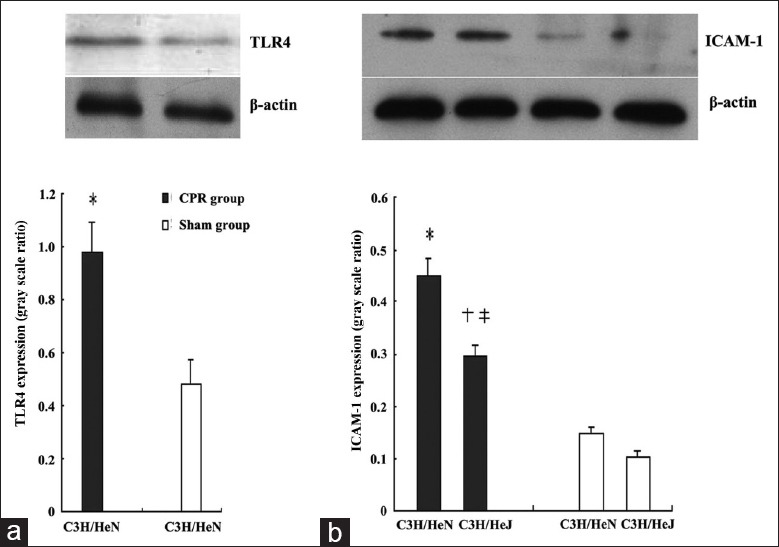
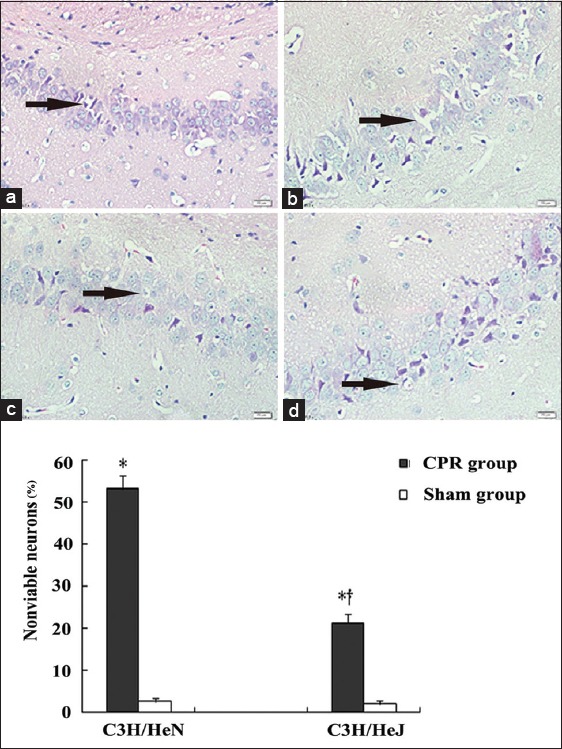
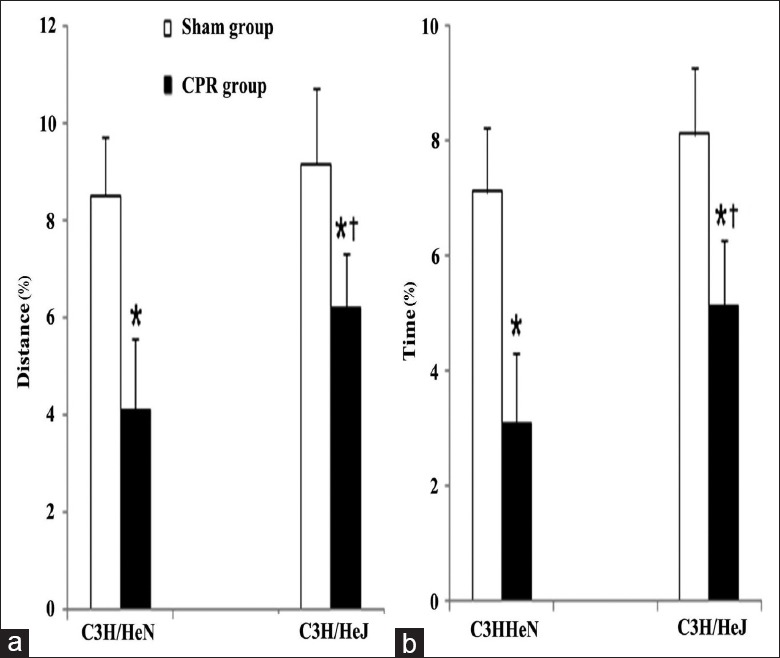
On day 3 after resuscitation the overall mortality was 33.33% in C3H/HeJ group compared with 53.33% in C3H/HeN group (P < 0.05). And there was much higher central tendency in C3H/HeJ group than C3H/HeN group during open field test (P < 0.05). Meanwhile, the percentage of nonviable neurons was 21.16% in C3H/HeJ group compared with 53.11% in C3H/HeN group (P < 0.05). And there were significantly lower levels of hippocampal TNF-α and MPO in C3H/HeJ mice (TNF-α: 6.85±1.19 ng/mL, MPO: 0.33±0.11 U/g) than C3H/HeN mice (TNF-α: 11.36±2.12 ng/mL, MPO: 0.54±0.17 U/g) (all P < 0.01). CPR also significantly increased the expressions of TLR4 and ICAM-1 in C3H/HeN group. However, the expression of ICAM-1 was much lower in C3H/HeJ group than in C3H/HeN group after CPR (P < 0.01).
TLR4 signaling is involved in brain damage and in inflammation triggered by CA/CPR.
Toll样受体4(TLR4)是先天性免疫系统和非感染性免疫反应中的关键受体。据报道,TLR4参与缺血/再灌注(I/R)损伤的病理过程。然而,TLR4在心脏骤停(CA)和心肺复苏(CPR)后I/R损伤过程中的作用仍不清楚。在本研究中,我们在CA/CPR小鼠模型中研究了TLR4突变对生存和神经功能结局的影响。
对TLR4突变小鼠(C3H/HeJ)和野生型小鼠(C3H/HeN)进行钾诱导的CA模型。未经处理的CA 3分钟后,尝试通过胸外按压、通气和静脉注射肾上腺素进行复苏。在CPR后第3天对小鼠进行行为测试。通过光学和电子显微镜评估海马神经元的形态变化。通过蛋白质免疫印迹法检测TLR4和细胞间黏附分子-1(ICAM-1)的表达。用酶联免疫吸附测定(ELISA)测量肿瘤坏死因子-α(TNF-α)和髓过氧化物酶(MPO)的水平。
复苏后第3天,C3H/HeJ组的总死亡率为33.33%,而C3H/HeN组为53.33%(P<0.05)。在旷场试验中,C3H/HeJ组的集中趋势比C3H/HeN组高得多(P<0.05)。同时,C3H/HeJ组中不可存活神经元的百分比为21.16%,而C3H/HeN组为53.11%(P<0.05)。C3H/HeJ小鼠海马TNF-α和MPO水平(TNF-α:6.85±1.19 ng/mL,MPO:0.33±0.11 U/g)明显低于C3H/HeN小鼠(TNF-α:11.36±2.12 ng/mL,MPO:0.54±0.17 U/g)(均P<0.01)。CPR还显著增加了C3H/HeN组中TLR4和ICAM-1的表达。然而,CPR后C3H/HeJ组中ICAM-1的表达远低于C3H/HeN组(P<0.01)。
TLR4信号通路参与了CA/CPR引发的脑损伤和炎症反应。