von Appen Alexander, Kosinski Jan, Sparks Lenore, Ori Alessandro, DiGuilio Amanda L, Vollmer Benjamin, Mackmull Marie-Therese, Banterle Niccolo, Parca Luca, Kastritis Panagiotis, Buczak Katarzyna, Mosalaganti Shyamal, Hagen Wim, Andres-Pons Amparo, Lemke Edward A, Bork Peer, Antonin Wolfram, Glavy Joseph S, Bui Khanh Huy, Beck Martin
European Molecular Biology Laboratory, Structural and Computational Biology Unit, Heidelberg, Germany.
Department of Chemistry, Chemical Biology and Biomedical Engineering, Stevens Institute of Technology, 507 River St., Hoboken NJ 07030, USA.
Nature. 2015 Oct 1;526(7571):140-143. doi: 10.1038/nature15381. Epub 2015 Sep 23.
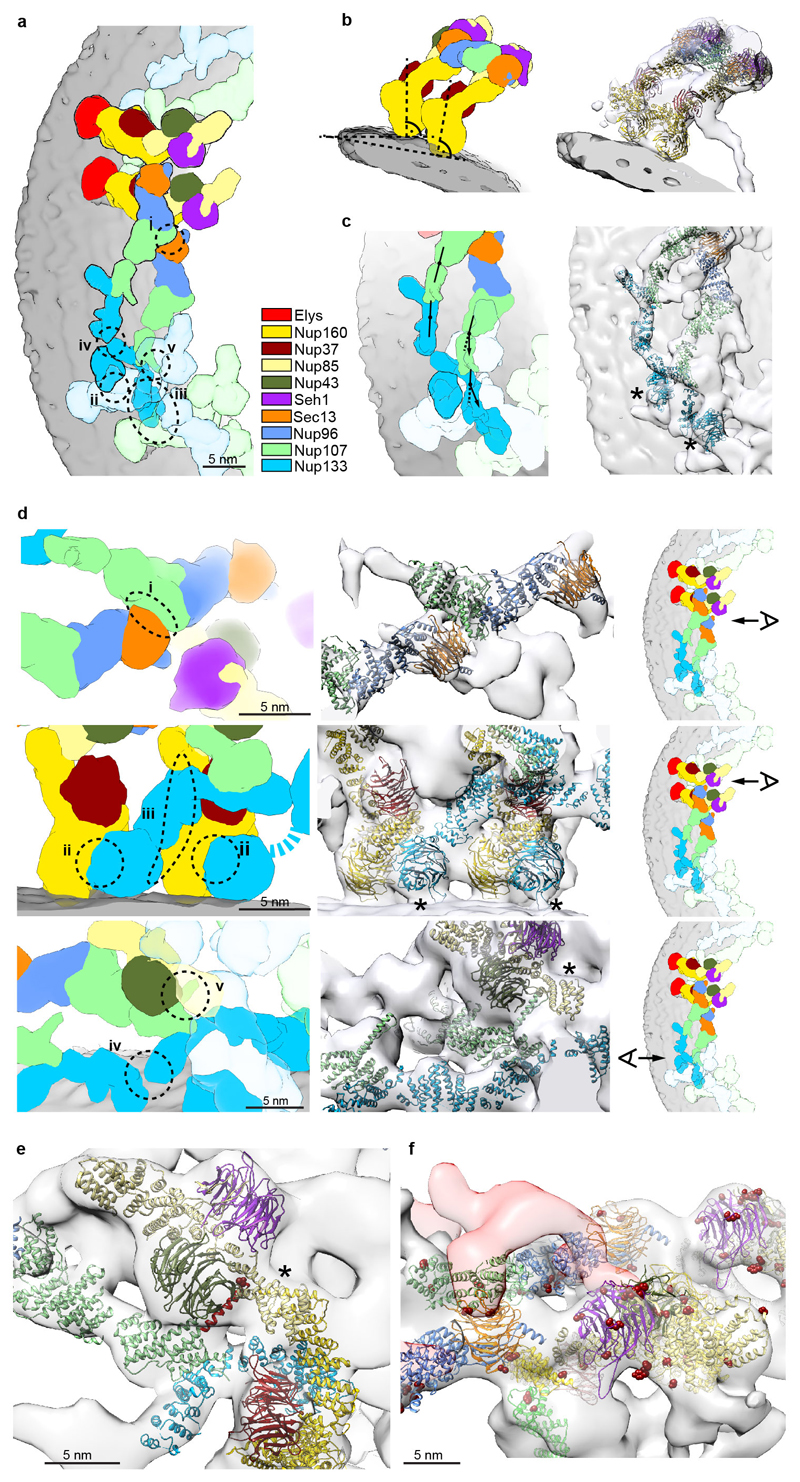
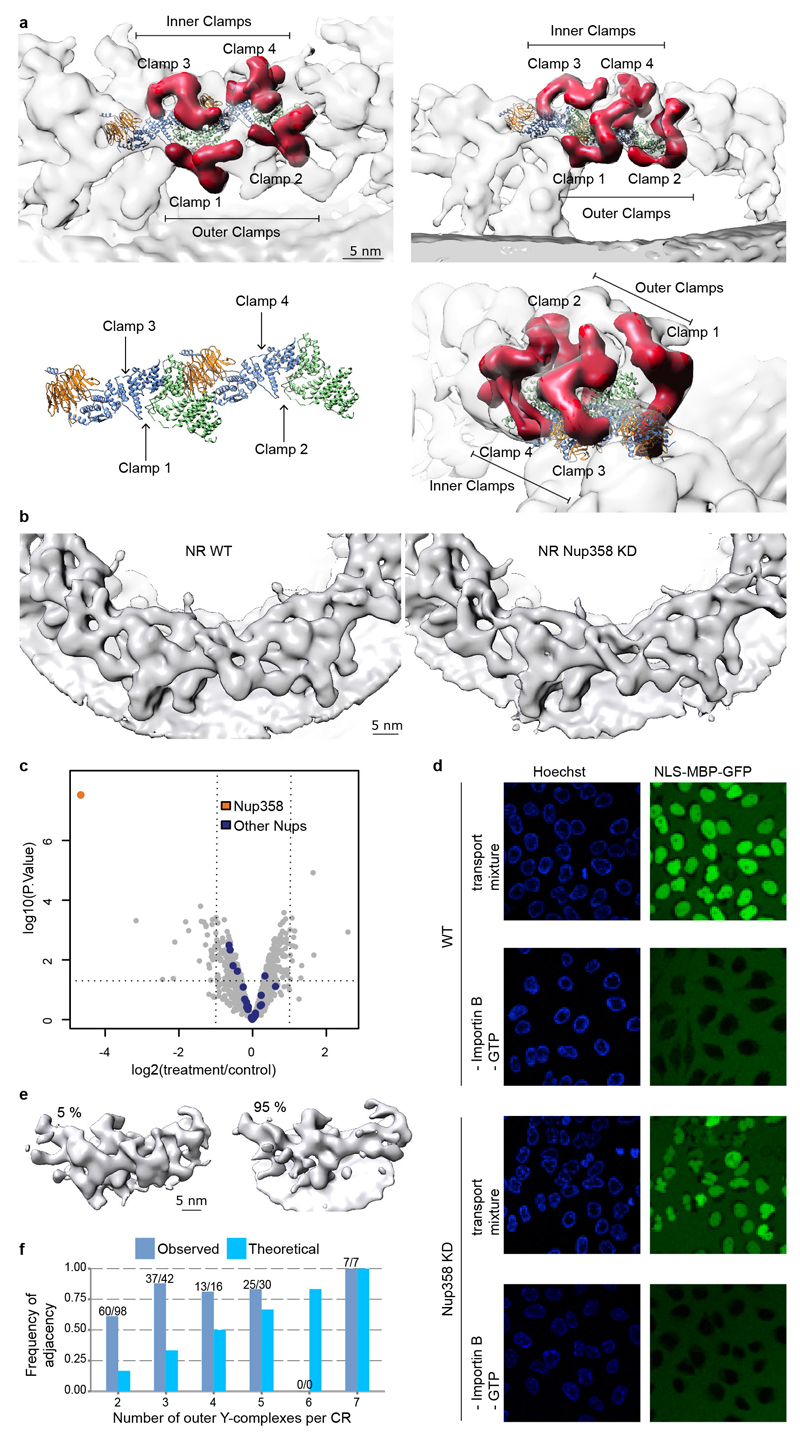
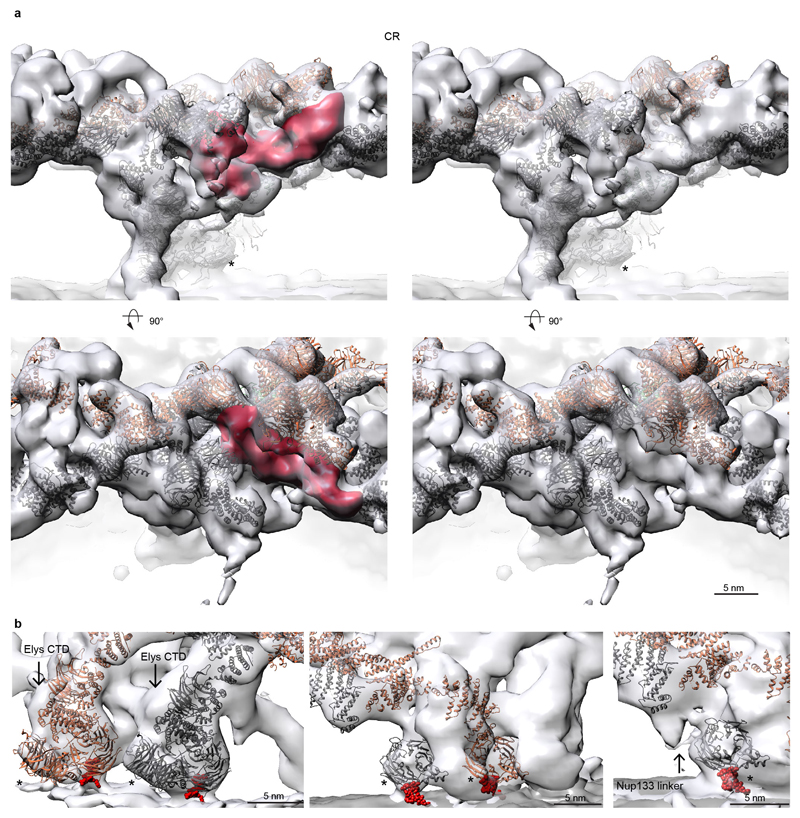
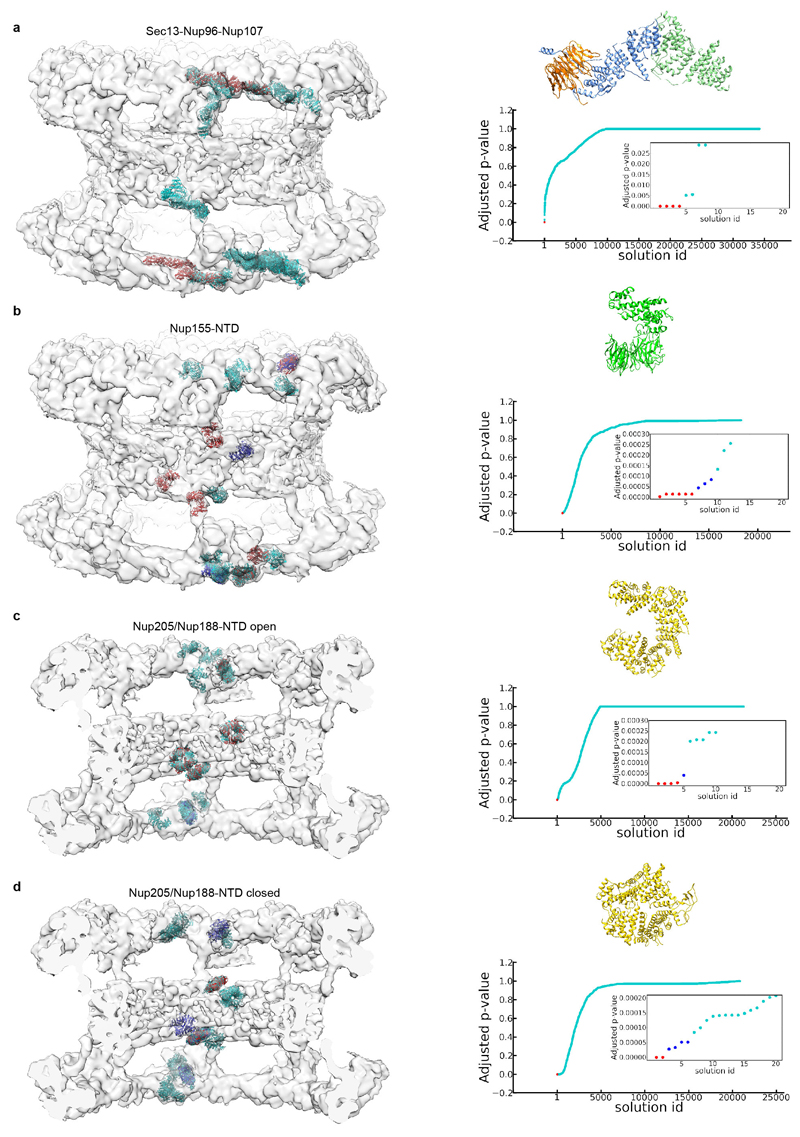
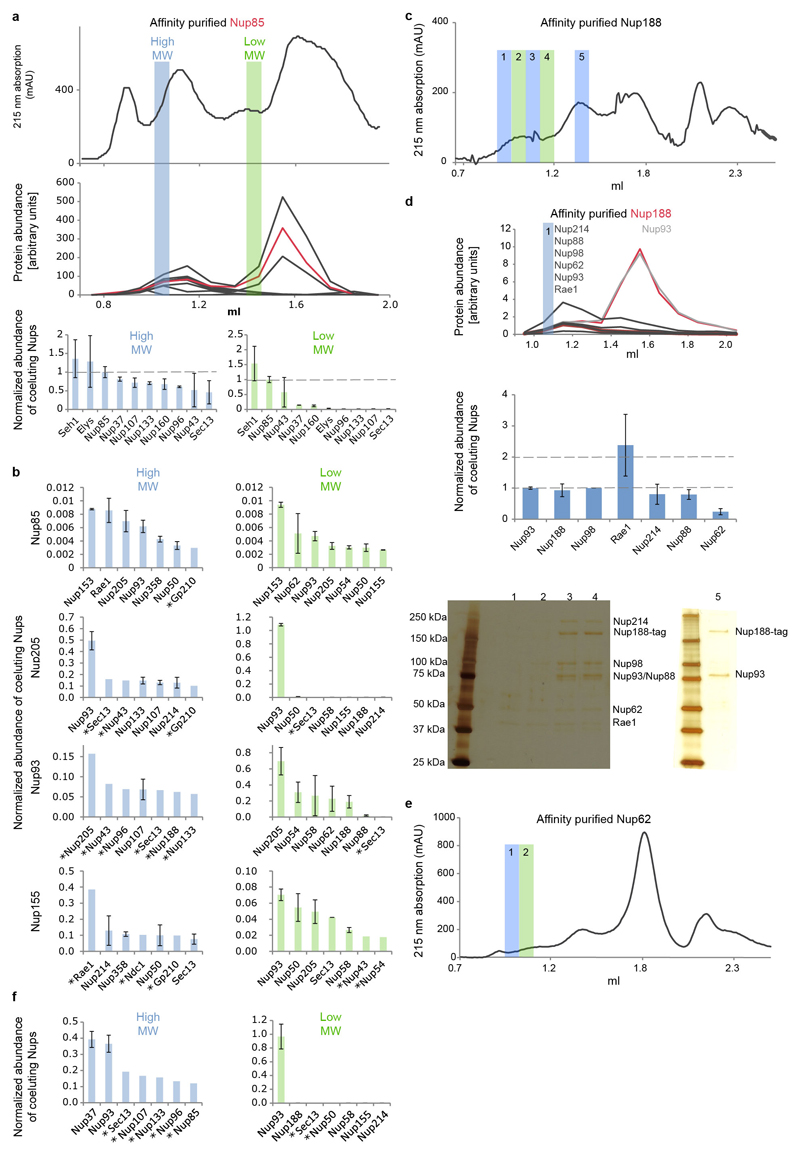
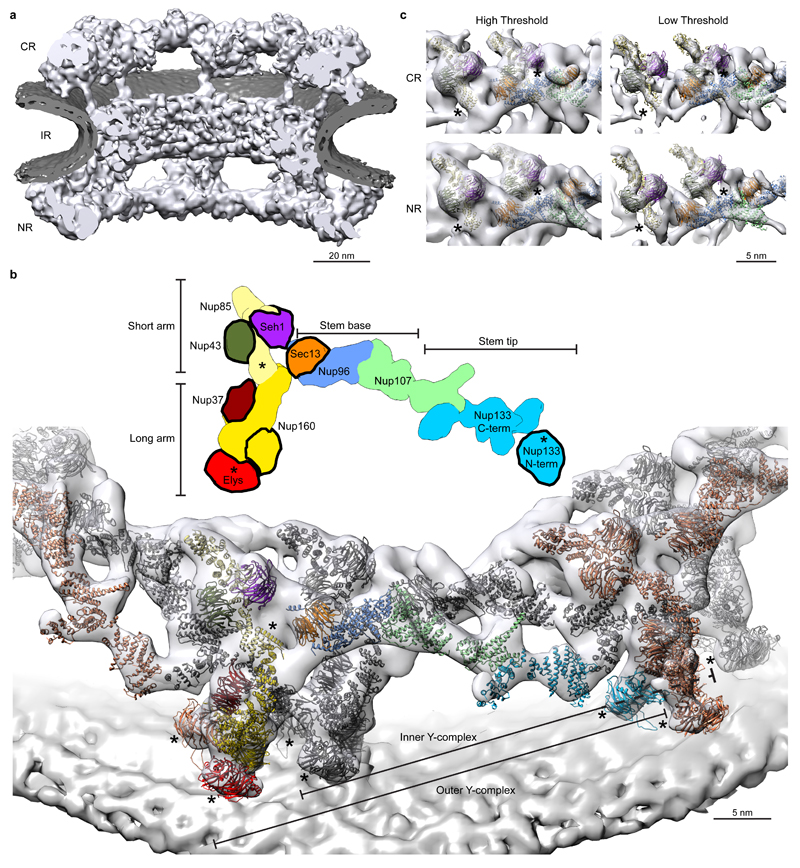
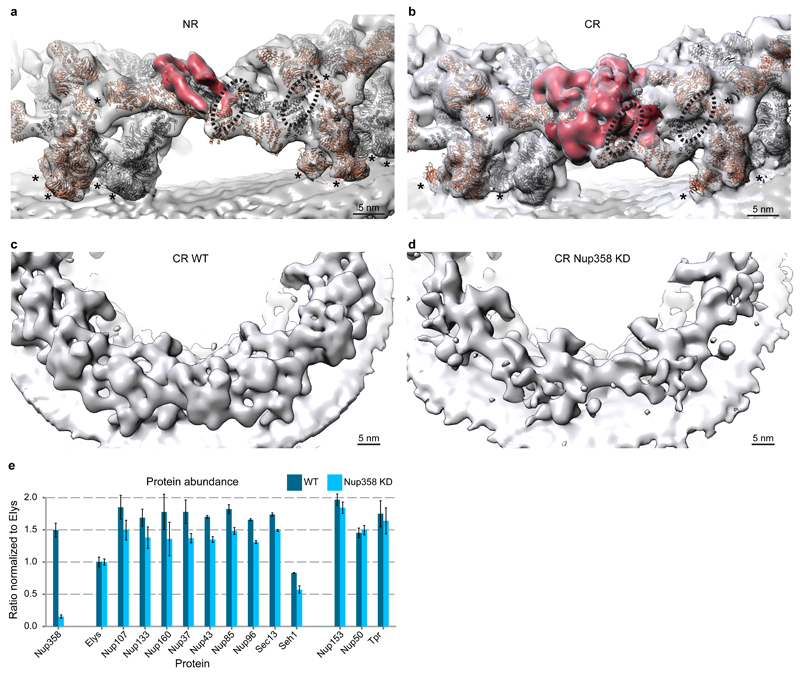
Nuclear pore complexes are fundamental components of all eukaryotic cells that mediate nucleocytoplasmic exchange. Determining their 110-megadalton structure imposes a formidable challenge and requires in situ structural biology approaches. Of approximately 30 nucleoporins (Nups), 15 are structured and form the Y and inner-ring complexes. These two major scaffolding modules assemble in multiple copies into an eight-fold rotationally symmetric structure that fuses the inner and outer nuclear membranes to form a central channel of ~60 nm in diameter. The scaffold is decorated with transport-channel Nups that often contain phenylalanine-repeat sequences and mediate the interaction with cargo complexes. Although the architectural arrangement of parts of the Y complex has been elucidated, it is unclear how exactly it oligomerizes in situ. Here we combine cryo-electron tomography with mass spectrometry, biochemical analysis, perturbation experiments and structural modelling to generate, to our knowledge, the most comprehensive architectural model of the human nuclear pore complex to date. Our data suggest previously unknown protein interfaces across Y complexes and to inner-ring complex members. We show that the transport-channel Nup358 (also known as Ranbp2) has a previously unanticipated role in Y-complex oligomerization. Our findings blur the established boundaries between scaffold and transport-channel Nups. We conclude that, similar to coated vesicles, several copies of the same structural building block--although compositionally identical--engage in different local sets of interactions and conformations.
核孔复合体是所有真核细胞的基本组成部分,介导核质交换。确定其110兆道尔顿的结构是一项艰巨的挑战,需要采用原位结构生物学方法。在大约30种核孔蛋白(Nups)中,有15种具有结构并形成Y复合体和内环复合体。这两个主要的支架模块以多个拷贝组装成八重旋转对称结构,融合内外核膜,形成直径约60纳米的中央通道。支架上装饰有运输通道Nups,它们通常含有苯丙氨酸重复序列,并介导与货物复合体的相互作用。尽管Y复合体部分的结构排列已经阐明,但尚不清楚它在原位究竟是如何寡聚的。在这里,我们将冷冻电子断层扫描与质谱、生化分析、扰动实验和结构建模相结合,据我们所知,生成了迄今为止最全面的人类核孔复合体结构模型。我们的数据揭示了Y复合体与内环复合体成员之间以前未知的蛋白质界面。我们表明,运输通道Nup358(也称为Ranbp2)在Y复合体寡聚化中具有以前未预料到的作用。我们的发现模糊了支架Nups和运输通道Nups之间已确立的界限。我们得出结论,与被膜小泡类似,相同结构构建块的几个拷贝——尽管组成相同——参与不同的局部相互作用和构象。