Simlai Aritra, Rai Archana, Mishra Saumya, Mukherjee Kalishankar, Roy Amit
Department of Biotechnology, Visva-Bharati University, Santiniketan-731235, West Bengal, India.
Department of Chemistry, Visva-Bharati University, Santiniketan-731235, West Bengal, India.
EXCLI J. 2014 Aug 29;13:997-1010. eCollection 2014.
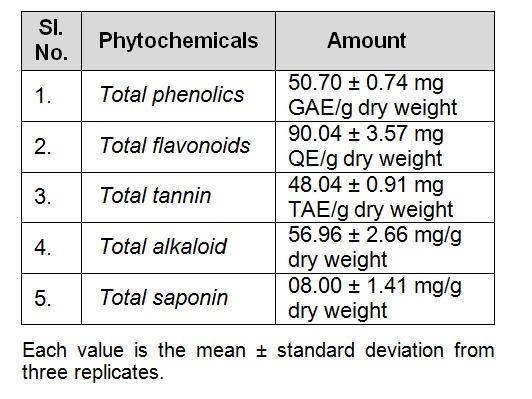
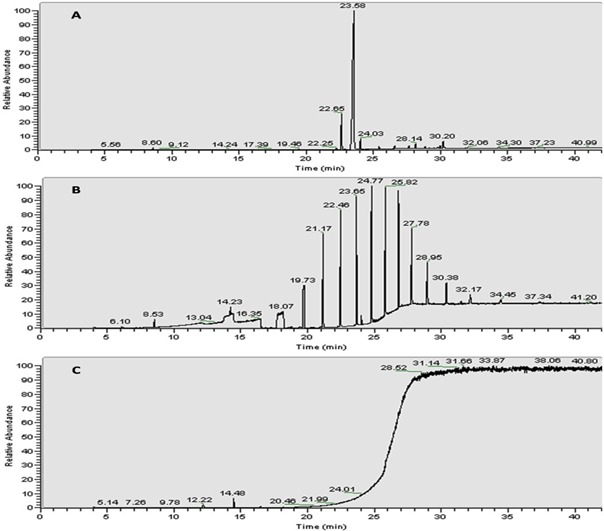
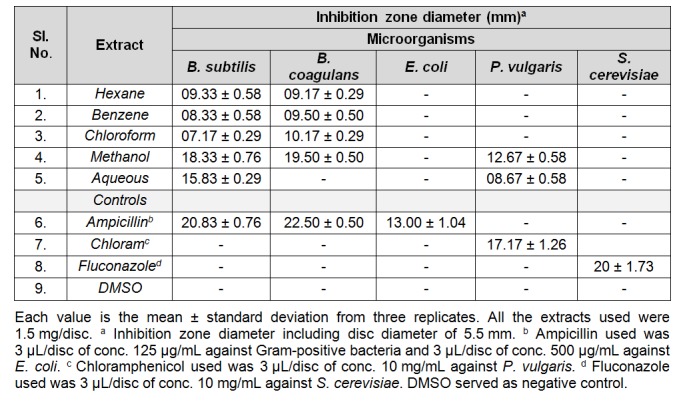
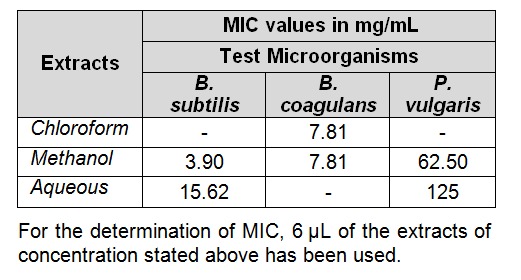
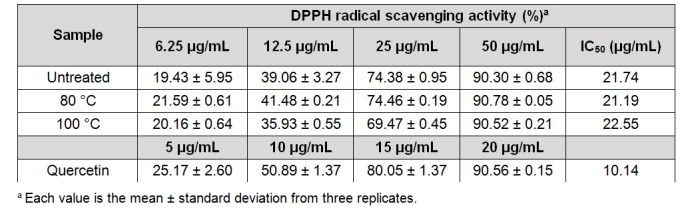
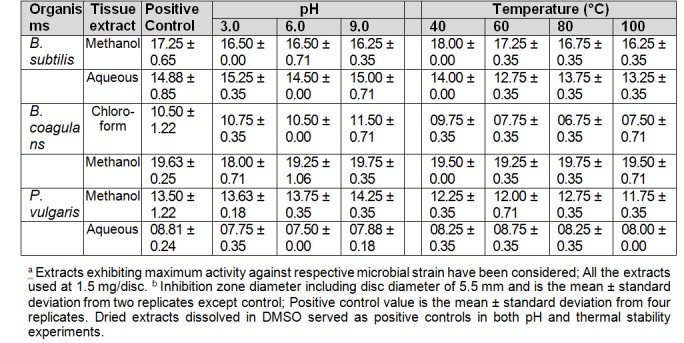
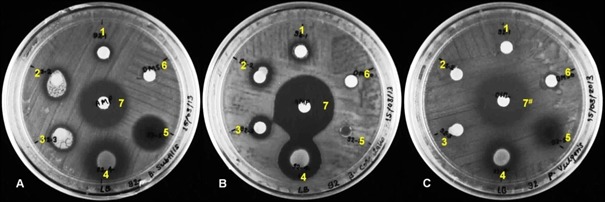
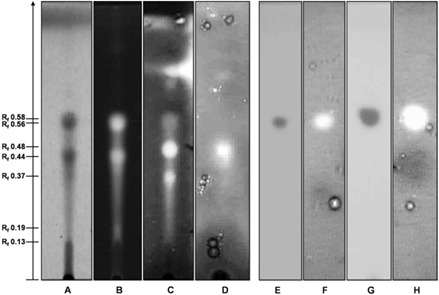
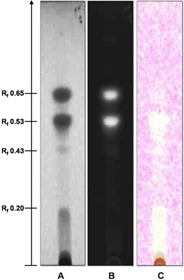
The present study deals with the phytochemical contents, antimicrobial and antioxidative activities of bark tissue of Sonneratia caseolaris, a mangrove plant from Sundarban estuary, India. Phytochemical analyses revealed the presence of high amounts of phenolics, flavonoids, tannins, alkaloids and saponins. Antimicrobial efficacies of various extracts of S. caseolaris were assessed by disc diffusion method against two Gram-positive (Bacillus subtilis and Bacillus coagulans), two Gram-negative (Escherichia coli and Proteus vulgaris) bacteria and one fungus (Saccharomyces cerevisiae). The methanolic extract among others showed significant minimum inhibitory concentration (MIC) values. The antioxidant activity as indicated by 2,2-diphenyl-1-picrylhydrazyl (DPPH) scavenging activity of the bark tissue extract from the species was found to be quite appreciable. The extracts were found to retain their antimicrobial activities despite pH and thermal treatments, thus indicating the stability of their activity even at extreme conditions. The antioxidant activity was also found to be considerably stable after thermal treatments. The components of the tissue extracts were subjected to separation using thin layer chromatography (TLC). The constituents with antimicrobial and antioxidative properties were identified using TLC-bioautography by agar-overlay and DPPH spraying methods respectively. A number of bioactive constituents with antimicrobial and radical scavenging properties were observed on the developed bioautography plate. The fractions with antimicrobial properties were isolated from the reference TLC plates and subjected to gas chromatography-mass spectrometry (GC-MS) analysis for partial characterization and identification of the metabolites that might be responsible for the activities. The study suggests Sonneratia caseolaris bark as a potential source of bioactive compounds with stable antimicrobial and antioxidative properties and can be used as natural antimicrobial/antioxidative agents in clinical, pharmaceutical and food processing industries.
本研究涉及来自印度孙德尔本斯河口的一种红树林植物——海桑的树皮组织的植物化学成分、抗菌和抗氧化活性。植物化学分析表明,其中含有大量的酚类、黄酮类、单宁、生物碱和皂苷。通过纸片扩散法评估了海桑各种提取物对两种革兰氏阳性菌(枯草芽孢杆菌和凝结芽孢杆菌)、两种革兰氏阴性菌(大肠杆菌和普通变形杆菌)以及一种真菌(酿酒酵母)的抗菌效果。其中甲醇提取物显示出显著的最低抑菌浓度(MIC)值。该物种树皮组织提取物的2,2 - 二苯基 - 1 - 苦基肼(DPPH)清除活性表明其抗氧化活性相当可观。研究发现,尽管经过了pH和热处理,提取物仍保留其抗菌活性,这表明即使在极端条件下其活性也很稳定。热处理后抗氧化活性也相当稳定。组织提取物的成分通过薄层色谱(TLC)进行分离。分别采用琼脂覆盖法和DPPH喷雾法,通过TLC - 生物自显影技术鉴定具有抗菌和抗氧化特性的成分。在展开的生物自显影板上观察到了许多具有抗菌和自由基清除特性的生物活性成分。从参考TLC板上分离出具有抗菌特性的馏分,并进行气相色谱 - 质谱(GC - MS)分析,以部分表征和鉴定可能具有这些活性的代谢物。该研究表明,海桑树皮是具有稳定抗菌和抗氧化特性的生物活性化合物的潜在来源,可作为天然抗菌/抗氧化剂应用于临床、制药和食品加工行业。