Singh Niraj Kumar, Sonani Ravi Raghav, Rastogi Rajesh Prasad, Madamwar Datta
Shri A. N. Patel PG Institute (M. B. Patel Science College Campus), Anand, Sardargunj, Anand - 388001, Gujarat, India.
BRD School of Biosciences, Sardar Patel Maidan, Vadtal Road, Post Box No. 39, Sardar Patel University, Vallabh Vidyanagar 388 120, Anand, Gujarat, India.
EXCLI J. 2015 Feb 20;14:268-89. doi: 10.17179/excli2014-723. eCollection 2015.
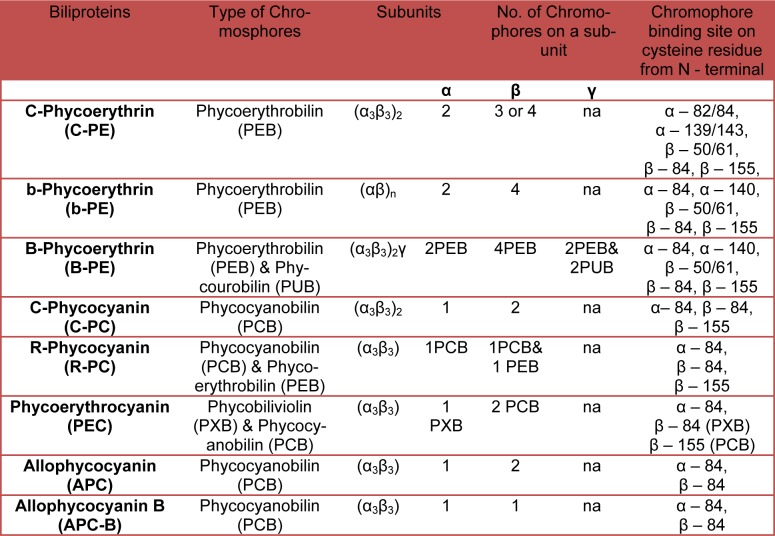
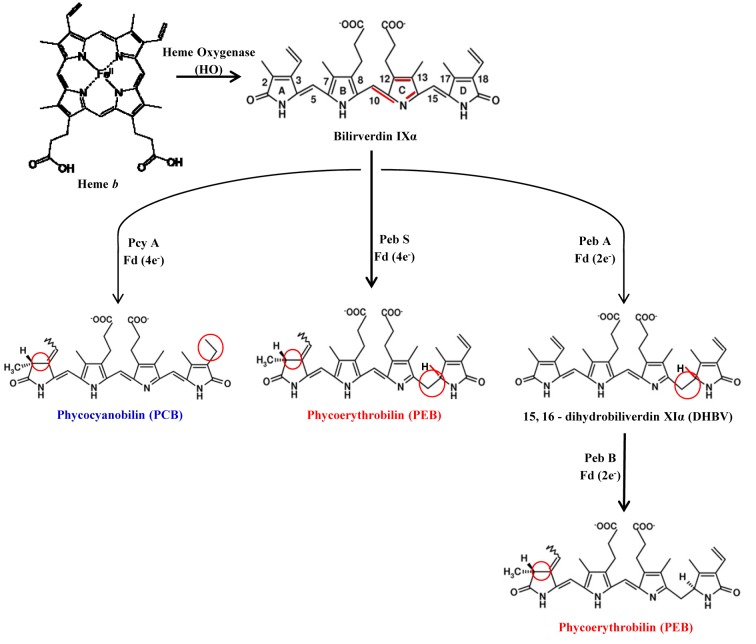
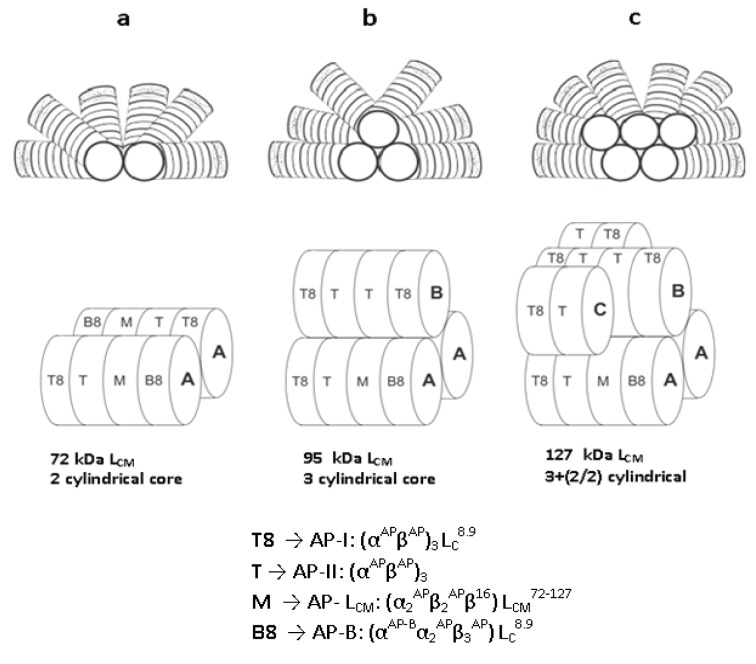
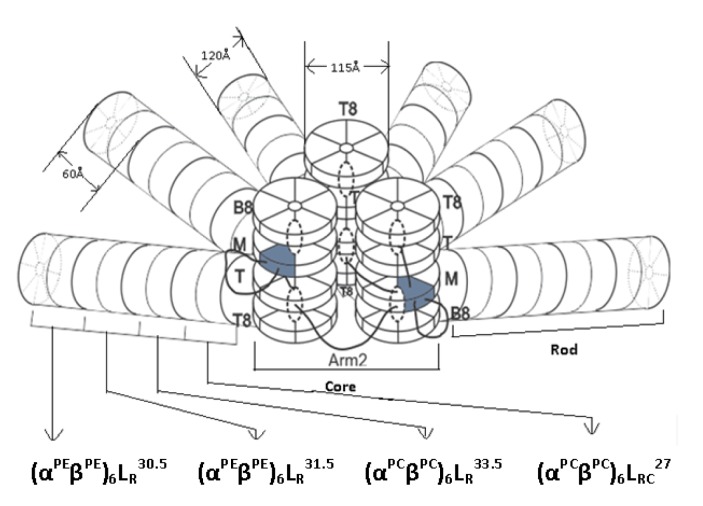
Cyanobacteria trap light energy by arrays of pigment molecules termed "phycobilisomes (PBSs)", organized proximal to "reaction centers" at which chlorophyll perform the energy transduction steps with highest quantum efficiency. PBSs, composed of sequential assembly of various chromophorylated phycobiliproteins (PBPs), as well as nonchromophoric, basic and hydrophobic polypeptides called linkers. Atomic resolution structure of PBP is a heterodimer of two structurally related polypeptides but distinct specialised polypeptides- a and ß, made up of seven alpha-helices each which played a crucial step in evolution of PBPs. PBPs carry out various light dependent responses such as complementary chromatic adaptation. The aim of this review is to summarize and discuss the recent progress in this field and to highlight the new and the questions that remain unresolved.
蓝细菌通过称为“藻胆体(PBS)”的色素分子阵列捕获光能,这些色素分子阵列在“反应中心”附近组织,叶绿素在反应中心以最高量子效率执行能量转换步骤。藻胆体由各种发色藻胆蛋白(PBP)以及称为连接体的非发色、碱性和疏水性多肽的顺序组装组成。PBP的原子分辨率结构是由两个结构相关但不同的特殊多肽——α和β组成的异二聚体,每个多肽由七个α螺旋组成,这在PBP的进化中起着关键作用。PBP执行各种光依赖反应,如互补色适应。本综述的目的是总结和讨论该领域的最新进展,并突出新出现的和尚未解决的问题。