Yu Da-Hai, Gadkari Manasi, Zhou Quan, Yu Shiyan, Gao Nan, Guan Yongtao, Schady Deborah, Roshan Tony N, Chen Miao-Hsueh, Laritsky Eleonora, Ge Zhongqi, Wang Hui, Chen Rui, Westwater Caroline, Bry Lynn, Waterland Robert A, Moriarty Chelsea, Hwang Cindy, Swennes Alton G, Moore Sean R, Shen Lanlan
Department of Pediatrics, Baylor College of Medicine, USDA/ARS Children's Nutrition Research Center, 1100 Bates St., Ste. 8020, Houston, TX, 77030, USA.
Department of Biological Sciences, Rutgers University, Newark, NJ, 07102, USA.
Genome Biol. 2015 Sep 30;16:211. doi: 10.1186/s13059-015-0763-5.
DNA methylation is an epigenetic mechanism central to development and maintenance of complex mammalian tissues, but our understanding of its role in intestinal development is limited.
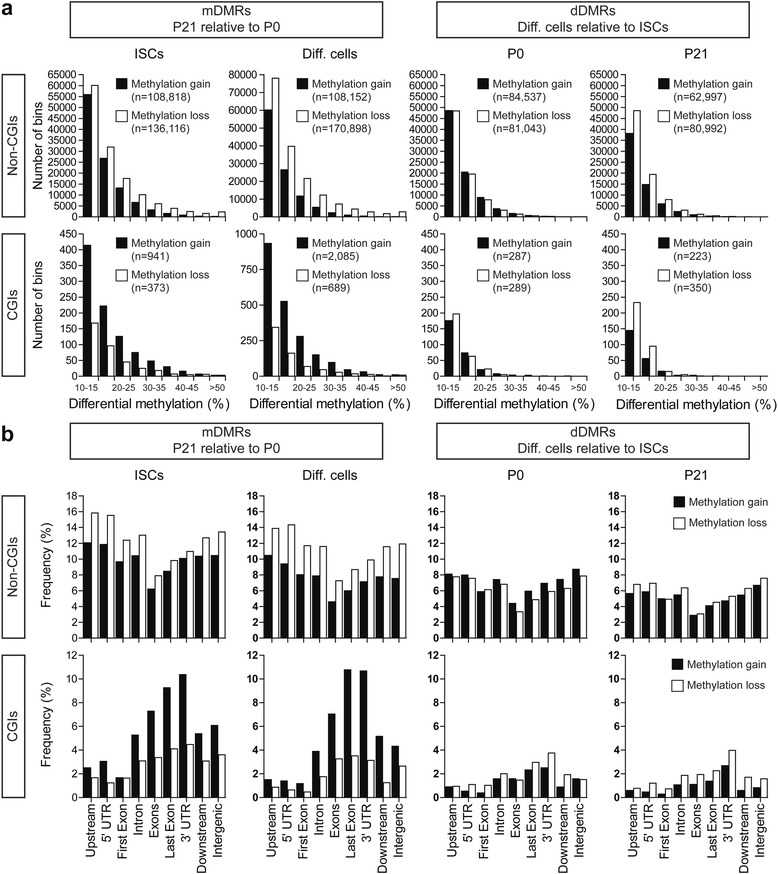
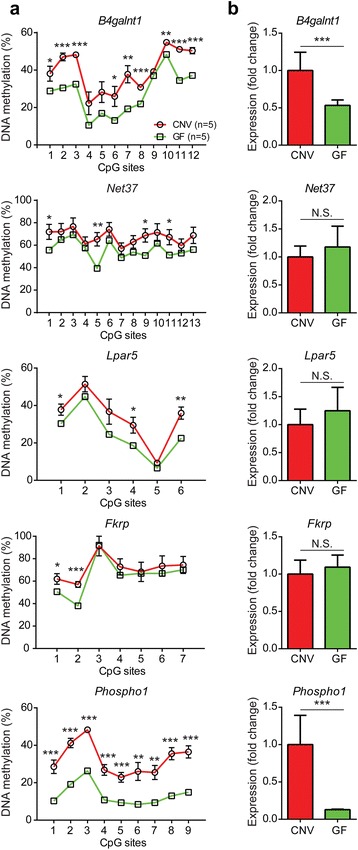
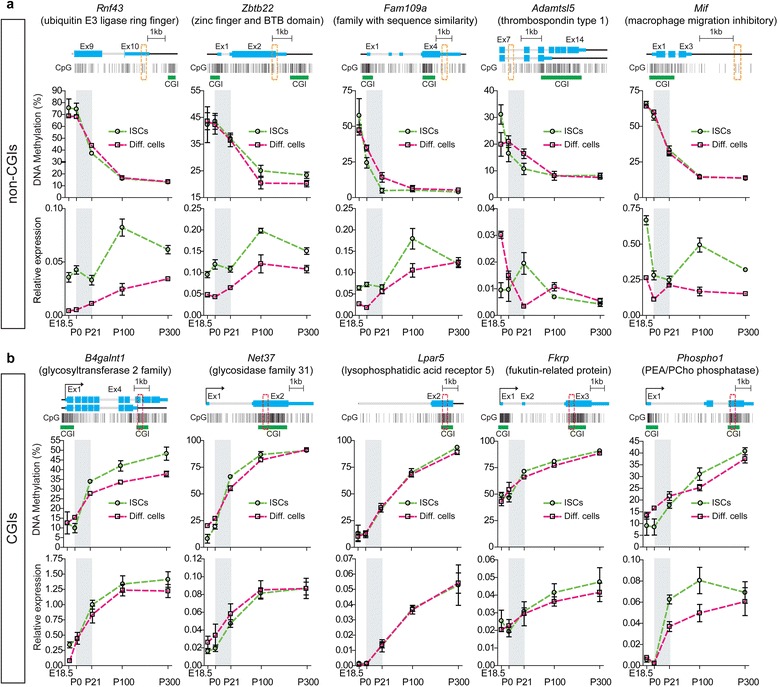
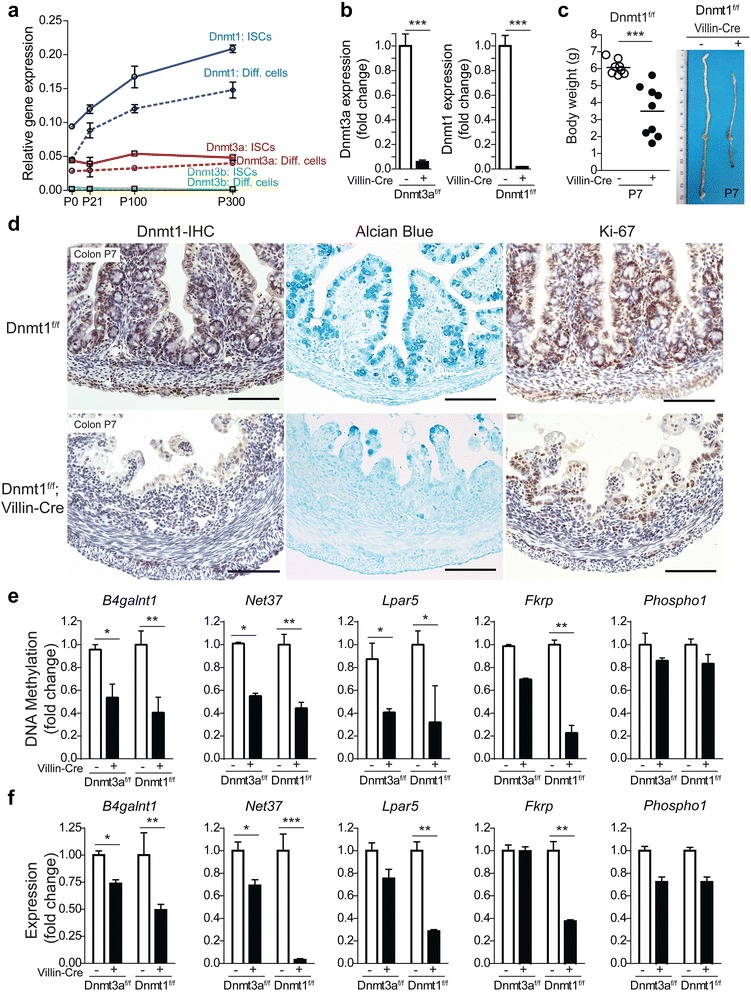
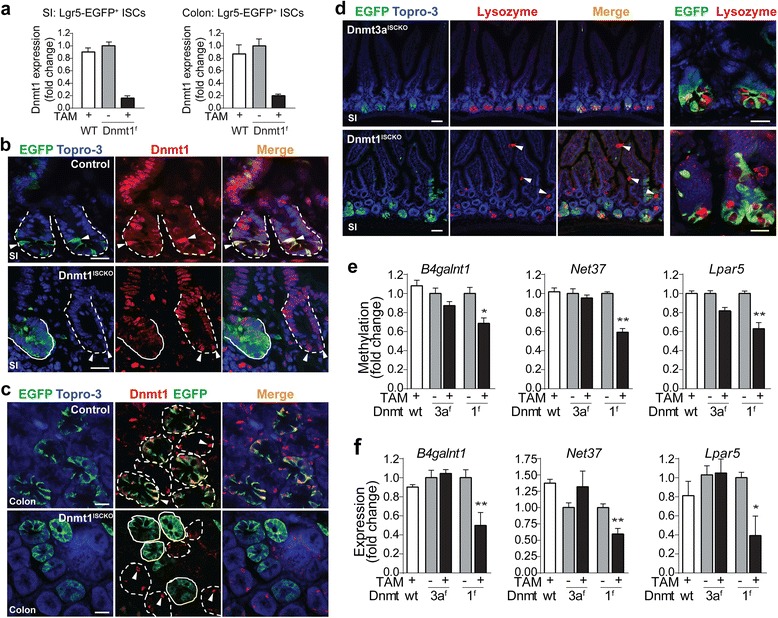
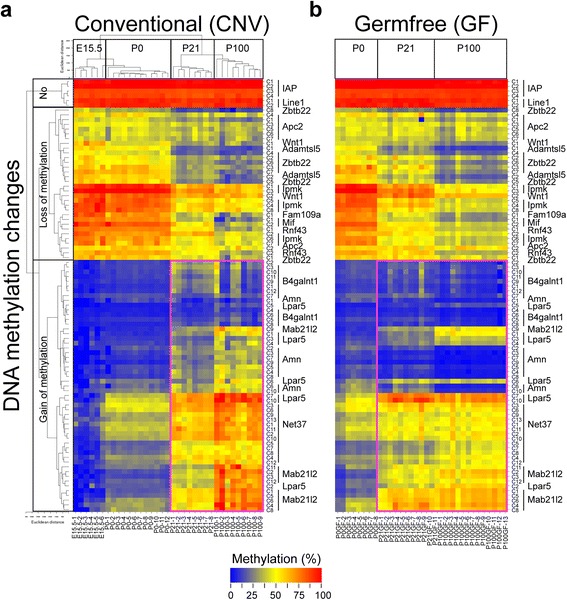
We use whole genome bisulfite sequencing, and find that differentiation of mouse colonic intestinal stem cells to intestinal epithelium is not associated with major changes in DNA methylation. However, we detect extensive dynamic epigenetic changes in intestinal stem cells and their progeny during the suckling period, suggesting postnatal epigenetic development in this stem cell population. We find that postnatal DNA methylation increases at 3' CpG islands (CGIs) correlate with transcriptional activation of glycosylation genes responsible for intestinal maturation. To directly test whether 3' CGI methylation regulates transcription, we conditionally disrupted two major DNA methyltransferases, Dnmt1 or Dnmt3a, in fetal and adult intestine. Deficiency of Dnmt1 causes severe intestinal abnormalities in neonates and disrupts crypt homeostasis in adults, whereas Dnmt3a loss was compatible with intestinal development. These studies reveal that 3' CGI methylation is functionally involved in the regulation of transcriptional activation in vivo, and that Dnmt1 is a critical regulator of postnatal epigenetic changes in intestinal stem cells. Finally, we show that postnatal 3' CGI methylation and associated gene activation in intestinal epithelial cells are significantly altered by germ-free conditions.
Our results demonstrate that the suckling period is critical for epigenetic development of intestinal stem cells, with potential important implications for lifelong gut health, and that the gut microbiome guides and/or facilitates these postnatal epigenetic processes.
DNA甲基化是复杂哺乳动物组织发育和维持过程中的一种关键表观遗传机制,但我们对其在肠道发育中的作用了解有限。
我们使用全基因组亚硫酸氢盐测序,发现小鼠结肠肠道干细胞向肠上皮细胞的分化与DNA甲基化的主要变化无关。然而,我们在哺乳期的肠道干细胞及其后代中检测到广泛的动态表观遗传变化,这表明该干细胞群体存在出生后的表观遗传发育。我们发现出生后3' CpG岛(CGIs)处的DNA甲基化增加与负责肠道成熟的糖基化基因的转录激活相关。为了直接测试3' CGI甲基化是否调节转录,我们在胎儿和成体肠道中条件性地破坏了两种主要的DNA甲基转移酶Dnmt1或Dnmt3a。Dnmt1的缺失导致新生儿严重的肠道异常,并破坏成体中的隐窝稳态,而Dnmt3a的缺失与肠道发育相容。这些研究表明,3' CGI甲基化在体内功能上参与转录激活的调节,并且Dnmt1是肠道干细胞出生后表观遗传变化的关键调节因子。最后,我们表明无菌条件会显著改变肠道上皮细胞中出生后的3' CGI甲基化和相关基因激活。
我们的结果表明哺乳期对肠道干细胞的表观遗传发育至关重要,对终身肠道健康具有潜在的重要意义,并且肠道微生物群指导和/或促进这些出生后的表观遗传过程。