Pulcini Serena, Staines Henry M, Lee Andrew H, Shafik Sarah H, Bouyer Guillaume, Moore Catherine M, Daley Daniel A, Hoke Matthew J, Altenhofen Lindsey M, Painter Heather J, Mu Jianbing, Ferguson David J P, Llinás Manuel, Martin Rowena E, Fidock David A, Cooper Roland A, Krishna Sanjeev
Institute for Infection and Immunity, St. George's, University of London, London SW17 0RE, UK.
Department of Microbiology and Immunology, Columbia University Medical Center, New York, NY 10032, USA.
Sci Rep. 2015 Sep 30;5:14552. doi: 10.1038/srep14552.
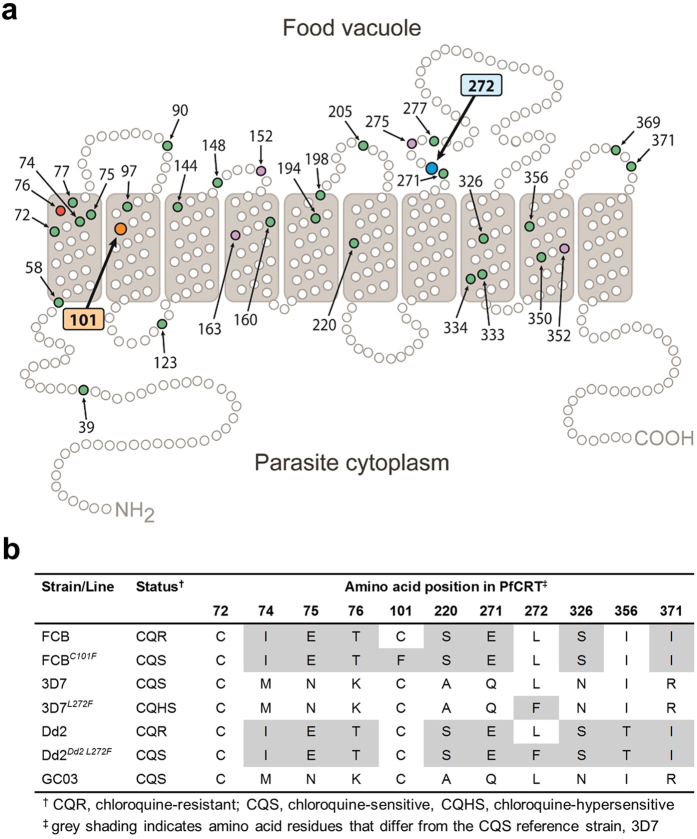
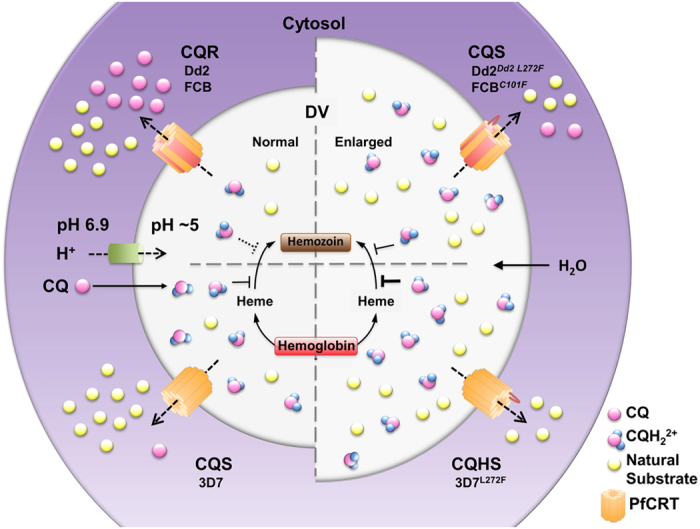
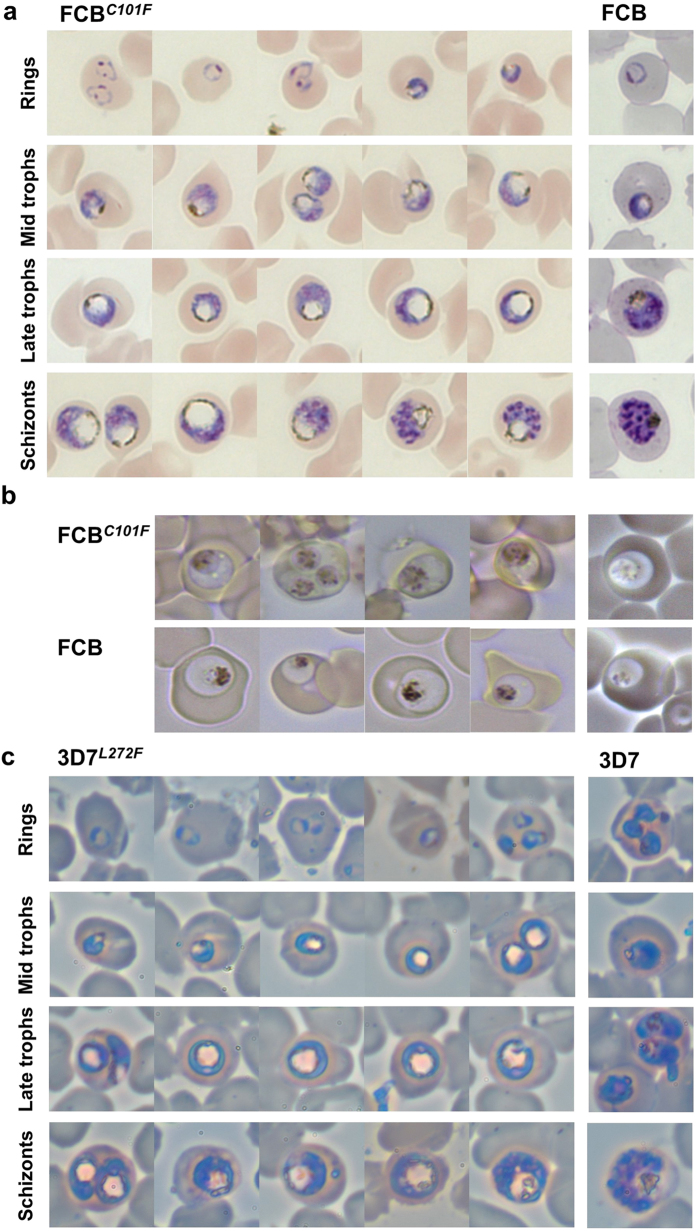
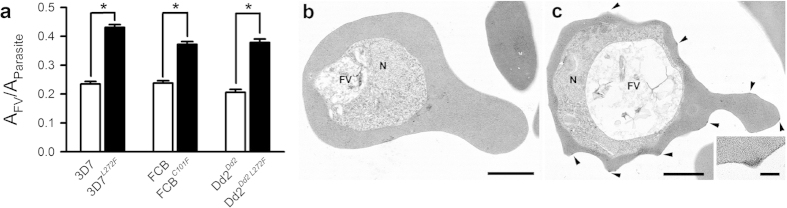
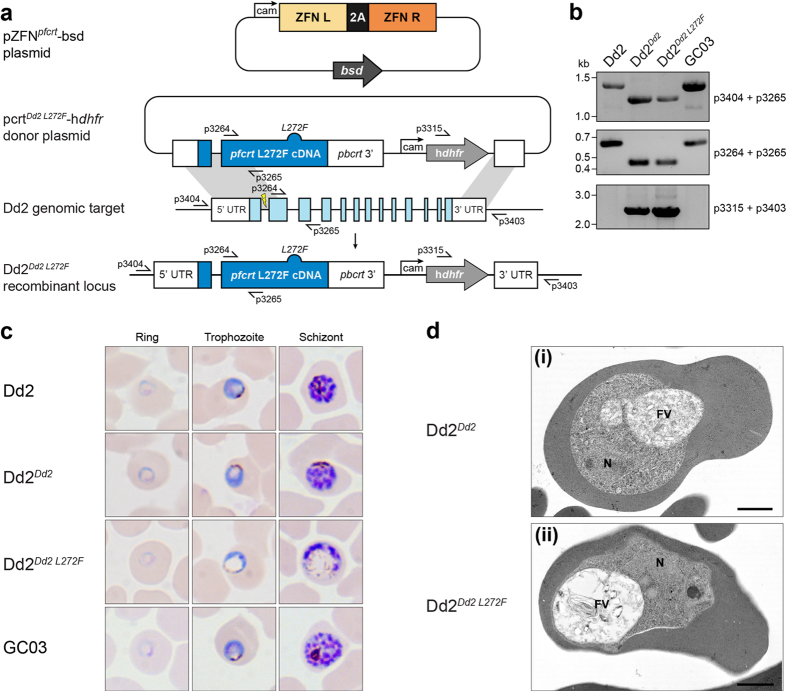
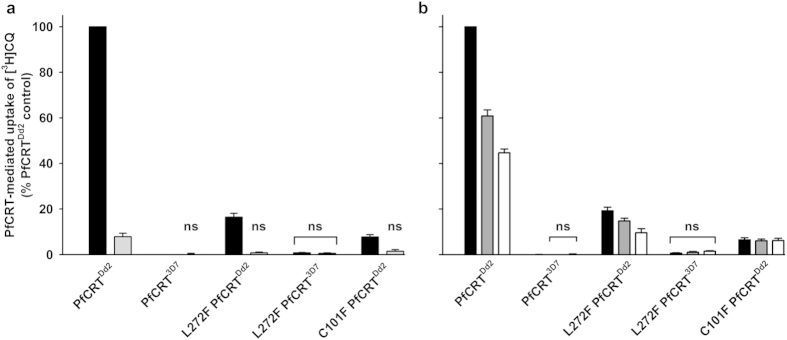
Mutations in the Plasmodium falciparum chloroquine resistance transporter, PfCRT, are the major determinant of chloroquine resistance in this lethal human malaria parasite. Here, we describe P. falciparum lines subjected to selection by amantadine or blasticidin that carry PfCRT mutations (C101F or L272F), causing the development of enlarged food vacuoles. These parasites also have increased sensitivity to chloroquine and some other quinoline antimalarials, but exhibit no or minimal change in sensitivity to artemisinins, when compared with parental strains. A transgenic parasite line expressing the L272F variant of PfCRT confirmed this increased chloroquine sensitivity and enlarged food vacuole phenotype. Furthermore, the introduction of the C101F or L272F mutation into a chloroquine-resistant variant of PfCRT reduced the ability of this protein to transport chloroquine by approximately 93 and 82%, respectively, when expressed in Xenopus oocytes. These data provide, at least in part, a mechanistic explanation for the increased sensitivity of the mutant parasite lines to chloroquine. Taken together, these findings provide new insights into PfCRT function and PfCRT-mediated drug resistance, as well as the food vacuole, which is an important target of many antimalarial drugs.
恶性疟原虫氯喹抗性转运蛋白(PfCRT)的突变是这种致命人类疟原虫对氯喹产生抗性的主要决定因素。在此,我们描述了经金刚烷胺或杀稻瘟菌素筛选的恶性疟原虫株系,它们携带PfCRT突变(C101F或L272F),导致食物泡增大。与亲代菌株相比,这些寄生虫对氯喹和其他一些喹啉类抗疟药的敏感性也有所增加,但对青蒿素的敏感性没有变化或变化很小。表达PfCRT的L272F变体的转基因寄生虫株系证实了这种对氯喹敏感性的增加和食物泡增大的表型。此外,将C101F或L272F突变引入PfCRT的氯喹抗性变体中,当在非洲爪蟾卵母细胞中表达时,该蛋白转运氯喹的能力分别降低了约93%和82%。这些数据至少部分地为突变寄生虫株系对氯喹敏感性增加提供了机制解释。综上所述,这些发现为PfCRT的功能、PfCRT介导的耐药性以及食物泡提供了新的见解,食物泡是许多抗疟药物的重要靶点。