Stumpf Liane, López Greco Laura S
Biology of Reproduction and Growth in Crustaceans, Department of Biodiversity and Experimental Biology, FCEyN, University of Buenos Aires, Buenos Aires, Argentina; IBBEA, CONICET-UBA, Buenos Aires, Argentina.
PLoS One. 2015 Sep 30;10(9):e0139372. doi: 10.1371/journal.pone.0139372. eCollection 2015.
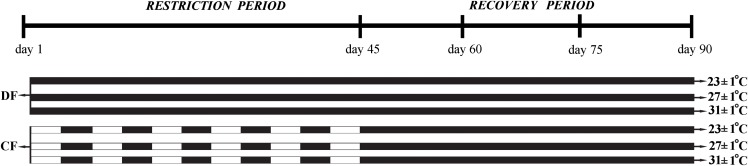
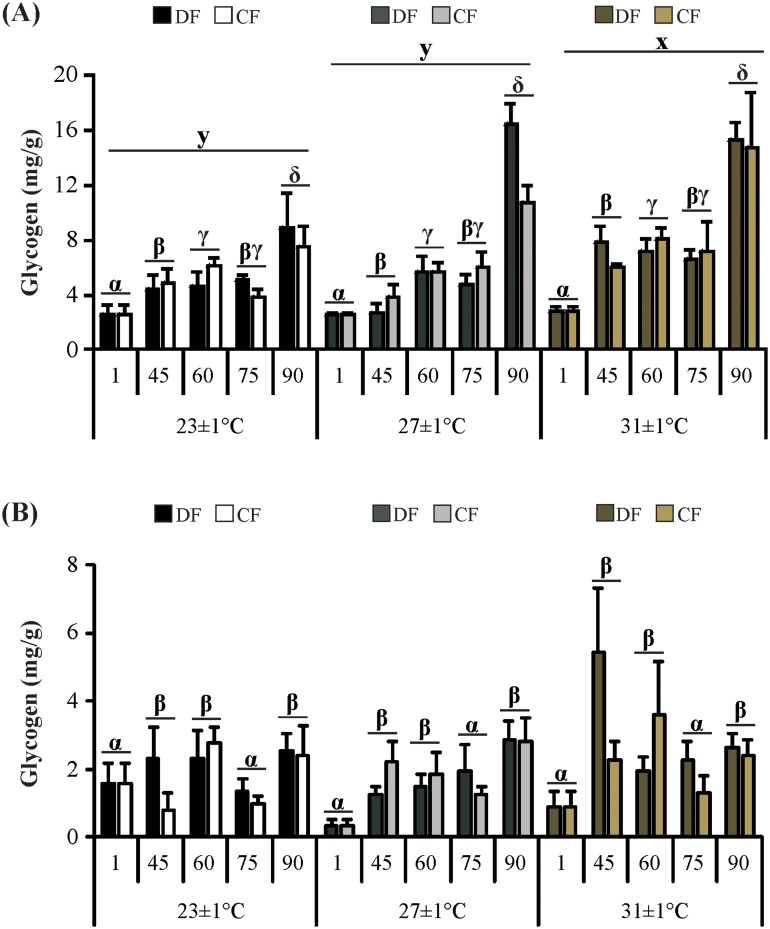
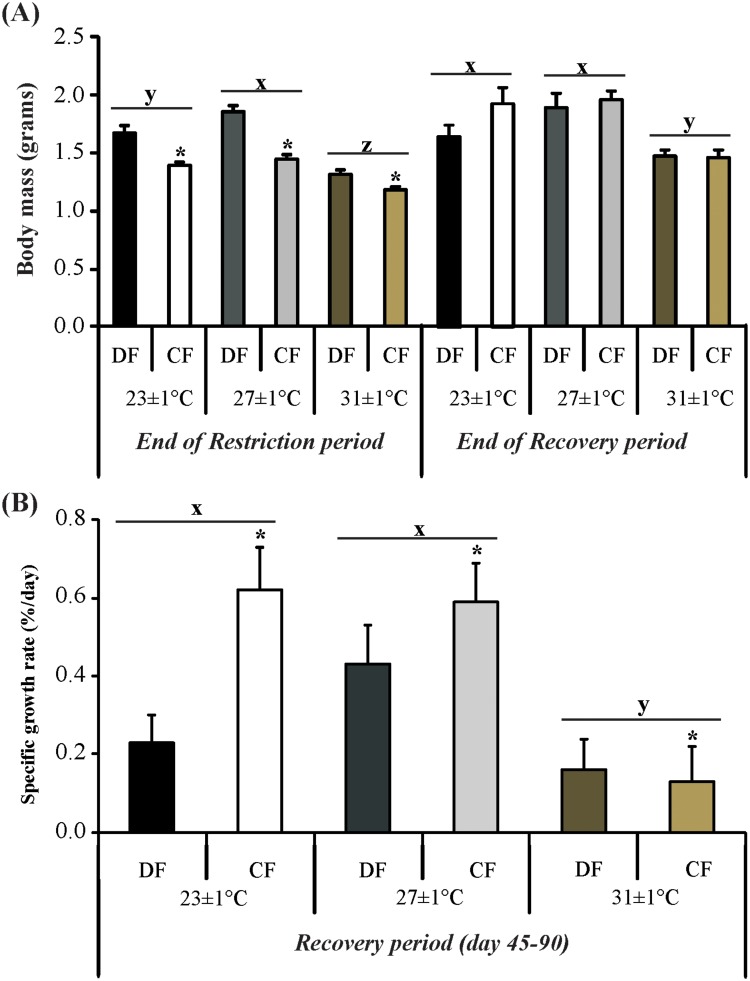
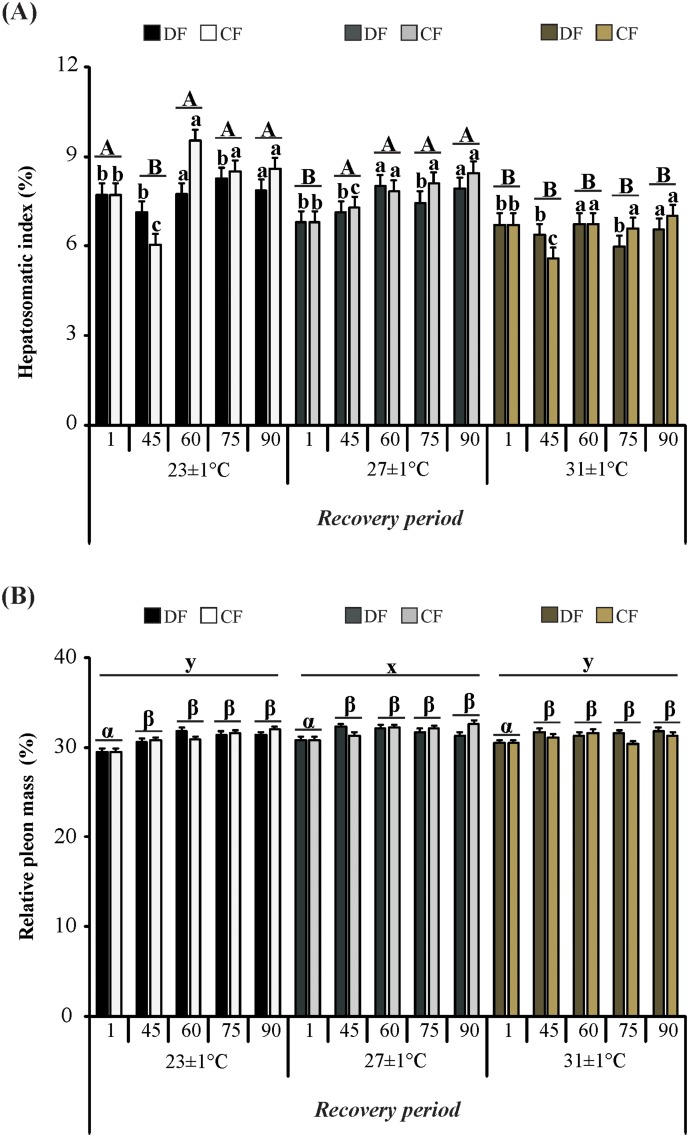
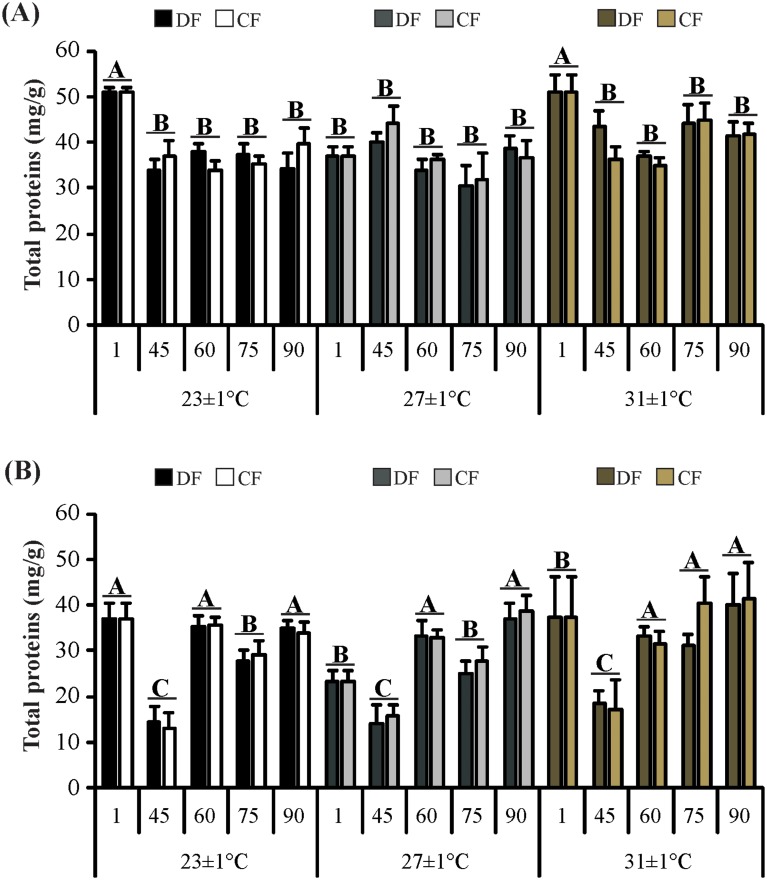
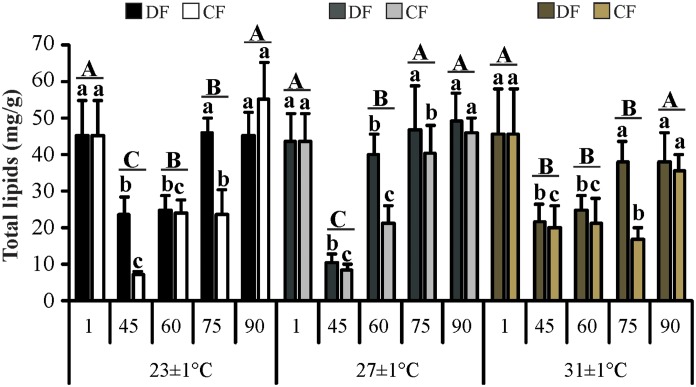
Feeding restriction, as a trigger for compensatory growth, might be considered an alternative viable strategy for minimizing waste as well as production costs. The study assessed whether juvenile redclaw crayfish Cherax quadricarinatus (initial weight 0.99 ± 0.03 g) was able to compensate for feeding restriction at different temperatures (23 ± 1, 27 ± 1 and 31 ± 1 ° C). Hyperphagia, food utilization efficiency, energetic reserves, and hepatopancreas structure were analyzed. Three temperatures and two feeding regimes (DF-daily fed throughout the experiment and CF- 4 days food deprivation followed by 4 days of feeding, intermittently) were tested. The restriction period was from day 1 to 45, and the recovery period was from day 45 to 90. The previously restricted crayfish held at 23, 27, and 31 ± 1 ° C displayed complete body weight catch-up through compensatory growth following the restriction period with depressed growth. The mechanisms that might explain this response were higher feed intake (hyperphagia), and increased food utilization efficiency. Hepatopancreatic lipids were used as a metabolic fuel and hepatosomatic index was reduced in the previously restricted crayfish, but recovery at the same level of unrestricted crayfish occurred after the shift to daily feeding. The highest temperature affected adversely growth, feed intake, food efficiency, and metabolism of crayfish, whereas the lowest temperature and feeding restriction induced a more efficient growth of the crayfish.
限食作为一种促进补偿性生长的诱因,可被视为一种既能减少浪费又能降低生产成本的可行替代策略。该研究评估了幼体红螯螯虾(初始体重0.99±0.03克)在不同温度(23±1、27±1和31±1℃)下是否能够补偿限食的影响。分析了摄食过量、食物利用效率、能量储备和肝胰腺结构。测试了三种温度和两种投喂方式(DF-在整个实验期间每日投喂;CF-4天禁食后再4天投喂,间歇性进行)。限食期为第1天至第45天,恢复期为第45天至第90天。先前在23、27和31±1℃下受到限食的螯虾在限食期生长受抑后,通过补偿性生长实现了体重完全追赶。可能解释这种反应的机制是摄食量增加(摄食过量)和食物利用效率提高。先前受到限食的螯虾将肝胰腺脂质用作代谢燃料,肝体指数降低,但在转为每日投喂后恢复到与未受限食的螯虾相同水平。最高温度对螯虾的生长、摄食量、食物效率和代谢产生不利影响,而最低温度和限食则使螯虾生长更高效。