Fry Bryan A, Solomon Lee A, Leslie Dutton P, Moser Christopher C
Department of Biochemistry & Biophysics, Univ. of Pennsylvania, Philadelphia PA, USA.
Department of Biochemistry & Biophysics, Univ. of Pennsylvania, Philadelphia PA, USA.
Biochim Biophys Acta. 2016 May;1857(5):513-521. doi: 10.1016/j.bbabio.2015.09.008. Epub 2015 Sep 28.
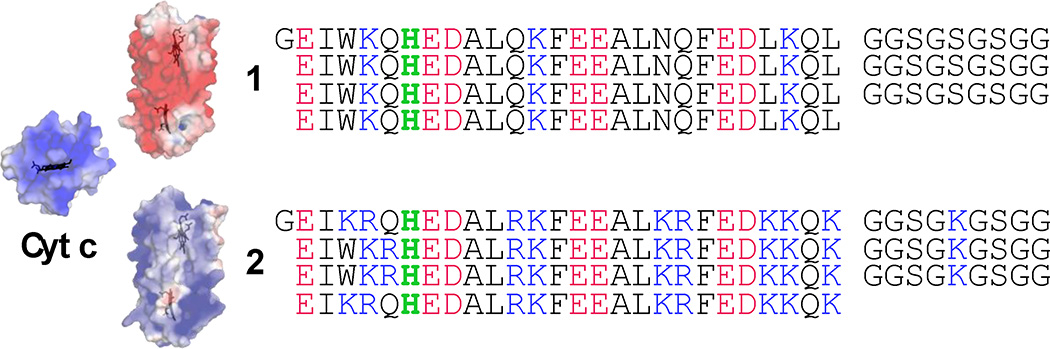
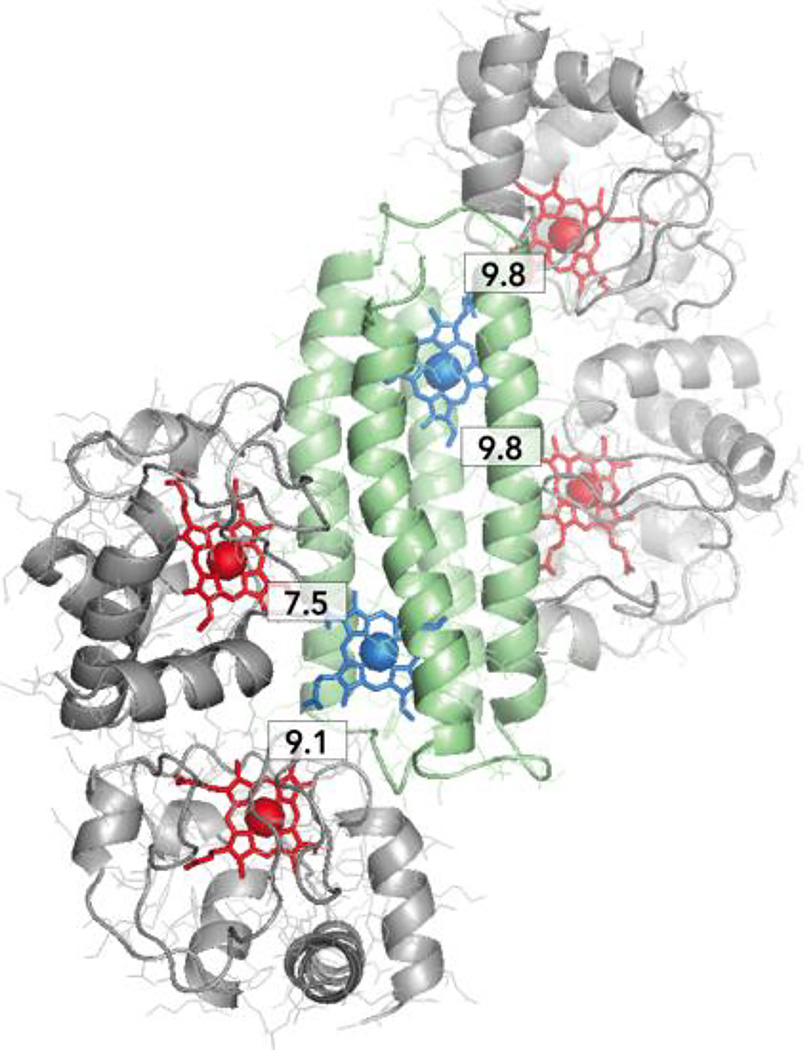
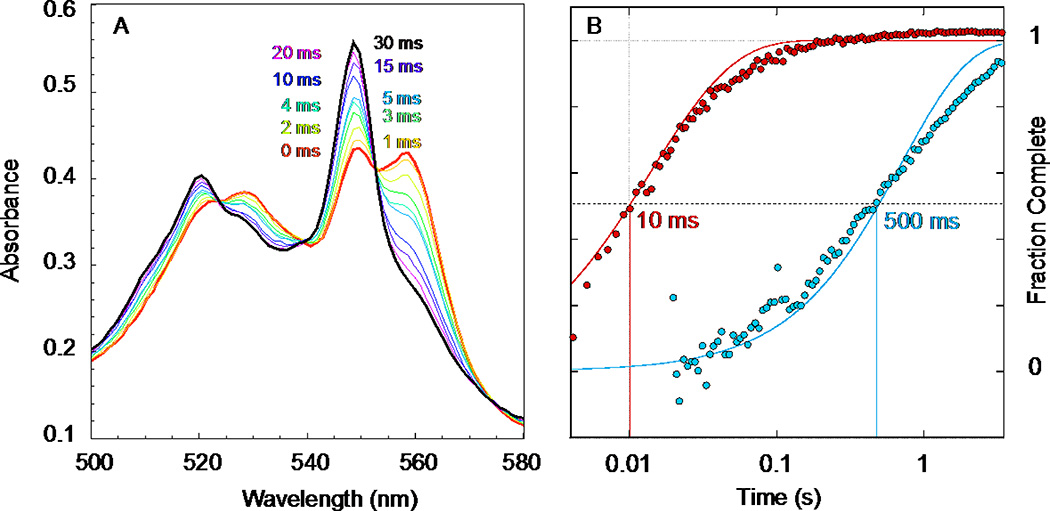
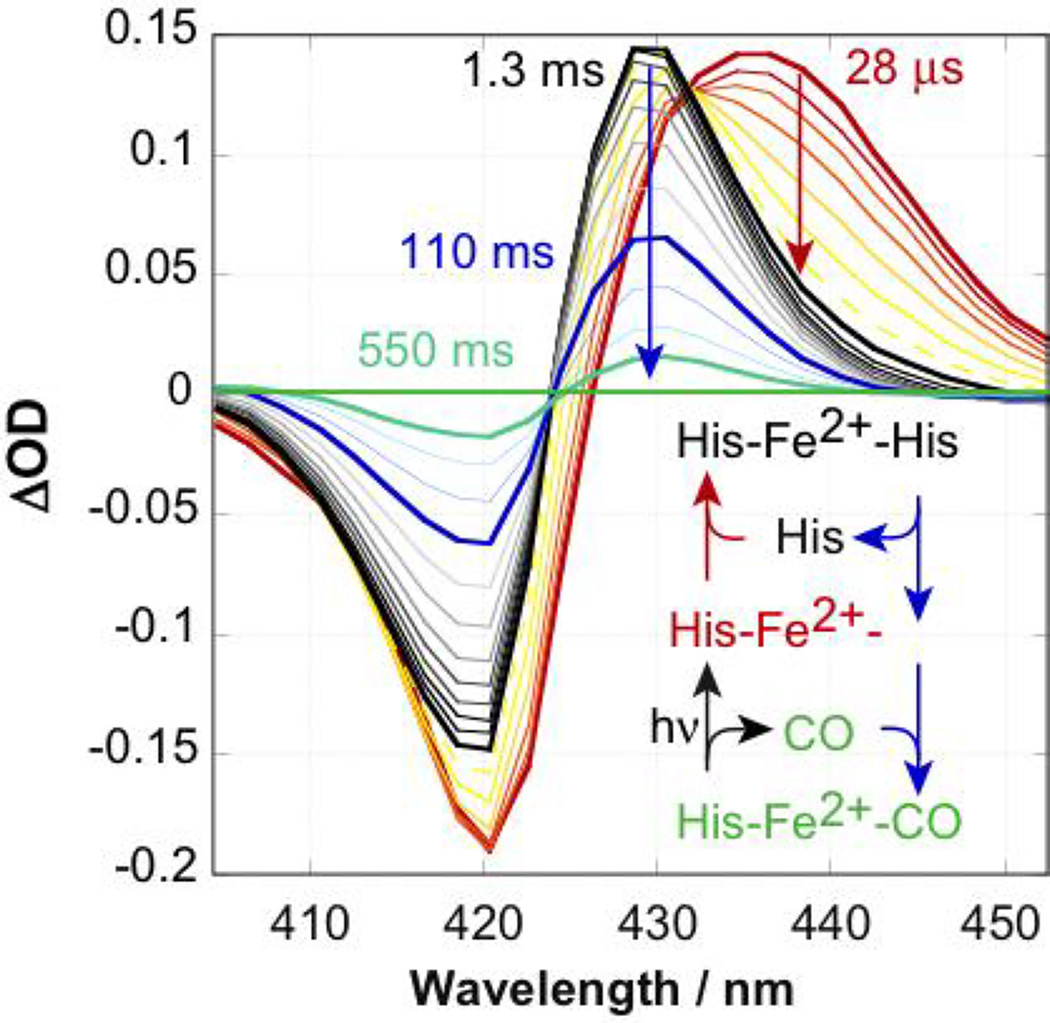
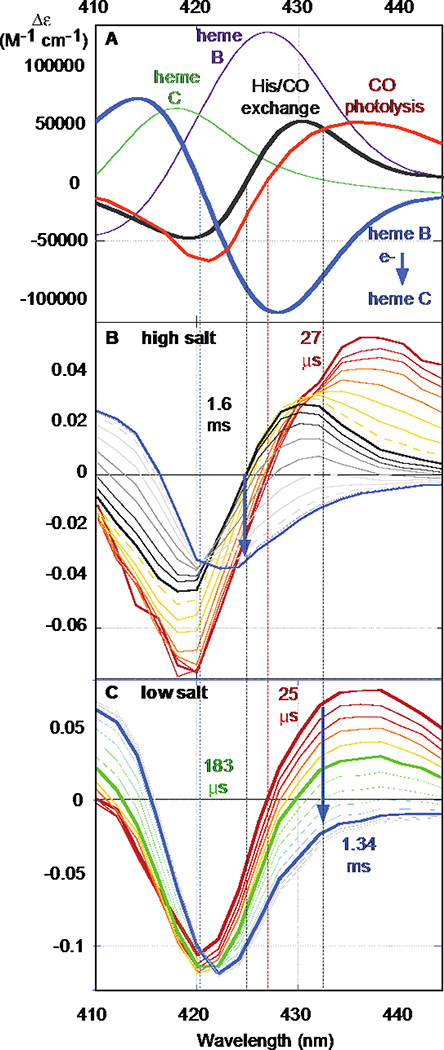
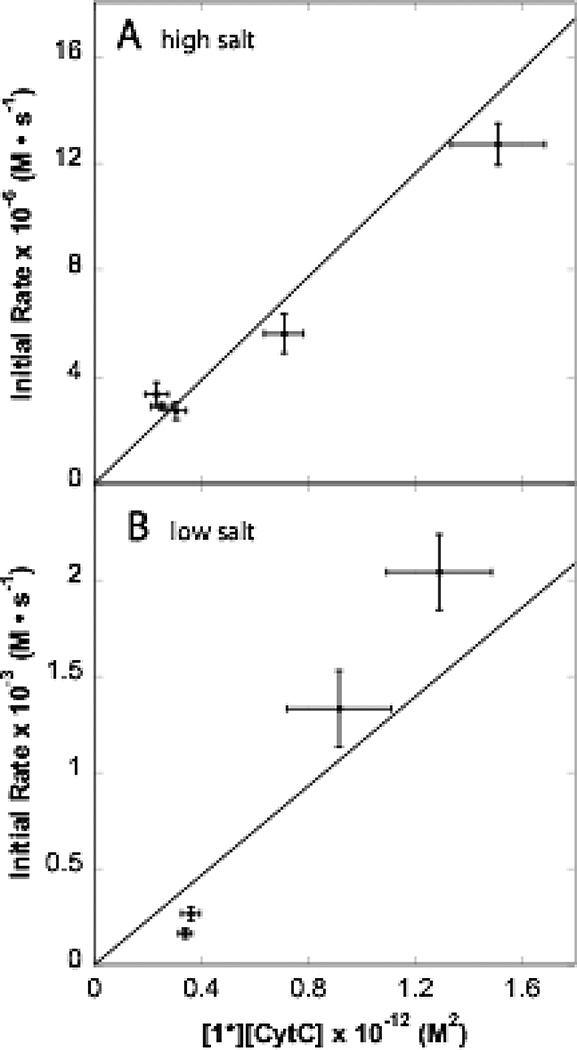
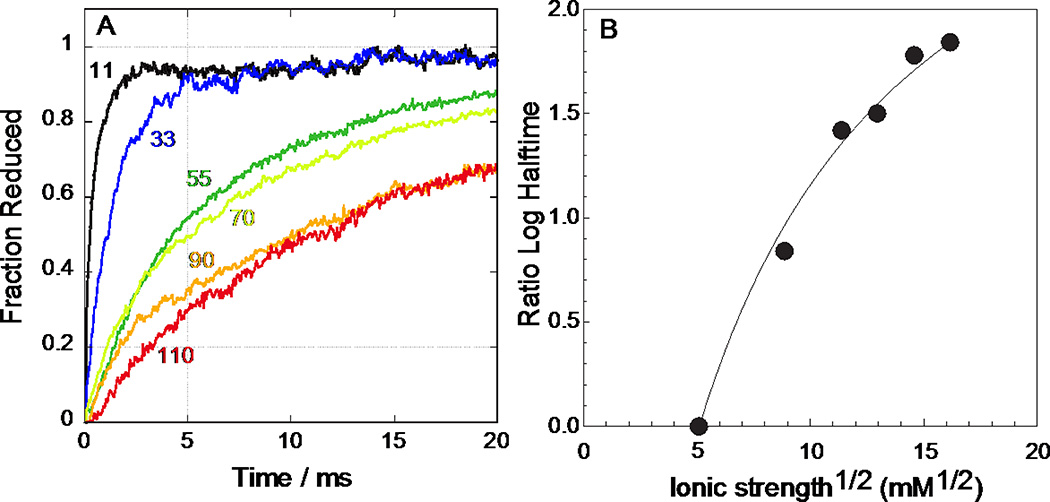
Maquettes are man-made cofactor-binding oxidoreductases designed from first principles with minimal reference to natural protein sequences. Here we focus on water-soluble maquettes designed and engineered to perform diffusive electron transport of the kind typically carried out by cytochromes, ferredoxins and flavodoxins and other small proteins in photosynthetic and respiratory energy conversion and oxido-reductive metabolism. Our designs were tested by analysis of electron transfer between heme maquettes and the well-known natural electron transporter, cytochrome c. Electron-transfer kinetics were measured from seconds to milliseconds by stopped-flow, while sub-millisecond resolution was achieved through laser photolysis of the carbon monoxide maquette heme complex. These measurements demonstrate electron transfer from the maquette to cytochrome c, reproducing the timescales and charge complementarity modulation observed in natural systems. The ionic strength dependence of inter-protein electron transfer from 9.7×10(6) M(-1) s(-1) to 1.2×10(9) M(-1) s(-1) follows a simple Debye-Hückel model for attraction between +8 net charged oxidized cytochrome c and -19 net charged heme maquette, with no indication of significant protein dipole moment steering. Successfully recreating essential components of energy conversion and downstream metabolism in man-made proteins holds promise for in vivo clinical intervention and for the production of fuel or other industrial products. This article is part of a Special Issue entitled Biodesign for Bioenergetics--the design and engineering of electronic transfer cofactors, proteins and protein networks, edited by Ronald L. Koder and J.L. Ross Anderson.
模型是从基本原理出发设计的人工辅因子结合氧化还原酶,设计过程中极少参考天然蛋白质序列。在这里,我们专注于设计和构建的水溶性模型,其功能是进行扩散性电子传递,这种电子传递通常由细胞色素、铁氧化还原蛋白、黄素氧化还原蛋白以及光合和呼吸能量转换与氧化还原代谢中的其他小蛋白质来完成。我们通过分析血红素模型与著名的天然电子转运蛋白细胞色素c之间的电子转移来测试我们的设计。通过停流法测量了从秒到毫秒的电子转移动力学,同时通过一氧化碳模型血红素复合物的激光光解实现了亚毫秒分辨率。这些测量结果表明电子从模型转移到细胞色素c,重现了在天然系统中观察到的时间尺度和电荷互补性调节。蛋白质间电子转移的离子强度依赖性从9.7×10⁶ M⁻¹ s⁻¹到1.2×10⁹ M⁻¹ s⁻¹,遵循简单的德拜-休克尔模型,即带 +8净电荷的氧化型细胞色素c与带 -19净电荷的血红素模型之间的吸引力,没有迹象表明存在显著的蛋白质偶极矩引导作用。在人工蛋白质中成功重建能量转换和下游代谢的关键成分,有望用于体内临床干预以及燃料或其他工业产品的生产。本文是名为“生物能量学的生物设计——电子转移辅因子、蛋白质和蛋白质网络的设计与工程”特刊的一部分,由罗纳德·L·科德和J.L.罗斯·安德森编辑。