Langhans Mark T, Yu Shuting, Tuan Rocky S
Center for Cellular and Molecular Engineering, Department of Orthopaedic Surgery, University of Pittsburgh School of Medicine, 450 Technology Drive, Room 221, Pittsburgh, PA 15219, USA.
Curr Stem Cell Res Ther. 2016;11(6):453-474. doi: 10.2174/1574888x10666151001115248.
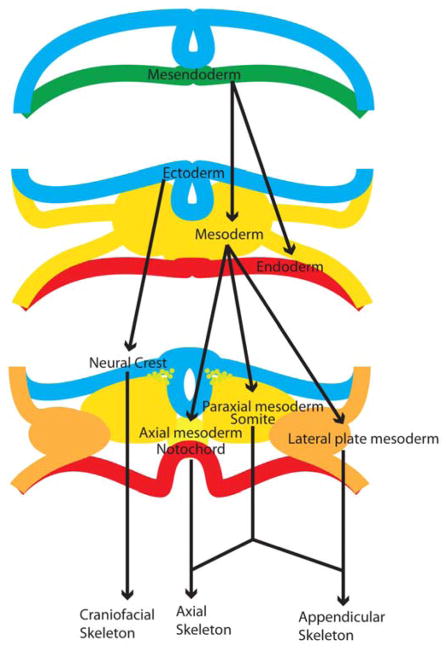
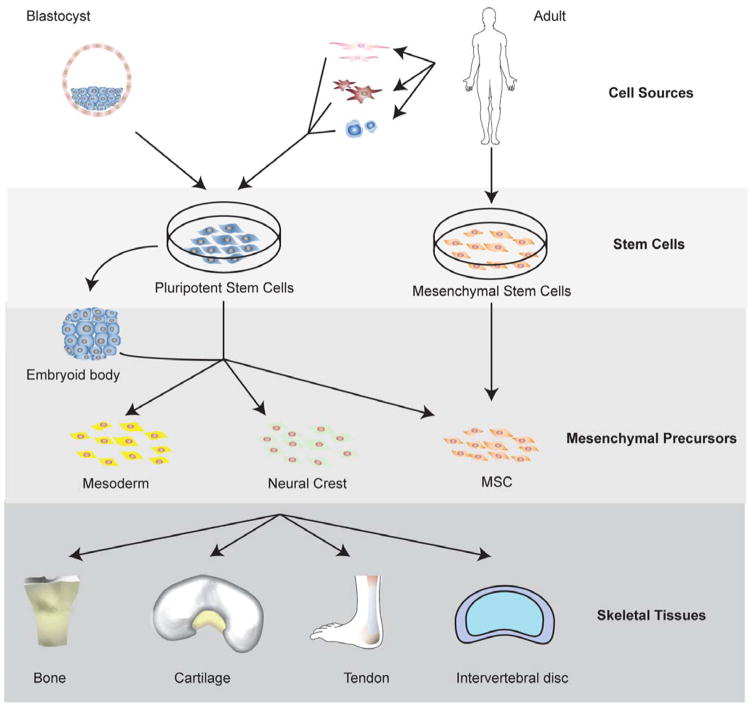
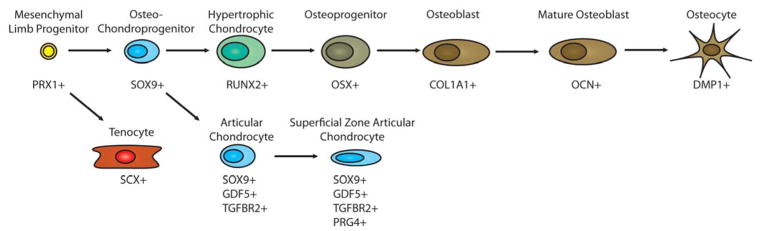
This review surveys the use of pluripotent and multipotent stem cells in skeletal tissue engineering. Specific emphasis is focused on evaluating the function and activities of these cells in the context of development in vivo, and how technologies and methods of stem cell-based tissue engineering for stem cells must draw inspiration from developmental biology. Information on the embryonic origin and in vivo differentiation of skeletal tissues is first reviewed, to shed light on the persistence and activities of adult stem cells that remain in skeletal tissues after embryogenesis. Next, the development and differentiation of pluripotent stem cells is discussed, and some of their advantages and disadvantages in the context of tissue engineering are presented. The final section highlights current use of multipotent adult mesenchymal stem cells, reviewing their origin, differentiation capacity, and potential applications to tissue engineering.
本综述探讨了多能干细胞和多潜能干细胞在骨骼组织工程中的应用。特别着重于评估这些细胞在体内发育过程中的功能和活性,以及基于干细胞的组织工程技术和方法如何从发育生物学中汲取灵感。首先回顾了骨骼组织的胚胎起源和体内分化信息,以阐明胚胎发生后留在骨骼组织中的成体干细胞的持久性和活性。接下来讨论了多能干细胞的发育和分化,并介绍了它们在组织工程背景下的一些优缺点。最后一部分重点介绍了多能成体间充质干细胞的当前应用,回顾了它们的起源、分化能力以及在组织工程中的潜在应用。