Kurt C
Trakya University, School of Physical Education and Sports, Coaching Education Department, Edirne, Türkiye.
Biol Sport. 2015 Sep;32(3):225-33. doi: 10.5604/20831862.1150305. Epub 2015 Apr 23.
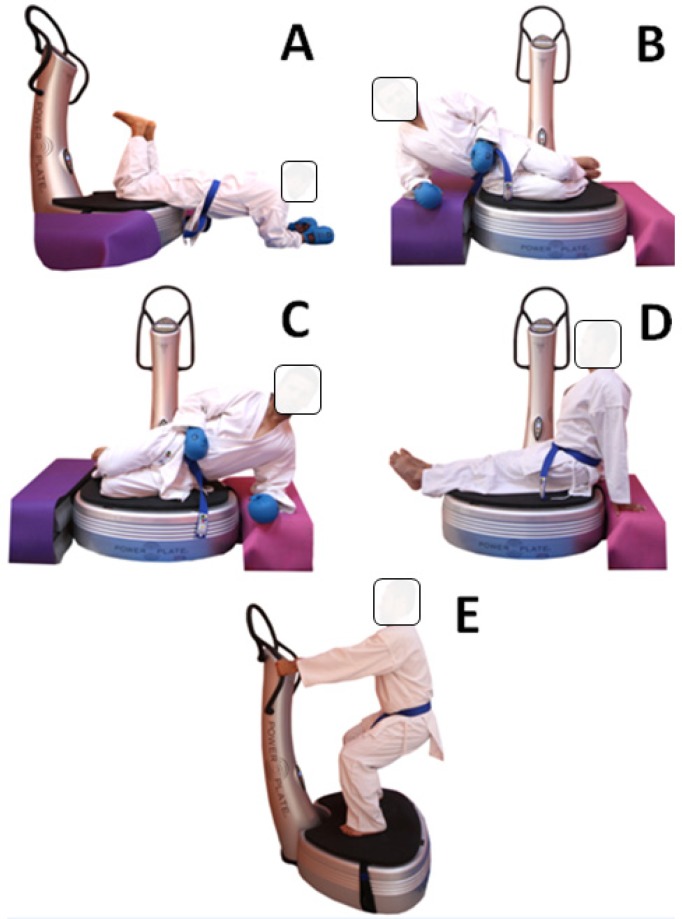
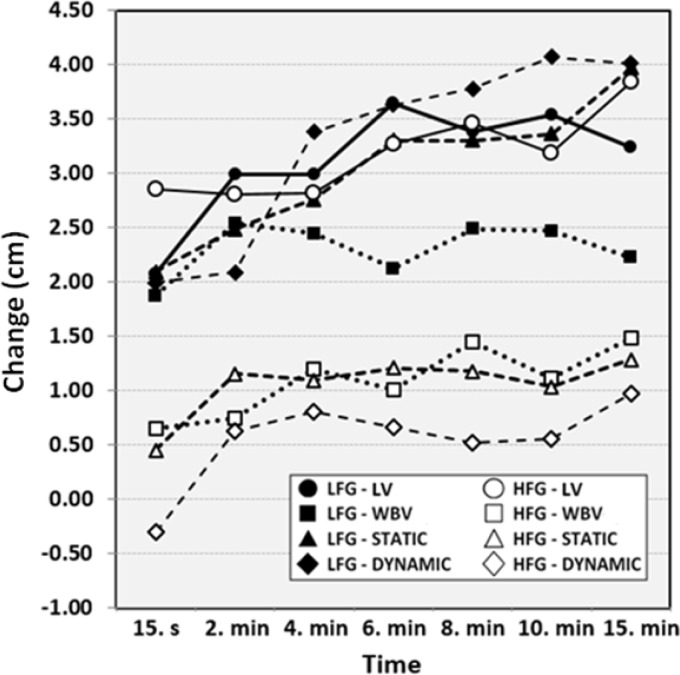
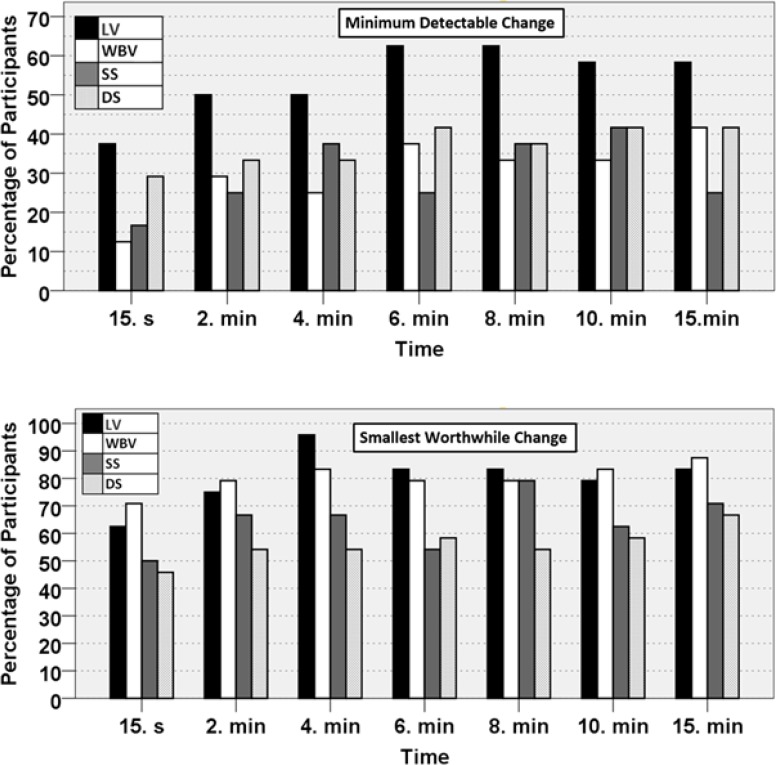
This study aimed to compare the effect of local vibration (LV) and whole body vibration (WBV) on lower body flexibility and to assess whether vibration treatments were more effective than traditionally used static and dynamic stretching methods. Twenty-four well-trained male combat athletes (age: 22.7 ± 3.3 years) performed four exercise protocols - LV (30 Hz, 4 mm), WBV (30 Hz, 4 mm), static stretching (SS), and dynamic stretching (DS) - in four sessions of equal duration 48 hours apart in a randomized, balanced order. During a 15-minute recovery after each protocol, subjects performed the stand and reach test (S&R) at the 15th second and the 2(nd), 4(th), 6(th), 8(th), 10(th) and 15(th) minute. There was a similar change pattern in S&R scores across the 15-minute recovery after each protocol (p = 0.572), remaining significantly elevated throughout the recovery. A significant main protocol effect was found for absolute change in S&R scores relative to baseline (p = 0.015). These changes were statistically greater in LV than WBV and DS. Changes in SS were not significantly different from LV, but were consistently lower than LV with almost moderate effect sizes. After LV, a greater percentage of subjects increased flexibility above the minimum detectable change compared to other protocols. Subjects with high flexibility (n = 12) benefited more from LV compared with other methods (effect size ≥ 0.862). In conclusion, LV was an effective alternative exercise modality to acutely increase lower extremity flexibility for well-trained athletes compared with WBV and traditional stretching exercises.
本研究旨在比较局部振动(LV)和全身振动(WBV)对下肢柔韧性的影响,并评估振动疗法是否比传统的静态和动态拉伸方法更有效。24名训练有素的男性格斗运动员(年龄:22.7±3.3岁)以随机、平衡的顺序,在四个持续时间相等且间隔48小时的时间段内,进行了四种运动方案——局部振动(30Hz,4mm)、全身振动(30Hz,4mm)、静态拉伸(SS)和动态拉伸(DS)。在每个方案后的15分钟恢复期间,受试者在第15秒以及第2、4、6、8、10和15分钟进行站立前屈测试(S&R)。每个方案后的15分钟恢复期间,S&R分数呈现相似的变化模式(p=0.572),在整个恢复过程中保持显著升高。相对于基线,S&R分数的绝对变化存在显著的主要方案效应(p=0.015)。这些变化在局部振动组比全身振动组和动态拉伸组在统计学上更大。静态拉伸组的变化与局部振动组无显著差异,但始终低于局部振动组,效应量几乎为中等。与其他方案相比,局部振动后,有更大比例的受试者柔韧性提高超过最小可检测变化。柔韧性高的受试者(n=12)与其他方法相比,从局部振动中获益更多(效应量≥0.862)。总之,与全身振动和传统拉伸运动相比,局部振动是一种有效的替代运动方式,可使训练有素的运动员急性增加下肢柔韧性。