Kim Ji Hyun, Wang Qian, Choi Ji Myung, Lee Sanghyun, Cho Eun Ju
Department of Food Science and Nutrition, and Kimchi Research Institute, Pusan National University, Busandaehak-ro 63 beon-gil, Geumjeong-gu, Busan 609-735, Korea.
Department of Integrative Plant Science, Chung-Ang University, Seodong-daero 4726, Daedeok-myeon, Anseong 456-756, Korea.
Nutr Res Pract. 2015 Oct;9(5):480-8. doi: 10.4162/nrp.2015.9.5.480. Epub 2015 May 22.
BACKGROUND/OBJECTIVES: Alzheimer's disease (AD) is characterized by deficits in memory and cognitive functions. The accumulation of amyloid beta peptide (Aβ) and oxidative stress in the brain are the most common causes of AD.
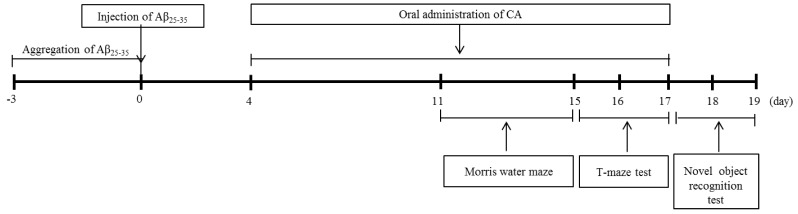
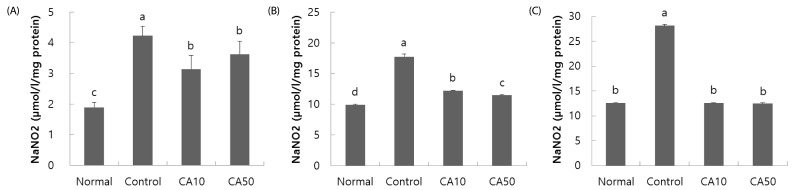
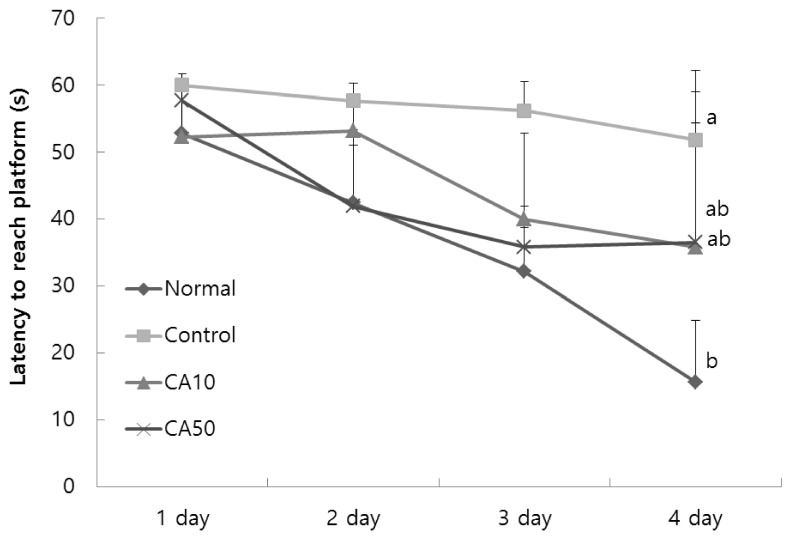
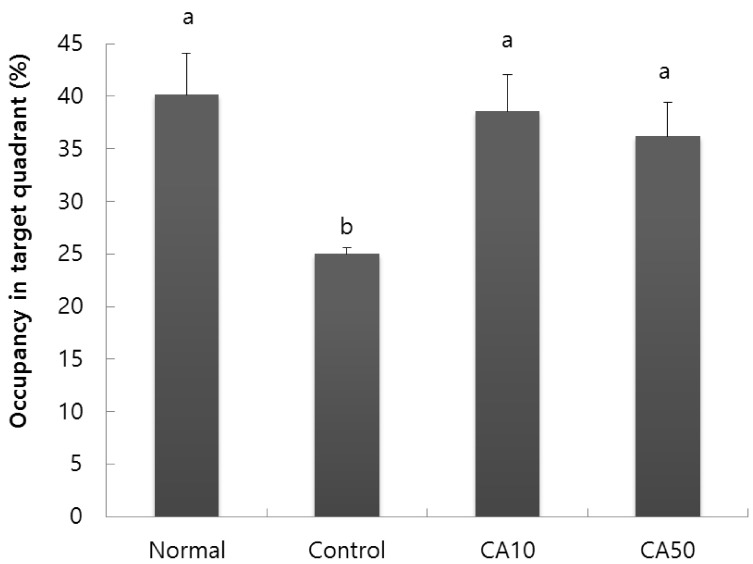
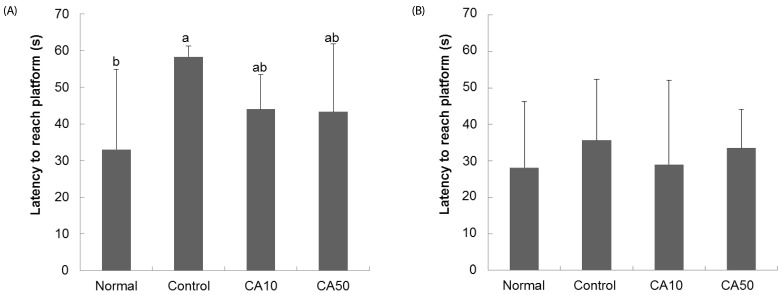
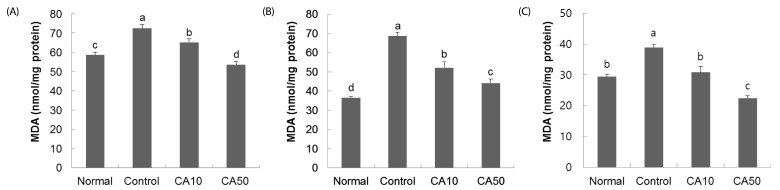
MATERIALS/METHODS: Caffeic acid (CA) is an active phenolic compound that has a variety of pharmacological actions. We studied the protective abilities of CA in an Aβ25-35-injected AD mouse model. CA was administered at an oral dose of 10 or 50 mg/kg/day for 2 weeks. Behavioral tests including T-maze, object recognition, and Morris water maze were carried out to assess cognitive abilities. In addition, lipid peroxidation and nitric oxide (NO) production in the brain were measured to investigate the protective effect of CA in oxidative stress.
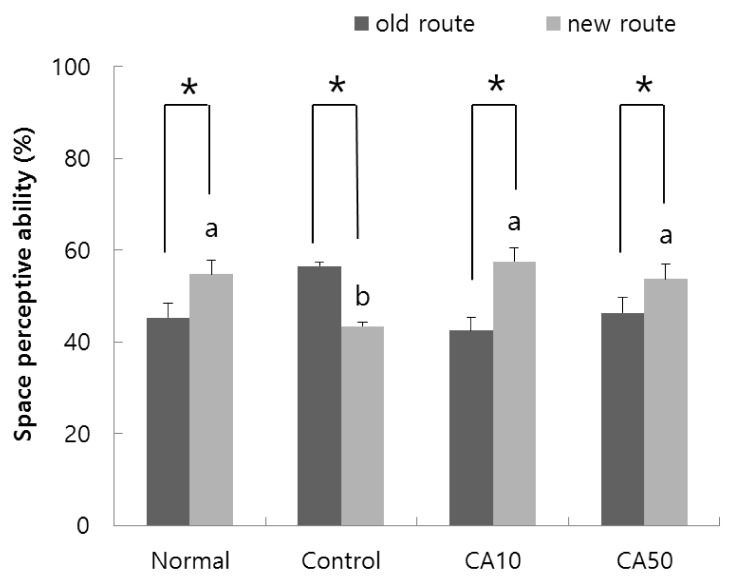
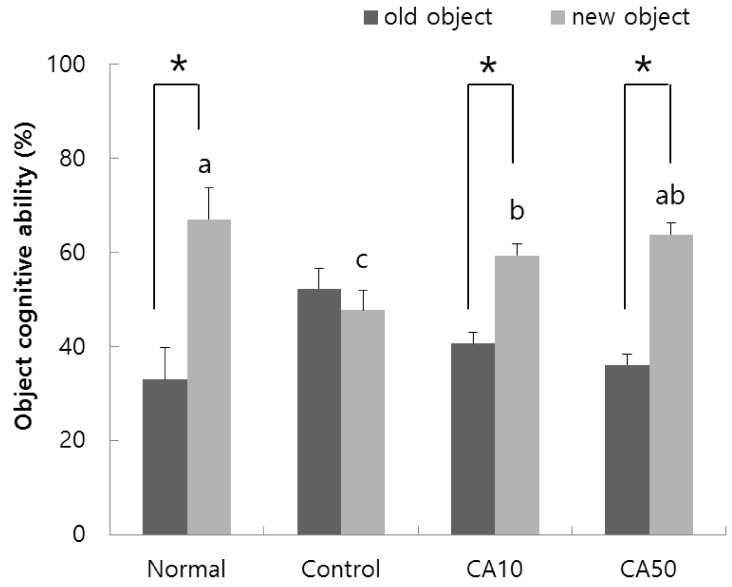
In the T-maze and object recognition tests, novel route awareness and novel object recognition were improved by oral administration of CA compared with the Aβ25-35-injected control group. These results indicate that administration of CA improved spatial cognitive and memory functions. The Morris water maze test showed that memory function was enhanced by administration of CA. In addition, CA inhibited lipid peroxidation and NO formation in the liver, kidney, and brain compared with the Aβ25-35-injected control group. In particular, CA 50 mg/kg/day showed the stronger protective effect from cognitive impairment than CA 10 mg/kg/day.
The present results suggest that CA improves Aβ25-35-induced memory deficits and cognitive impairment through inhibition of lipid peroxidation and NO production.
背景/目的:阿尔茨海默病(AD)的特征是记忆和认知功能缺陷。大脑中β淀粉样肽(Aβ)的积累和氧化应激是AD最常见的病因。
材料/方法:咖啡酸(CA)是一种具有多种药理作用的活性酚类化合物。我们在注射Aβ25 - 35的AD小鼠模型中研究了CA的保护能力。CA以10或50 mg/kg/天的口服剂量给药,持续2周。进行了包括T迷宫、物体识别和莫里斯水迷宫在内的行为测试,以评估认知能力。此外,测量了大脑中的脂质过氧化和一氧化氮(NO)生成,以研究CA在氧化应激中的保护作用。
在T迷宫和物体识别测试中,与注射Aβ25 - 35的对照组相比,口服CA可改善新路线意识和新物体识别能力。这些结果表明,给予CA可改善空间认知和记忆功能。莫里斯水迷宫测试表明,给予CA可增强记忆功能。此外,与注射Aβ25 - 35的对照组相比,CA抑制了肝脏、肾脏和大脑中的脂质过氧化和NO形成。特别是,50 mg/kg/天的CA比10 mg/kg/天的CA对认知障碍的保护作用更强。
目前的结果表明,CA通过抑制脂质过氧化和NO生成来改善Aβ25 - 35诱导的记忆缺陷和认知障碍。