Chu Fei-Fei, Shen Xiao-Fei, Lam Paul K S, Zeng Raymond J
Advanced Laboratory for Environmental Research and Technology, USTC-CityU, Suzhou 215123, China.
College of Standardization, China Jiliang University, Hangzhou 310018, China.
Int J Mol Sci. 2015 Sep 28;16(10):23355-68. doi: 10.3390/ijms161023355.
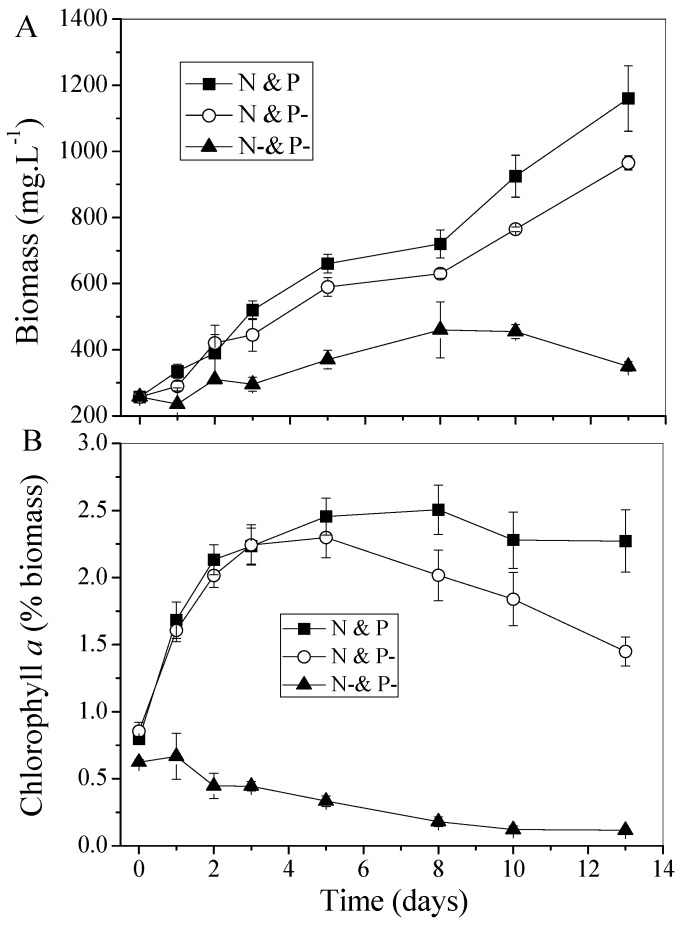
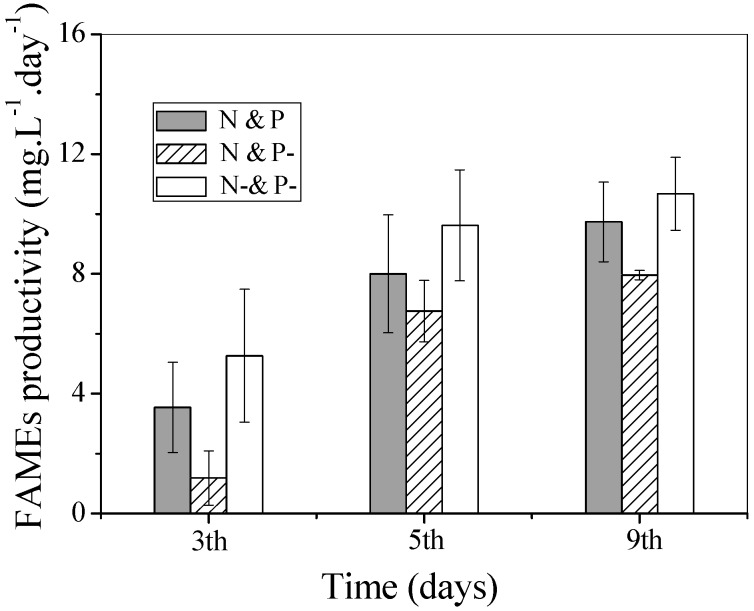
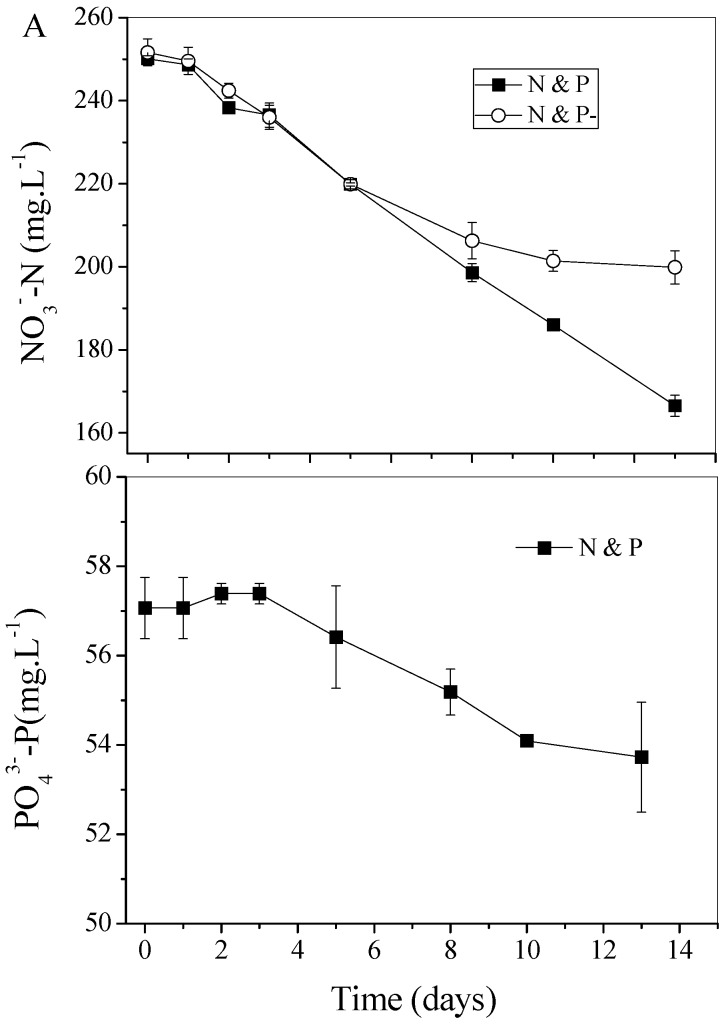
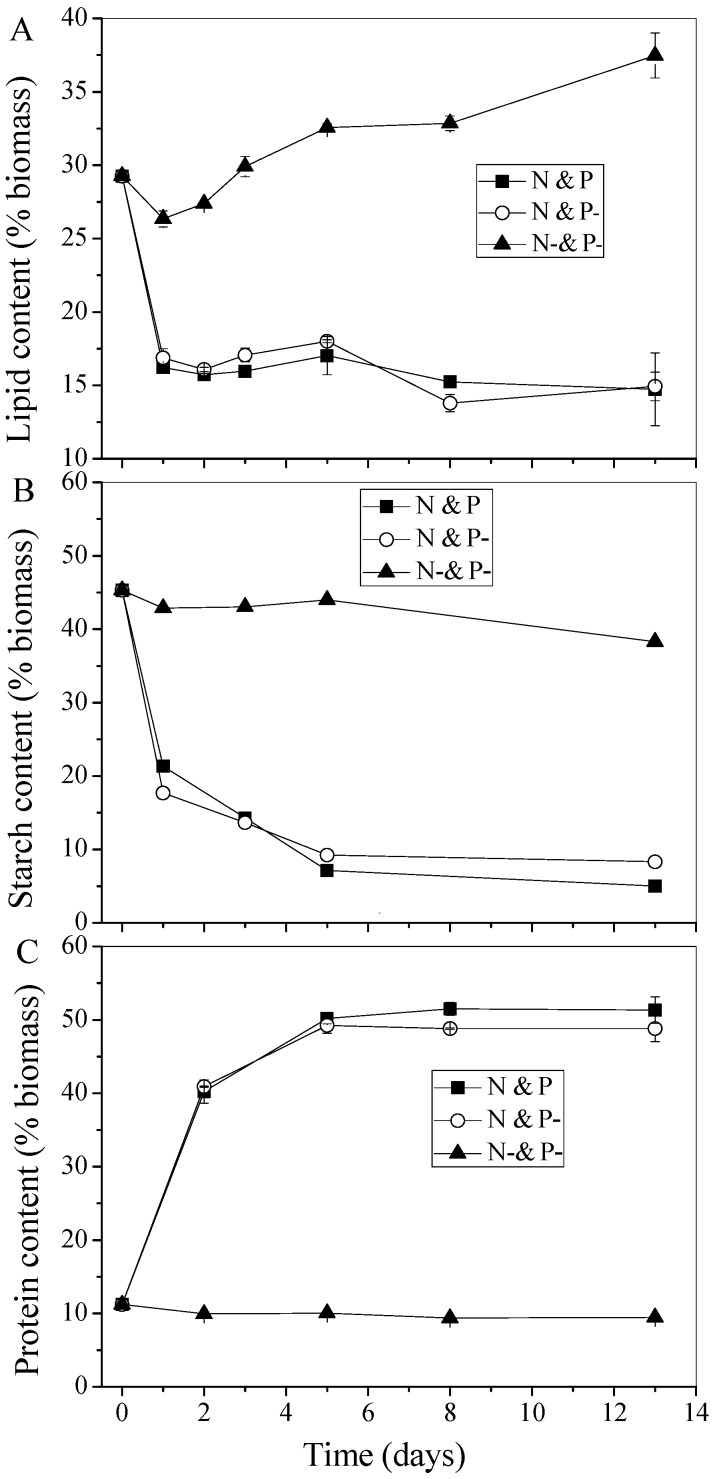
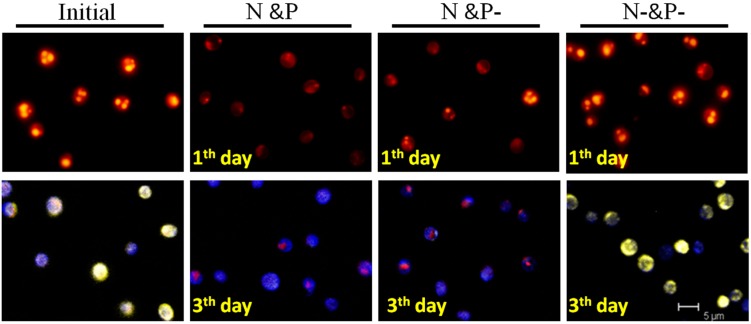
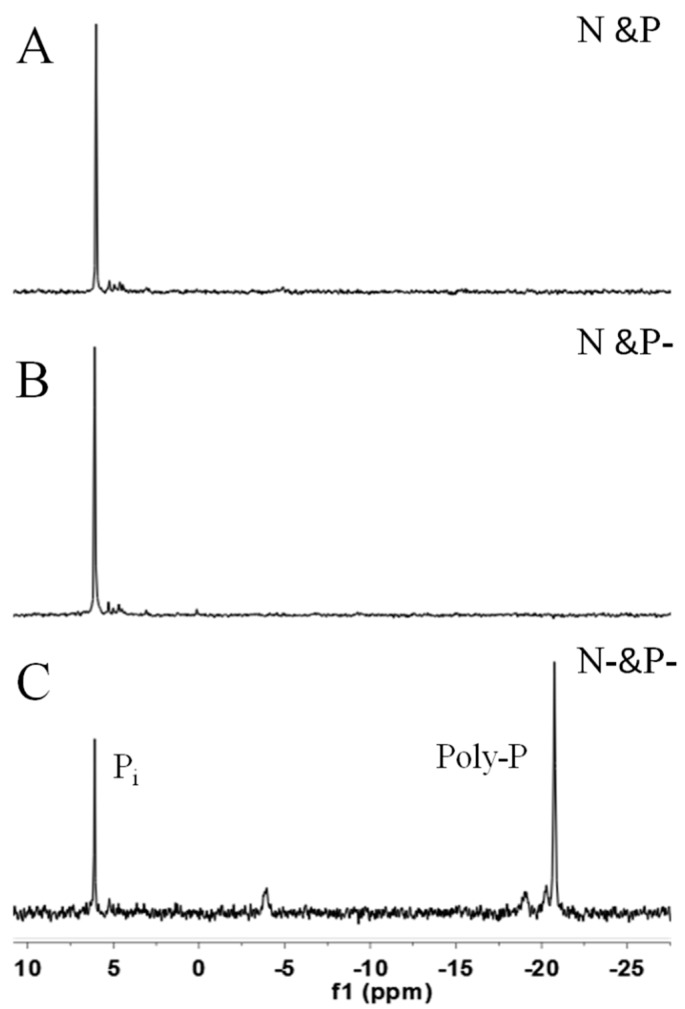
Polyphosphate (Poly-P) accumulation has been reported in Chlorella vulgaris under nitrogen deficiency conditions with sufficient P supply, and the process has been demonstrated to have great impact on lipid productivity. In this article, the utilization of polyphosphates and the regreening process under N resupplying conditions, especially for lipid production reviving, were investigated. This regreening process was completed within approximately 3-5 days. Polyphosphates were first degraded within 3 days in the regreening process, with and without an external P supply, and the degradation preceded the assimilation of phosphate in the media with an external P offering. Nitrate assimilation was markedly influenced by the starvation of P after polyphosphates were exhausted in the medium without external phosphates, and then the reviving process of biomass and lipid production was strictly impeded. It is, thus, reasonable to assume that simultaneous provision of external N and P is essential for overall biodiesel production revival during the regreening process.
据报道,在磷供应充足但氮缺乏的条件下,普通小球藻中会积累多聚磷酸盐(Poly-P),并且该过程已被证明对脂质生产率有很大影响。在本文中,研究了在重新供应氮的条件下多聚磷酸盐的利用情况以及复绿过程,特别是对于脂质生产的恢复情况。这个复绿过程大约在3 - 5天内完成。在有或没有外部磷供应的情况下,多聚磷酸盐在复绿过程的3天内首先降解,并且在有外部磷供应的培养基中,其降解先于磷酸盐的同化。在没有外部磷酸盐的培养基中,多聚磷酸盐耗尽后,磷饥饿对硝酸盐同化有显著影响,随后生物质和脂质生产的恢复过程受到严格阻碍。因此,合理的假设是,在复绿过程中同时提供外部氮和磷对于整体生物柴油生产的恢复至关重要。