Brincks Erik L, Kucaba Tamara A, James Britnie R, Murphy Katherine A, Schwertfeger Kathryn L, Sangwan Veena, Banerjee Sulagna, Saluja Ashok K, Griffith Thomas S
Department of Urology, University of Minnesota, Minneapolis, MN 55455.
Department of Lab Medicine and Pathology, University of Minnesota, Minneapolis, MN 55455.
FEBS J. 2015 Dec;282(24):4747-4765. doi: 10.1111/febs.13532. Epub 2015 Oct 18.
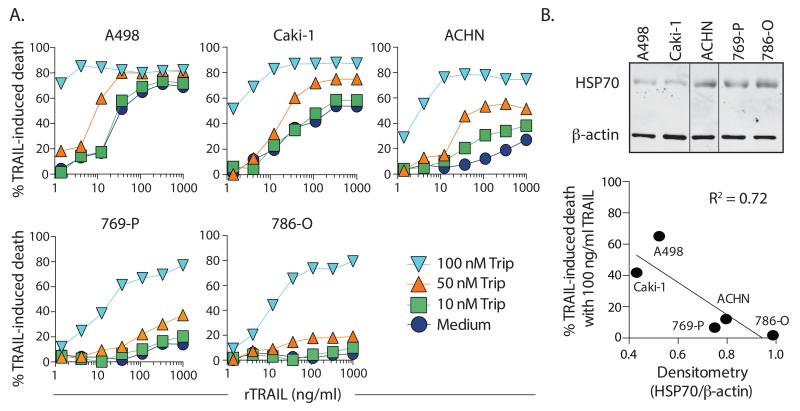
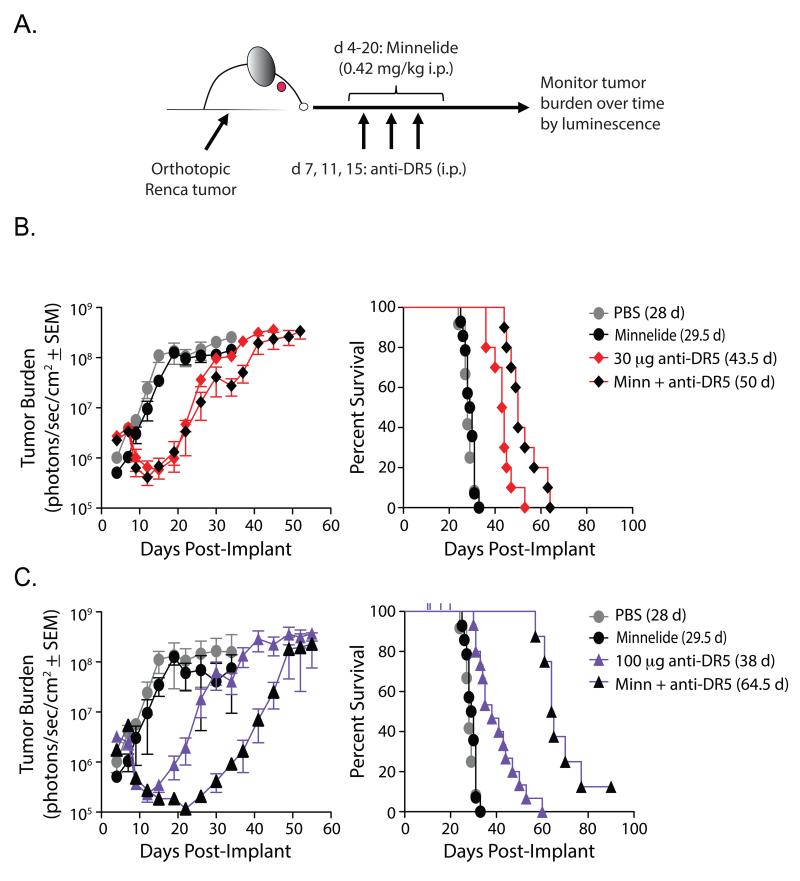
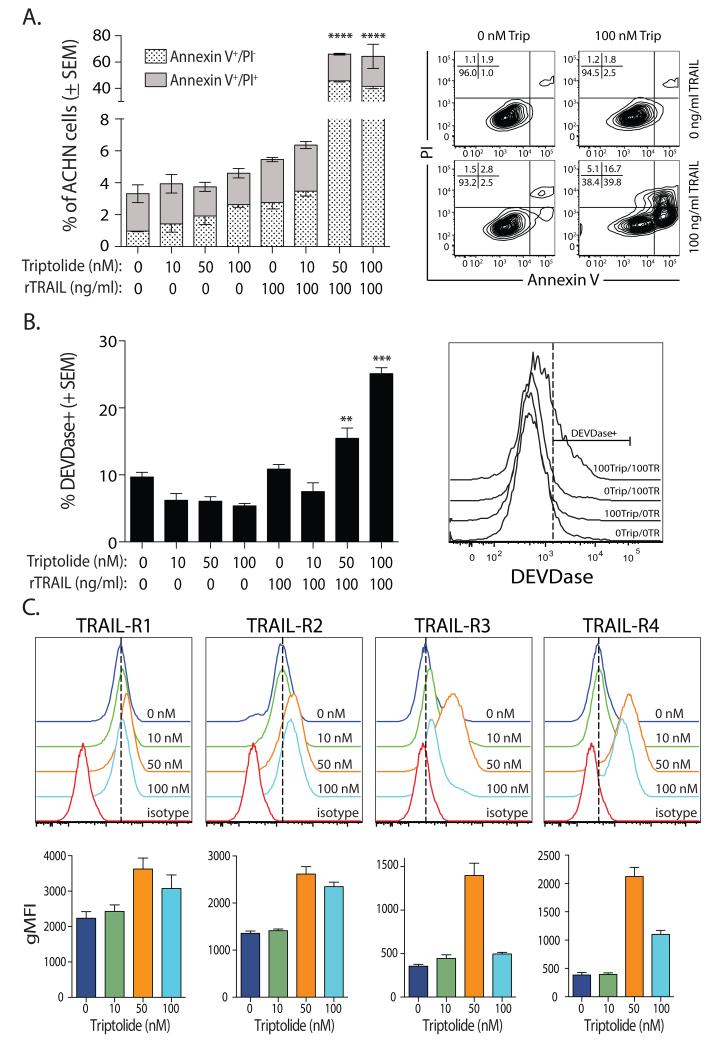
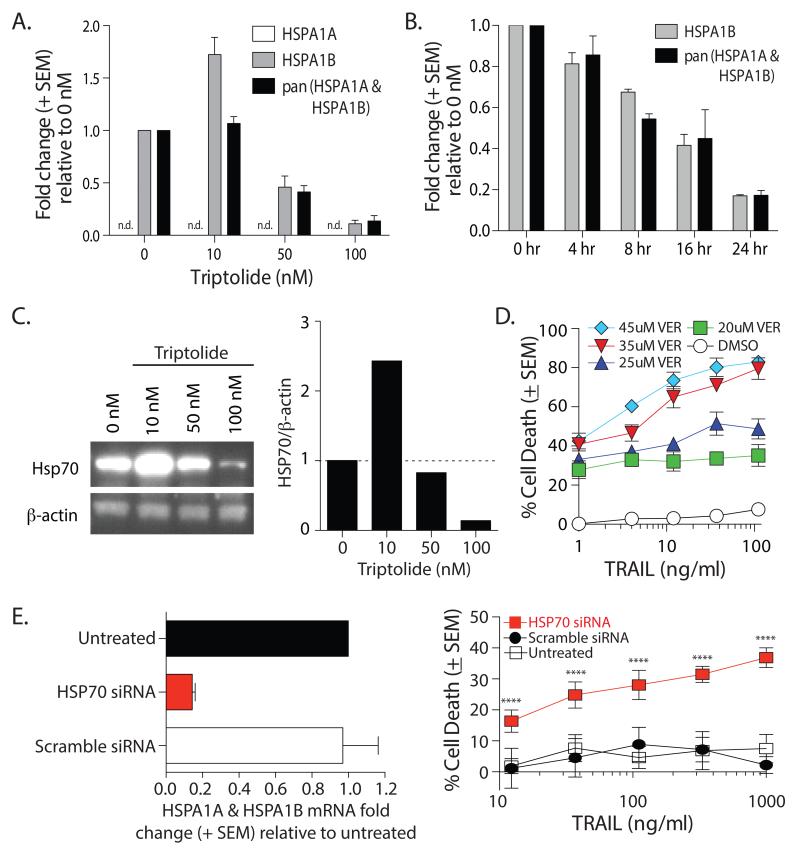
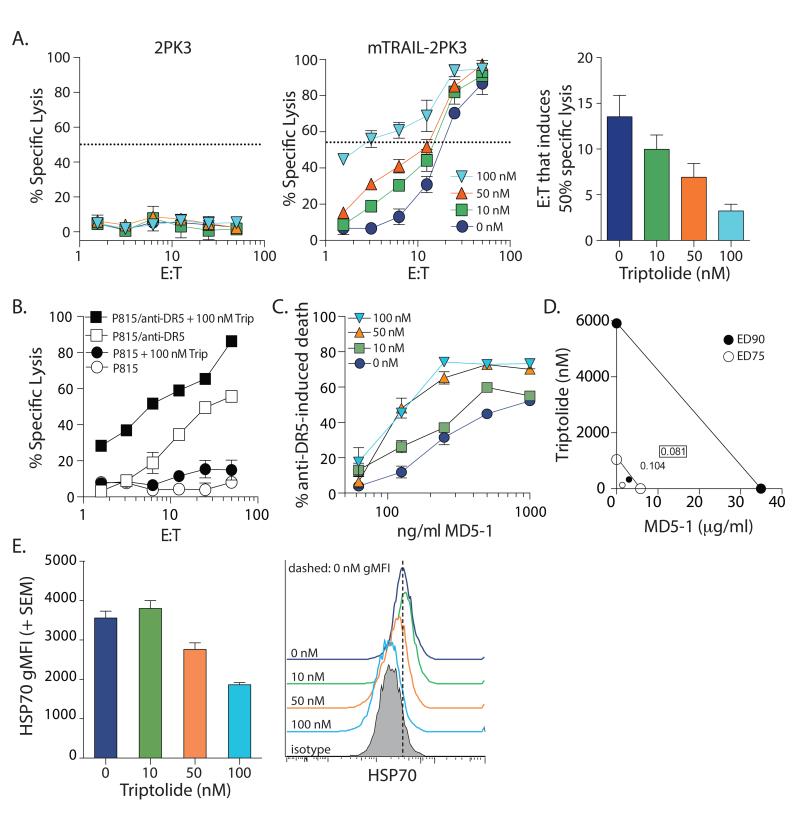
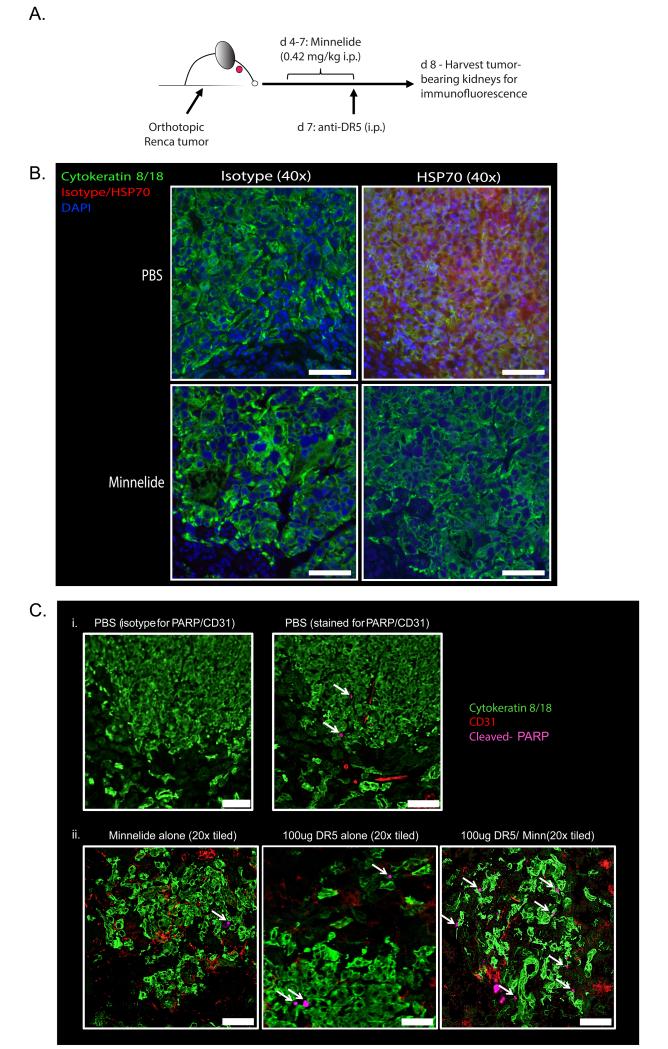
Renal cell carcinoma (RCC) is resistant to traditional cancer therapies, and metastatic RCC (mRCC) is incurable. The shortcomings in current therapeutic options for patients with mRCC provide the rationale for the development of novel treatment protocols. Tumor necrosis factor-related apoptosis-inducing ligand (TRAIL) has proven to be a potent inducer of tumor cell death in vitro and in vivo, and a number of TRAIL death receptor agonists (recombinant TRAIL or TRAIL death receptor-specific mAb) have been developed and tested clinically. Unfortunately the clinical efficacy of TRAIL has been underwhelming and is likely due to a number of possible mechanisms that render tumors resistant to TRAIL, prompting the search for drugs that increase tumor cell susceptibility to TRAIL. The objective of this study was to determine the effectiveness of combining the diterpene triepoxide triptolide, or its water-soluble prodrug, Minnelide, with TRAIL receptor agonists against RCC in vitro or in vivo, respectively. TRAIL-induced apoptotic death of human RCC cells was increased in the presence of triptolide. The triptolide-induced sensitization was accompanied by increased TRAIL-R2 (DR5) and decreased heat shock protein 70 expression. In vivo treatment of mice bearing orthotopic RCC (Renca) tumors showed the combination of Minnelide and agonistic anti-DR5 mAb significantly decreased tumor burden and increased animal survival compared to either therapy alone. Our data suggest triptolide/Minnelide sensitizes RCC cells to TRAIL-induced apoptosis through altered TRAIL death receptor and heat shock protein expression.
肾细胞癌(RCC)对传统癌症治疗具有抗性,而转移性肾细胞癌(mRCC)无法治愈。mRCC患者当前治疗选择的缺点为开发新型治疗方案提供了理论依据。肿瘤坏死因子相关凋亡诱导配体(TRAIL)已被证明在体外和体内都是肿瘤细胞死亡的有效诱导剂,并且已经开发了多种TRAIL死亡受体激动剂(重组TRAIL或TRAIL死亡受体特异性单克隆抗体)并进行了临床测试。不幸的是,TRAIL的临床疗效并不理想,这可能是由于多种可能的机制使肿瘤对TRAIL产生抗性,从而促使人们寻找能增加肿瘤细胞对TRAIL敏感性的药物。本研究的目的是分别确定将二萜环氧化物雷公藤内酯醇或其水溶性前药米内立德与TRAIL受体激动剂联合用于体外或体内抗RCC的有效性。在存在雷公藤内酯醇的情况下,TRAIL诱导的人RCC细胞凋亡死亡增加。雷公藤内酯醇诱导的致敏作用伴随着TRAIL-R2(DR5)表达增加和热休克蛋白70表达降低。对原位RCC(Renca)肿瘤小鼠进行的体内治疗表明,与单独使用任何一种疗法相比,米内立德与抗DR5激动性单克隆抗体联合使用可显著降低肿瘤负荷并提高动物存活率。我们的数据表明,雷公藤内酯醇/米内立德通过改变TRAIL死亡受体和热休克蛋白表达使RCC细胞对TRAIL诱导的凋亡敏感。