Pusceddu Matteo M, El Aidy Sahar, Crispie Fiona, O'Sullivan Orla, Cotter Paul, Stanton Catherine, Kelly Philip, Cryan John F, Dinan Timothy G
Department of Psychiatry and Neurobehavioural Science, University College Cork, Cork, Ireland; APC Microbiome Institute, University College Cork, Cork, Ireland.
APC Microbiome Institute, University College Cork, Cork, Ireland; Microbial Physiology, Groningen Biomolecular Sciences and Biotechnology Institute, University of Groningen, Groningen, The Netherlands.
PLoS One. 2015 Oct 1;10(10):e0139721. doi: 10.1371/journal.pone.0139721. eCollection 2015.
Early life stress is a risk factor for many psychiatric disorders ranging from depression to anxiety. Stress, especially during early life, can induce dysbiosis in the gut microbiota, the key modulators of the bidirectional signalling pathways in the gut-brain axis that underline several neurodevelopmental and psychiatric disorders. Despite their critical role in the development and function of the central nervous system, the effect of n-3 polyunsaturated fatty acids (n-3 PUFAs) on the regulation of gut-microbiota in early-life stress has not been explored.
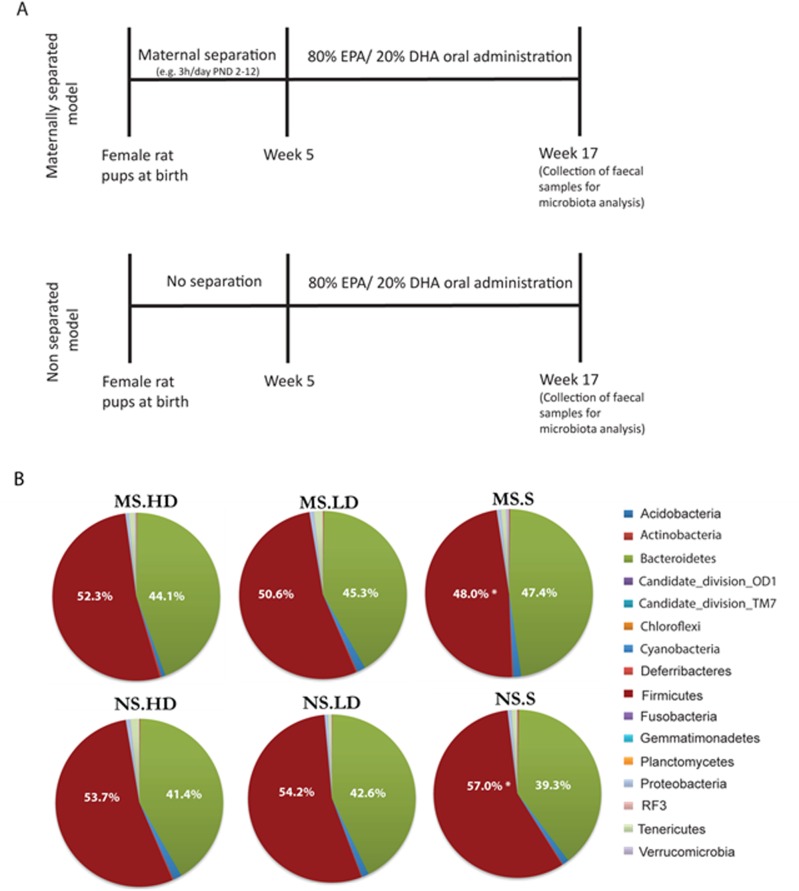
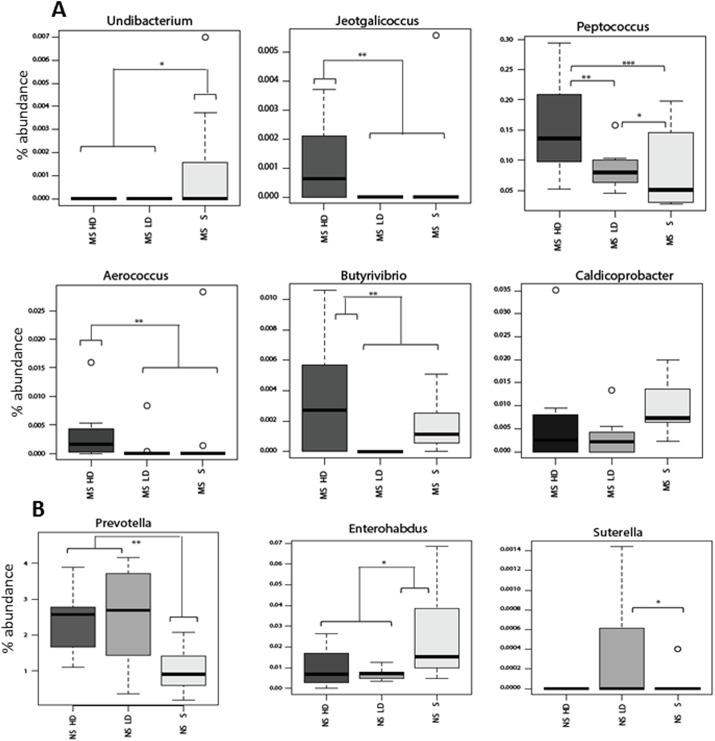
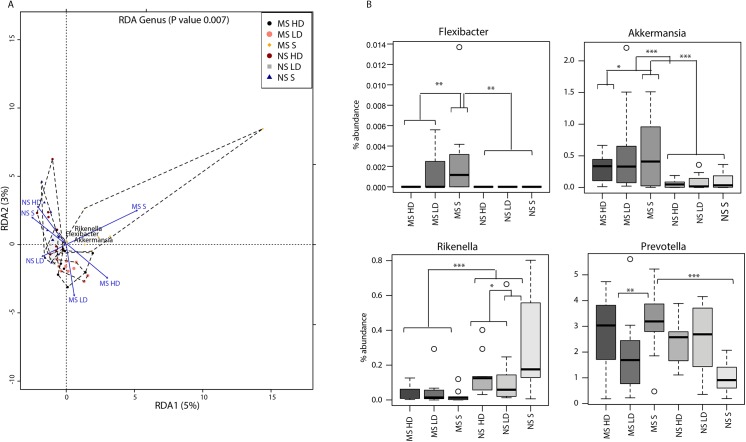
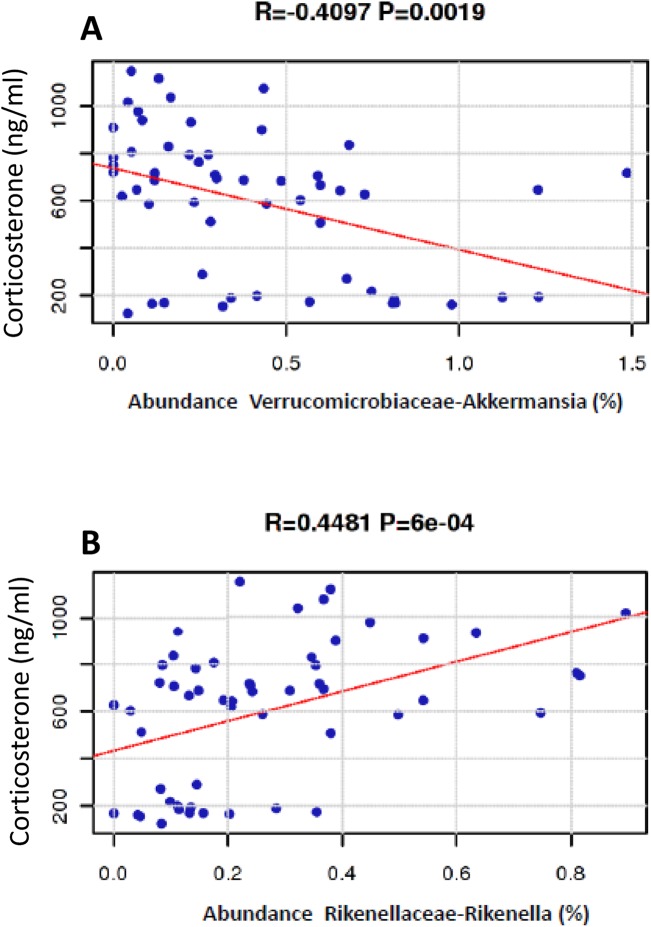
Here, we show that long-term supplementation of eicosapentaenoic acid (EPA)/docosahexaenoic acid (DHA) (80% EPA, 20% DHA) n-3 PUFAs mixture could restore the disturbed gut-microbiota composition of maternally separated (MS) female rats. Sprague-Dawley female rats were subjected to an early-life stress, maternal separation procedure from postnatal days 2 to 12. Non-separated (NS) and MS rats were administered saline, EPA/DHA 0.4 g/kg/day or EPA/DHA 1 g/kg/day, respectively. Analysis of the gut microbiota in adult rats revealed that EPA/DHA changes composition in the MS, and to a lesser extent the NS rats, and was associated with attenuation of the corticosterone response to acute stress.
In conclusion, EPA/DHA intervention alters the gut microbiota composition of both neurodevelopmentally normal and early-life stressed animals. This study offers insights into the interaction between n-3 PUFAs and gut microbes, which may play an important role in advancing our understanding of disorders of mood and cognitive functioning, such as anxiety and depression.
早年生活压力是许多精神疾病的风险因素,范围从抑郁症到焦虑症。压力,尤其是在早年时,可导致肠道微生物群失调,而肠道微生物群是肠-脑轴双向信号通路的关键调节因子,这些通路与多种神经发育和精神疾病相关。尽管n-3多不饱和脂肪酸(n-3 PUFAs)在中枢神经系统的发育和功能中起关键作用,但尚未探讨其在早年生活压力下对肠道微生物群调节的影响。
在此,我们表明长期补充二十碳五烯酸(EPA)/二十二碳六烯酸(DHA)(80% EPA,20% DHA)的n-3 PUFAs混合物可恢复母婴分离(MS)雌性大鼠紊乱的肠道微生物群组成。将斯普拉格-道利雌性大鼠在出生后第2天至12天进行早年生活压力、母婴分离程序。未分离(NS)和MS大鼠分别给予生理盐水、0.4 g/kg/天的EPA/DHA或1 g/kg/天的EPA/DHA。对成年大鼠肠道微生物群的分析显示,EPA/DHA改变了MS大鼠的组成,对NS大鼠的影响较小,并且与皮质酮对急性应激反应的减弱有关。
总之,EPA/DHA干预改变了神经发育正常和早年生活受应激动物的肠道微生物群组成。本研究为n-3 PUFAs与肠道微生物之间的相互作用提供了见解,这可能在推进我们对情绪和认知功能障碍(如焦虑和抑郁)的理解方面发挥重要作用。