Saigal Saurabh, Sharma Jai Prakash, Dhurwe Ritika, Kumar Sanjay, Gurjar Mohan
Department of Trauma and Emergency Medicine, AIIMS, Bhopal, India.
Department of Anaesthesia, AIIMS, Bhopal, India.
Indian J Crit Care Med. 2015 Sep;19(9):537-46. doi: 10.4103/0972-5229.164806.
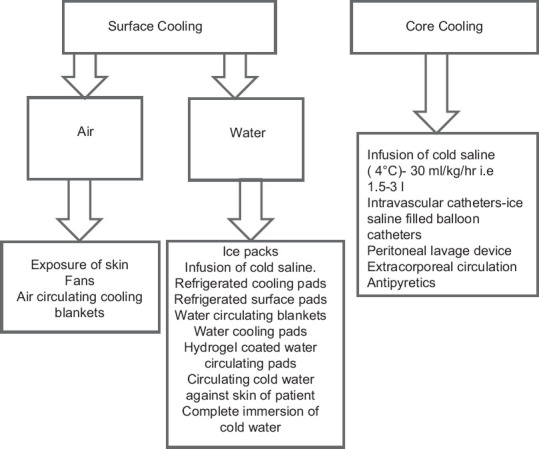
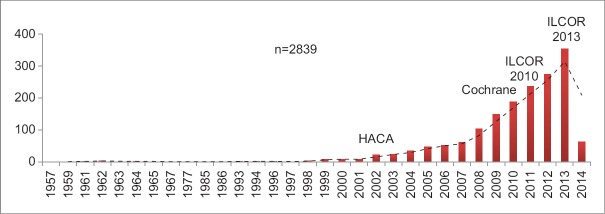
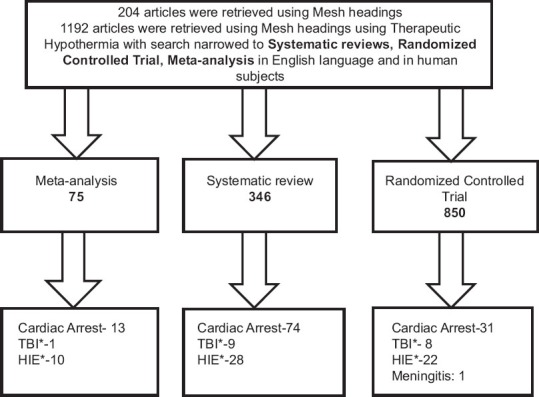
Targeted temperature management (TTM) in today's modern era, especially in intensive care units represents a promising multifaceted therapy for a variety of conditions. Though hypothermia is being used since Hippocratic era, the renewed interest of late has been since early 21(st) century. There have been multiple advancements in this field and varieties of cooling devices are available at present. TTM requires careful titration of its depth, duration and rewarming as it is associated with side-effects. The purpose of this review is to find out the best evidence-based clinical practice criteria of therapeutic hypothermia in critical care settings. TTM is an unique therapeutic modality for salvaging neurological tissue viability in critically ill patients viz. Post-cardiac arrest, traumatic brain injury (TBI), meningitis, acute liver failure and stroke. TTM is standard of care in post-cardiac arrest situations; there has been a lot of controversy of late regarding temperature ranges to be used for the same. In patients with TBI, it reduces intracranial pressure, but has not shown any favorable neurologic outcome. Hypothermia is generally accepted treatment for hypoxic ischemic encephalopathy in newborns. The current available technology to induce and maintain hypothermia allows for precise temperature control. Future studies should focus on optimizing hypothermic treatment to full benefit of our patients and its application in other clinical scenarios.
在当今时代,尤其是在重症监护病房,目标温度管理(TTM)是一种针对多种病症的颇具前景的多方面治疗方法。尽管自希波克拉底时代起就开始使用低温疗法,但最近的重新关注始于21世纪初。该领域已经取得了多项进展,目前有各种各样的降温设备可供使用。由于TTM与副作用相关,因此需要仔细调整其深度、持续时间和复温过程。本综述的目的是找出重症监护环境中治疗性低温的最佳循证临床实践标准。TTM是挽救重症患者神经组织活力的一种独特治疗方式,例如在心搏骤停、创伤性脑损伤(TBI)、脑膜炎、急性肝衰竭和中风后。TTM是心搏骤停后情况的护理标准;最近关于用于此情况的温度范围存在很多争议。在TBI患者中,它可降低颅内压,但未显示出任何有利的神经学结果。低温疗法是新生儿缺氧缺血性脑病的普遍接受的治疗方法。目前用于诱导和维持低温的现有技术可实现精确的温度控制。未来的研究应专注于优化低温治疗,以使我们的患者充分受益,并将其应用于其他临床场景。