Abe Shinya, Yamamoto Kouhei, Kurata Morito, Abe-Suzuki Shiho, Horii Rie, Akiyama Futoshi, Kitagawa Masanobu
Department of Comprehensive Pathology, Graduate School of Medical and Dental Sciences, Tokyo Medical and Dental University, Tokyo, Japan.
Department of Pathology, Cancer Institute Hospital, Japanese Foundation for Cancer Research, Tokyo, Japan.
Oncotarget. 2015 Oct 27;6(33):34892-909. doi: 10.18632/oncotarget.5408.
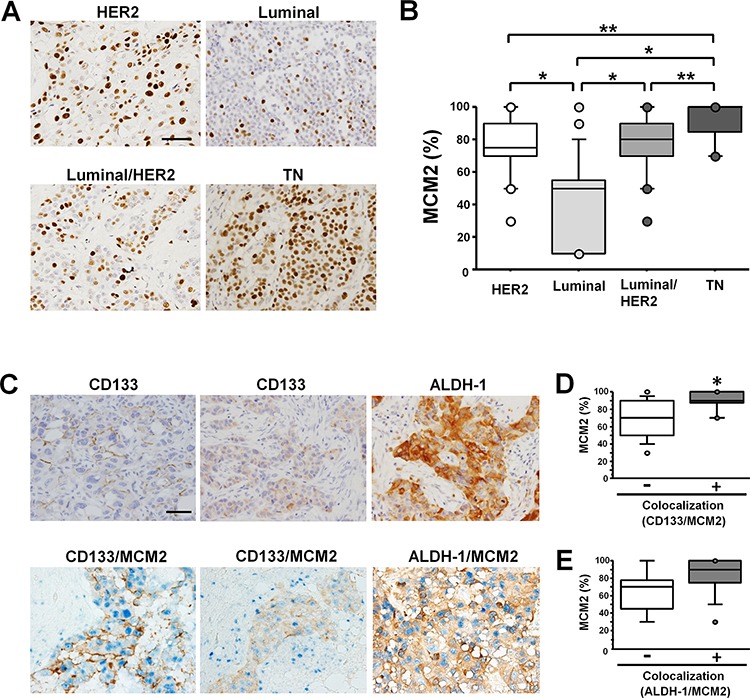
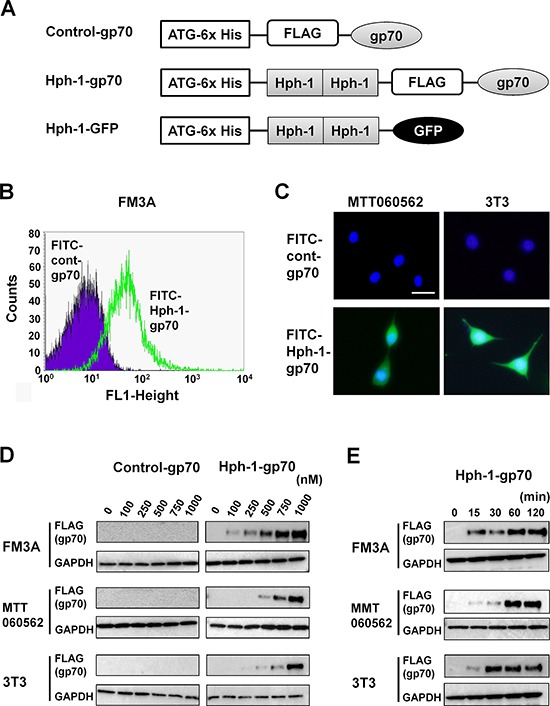
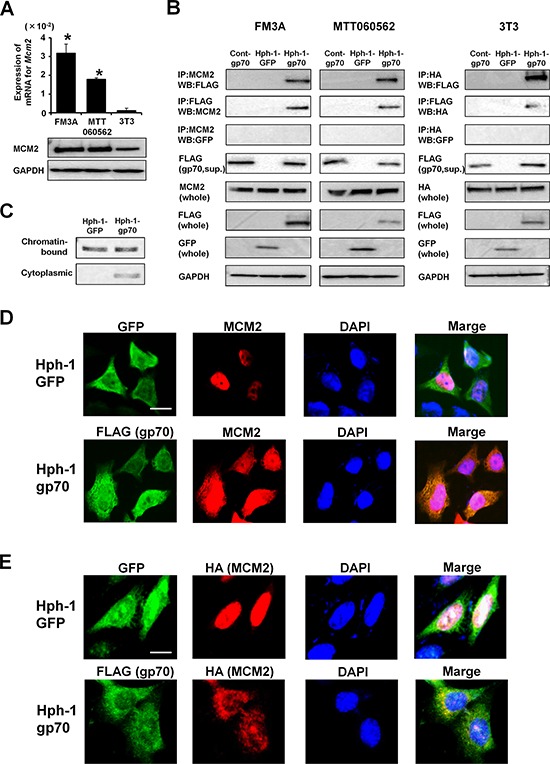
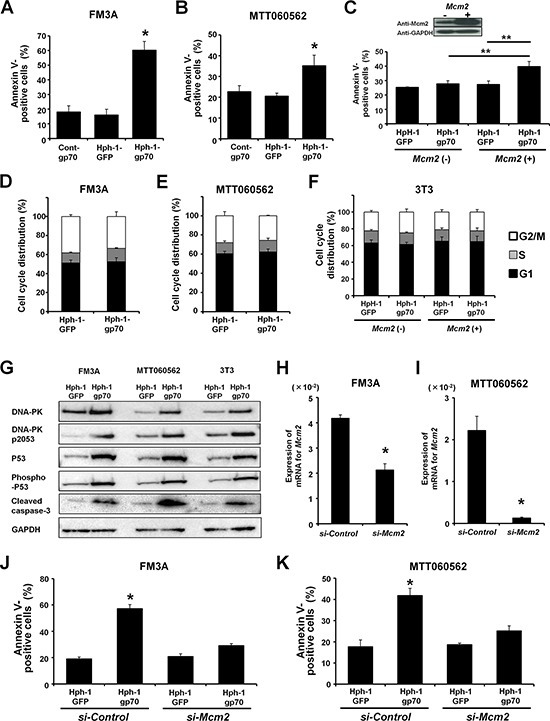
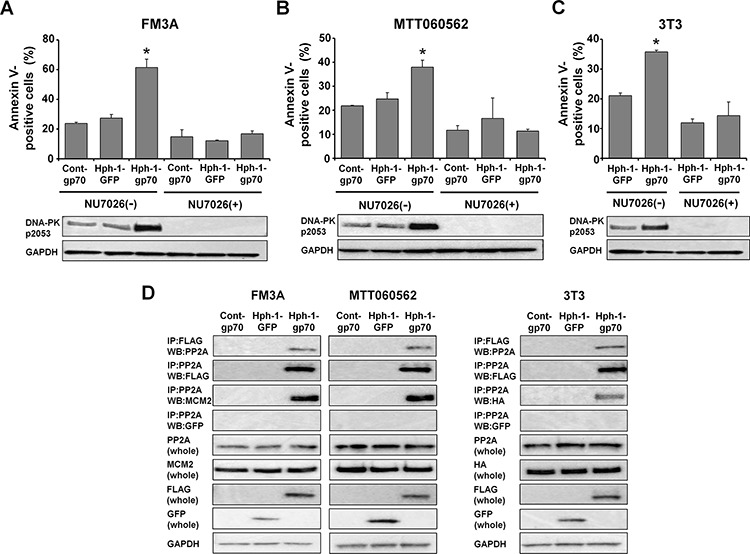
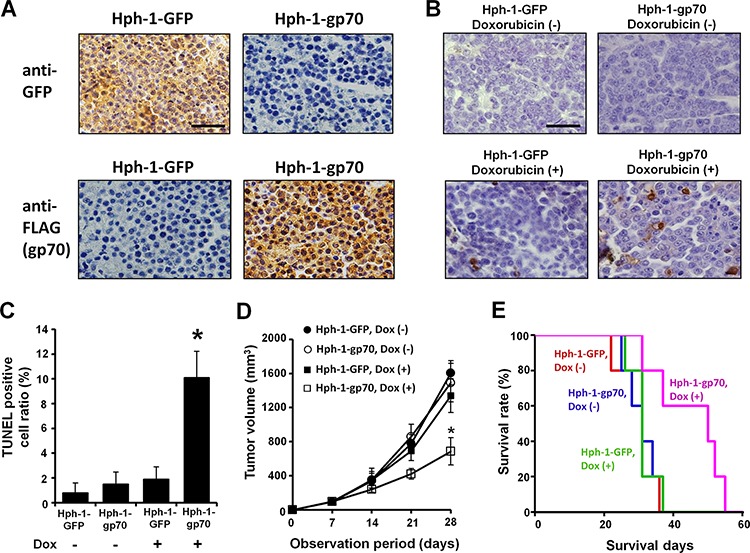
Highly malignant tumors express high levels of the minichromosome maintenance 2 (MCM2) protein, which is associated with advanced tumor grade, advanced stage, and poor prognosis. In a previous study, we showed that Friend leukemia virus (FLV) envelope protein gp70 bound MCM2, impaired its nuclear translocation, and enhanced DNA-damage-induced apoptosis in FLV-infected hematopoietic cells when the cells expressed high levels of MCM2. Here, we show that MCM2 is highly expressed in clinical samples of invasive carcinoma of the breast, especially triple-negative breast cancer (TNBC), and in cancer stem cell (CSC) marker-positive breast cancer cells. To generate a cancer therapy model using gp70, we introduced the gp70 protein into the cytoplasm of murine breast cancer cells that express high levels of MCM2 by conjugating the protein transduction domain (PTD) of Hph-1 to gp70 (Hph-1-gp70). Hph-1-gp70 was successfully transduced into the cytoplasm of breast cancer cells. The transduced protein enhanced the DNA damage-induced apoptosis of cancer cells in vitro and in vivo. Therefore, an MCM2-targeted strategy using Hph-1-gp70 treatment to induce DNA damage might be a successful therapy for highly malignant breast cancers such as TNBC and for the eradication of CSC-like cells from breast cancer tissue.
高恶性肿瘤表达高水平的微小染色体维持蛋白2(MCM2),该蛋白与肿瘤高级别、晚期及不良预后相关。在之前的一项研究中,我们发现Friend白血病病毒(FLV)包膜蛋白gp70与MCM2结合,损害其核转位,并在FLV感染的造血细胞中高水平表达MCM2时增强DNA损伤诱导的凋亡。在此,我们表明MCM2在乳腺浸润性癌的临床样本中高度表达,尤其是三阴性乳腺癌(TNBC),以及在癌症干细胞(CSC)标志物阳性的乳腺癌细胞中高度表达。为了构建使用gp70的癌症治疗模型,我们通过将Hph-1的蛋白转导结构域(PTD)与gp70偶联(Hph-1-gp70),将gp70蛋白导入高水平表达MCM2的小鼠乳腺癌细胞的细胞质中。Hph-1-gp70成功转导至乳腺癌细胞的细胞质中。转导的蛋白在体外和体内均增强了DNA损伤诱导的癌细胞凋亡。因此,使用Hph-1-gp70治疗诱导DNA损伤的MCM2靶向策略可能是治疗TNBC等高恶性乳腺癌以及从乳腺癌组织中根除CSC样细胞的成功疗法。