Woodfolk Judith A, Commins Scott P, Schuyler Alexander J, Erwin Elizabeth A, Platts-Mills Thomas A E
Asthma and Allergic Diseases Center, University of Virginia Health System, Charlottesville, VA, United States.
Asthma and Allergic Diseases Center, University of Virginia Health System, Charlottesville, VA, United States.
Allergol Int. 2015 Oct;64(4):295-303. doi: 10.1016/j.alit.2015.06.001. Epub 2015 Jul 15.
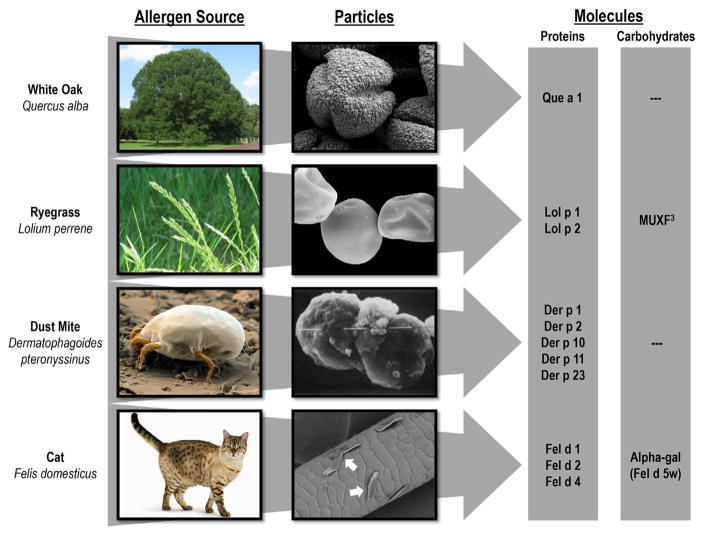
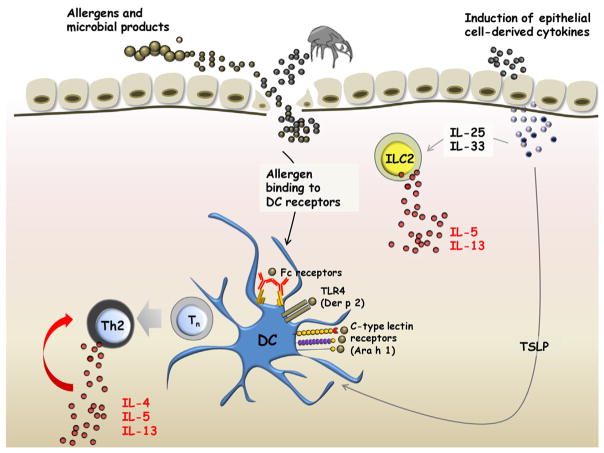
Allergens are foreign proteins or glycoproteins that are the target of IgE antibody responses in humans. The relationship between subsequent exposure and the allergic symptoms is often or usually obvious; however, there is increasing evidence that in asthma, atopic dermatitis and some forms of food allergy the induction of symptoms is delayed or chronic. The primary exposure to inhaled allergens is to the particles, which are capable of carrying allergens in the air. Thus, the response reflects not only the properties of the proteins, but also the biological properties of the other constituents of the particle. This is best understood in relation to the mite fecal particles in which the contents include many different immunologically active substances. Allergic disease first became a major problem over 100 years ago, and for many years sensitization to pollens was the dominant form of these diseases. The rise in pediatric asthma correlates best with the move of children indoors, which started in 1960 and was primarily driven by indoor entertainment for children. While the causes of the increase are not simple they include both a major increase in sensitization to indoor allergens and the complex consequences of inactivity. Most recently, there has also been an increase in food allergy. Understanding this has required a reappraisal of the importance of the skin as a route for sensitization. Overall, understanding allergic diseases requires knowing about the sources, the particles and the routes of exposure as well as the properties of the individual allergens.
变应原是外来蛋白质或糖蛋白,是人类IgE抗体反应的靶标。后续接触与过敏症状之间的关系通常或往往很明显;然而,越来越多的证据表明,在哮喘、特应性皮炎和某些形式的食物过敏中,症状的诱发是延迟的或慢性的。吸入变应原的初次接触是针对能够在空气中携带变应原的颗粒。因此,反应不仅反映了蛋白质的特性,还反映了颗粒其他成分的生物学特性。这一点在螨粪颗粒中体现得最为明显,其内容物包含许多不同的免疫活性物质。过敏疾病在100多年前首次成为一个主要问题,多年来对花粉的致敏是这些疾病的主要形式。儿童哮喘的增加与儿童开始转向室内活动密切相关,这始于1960年,主要是由儿童的室内娱乐活动推动的。虽然增加的原因并不简单,但包括对室内变应原致敏的大幅增加以及缺乏活动的复杂后果。最近,食物过敏也有所增加。理解这一点需要重新评估皮肤作为致敏途径的重要性。总体而言,了解过敏性疾病需要了解其来源、颗粒、接触途径以及各个变应原的特性。