Mooney Jason P, Lokken Kristen L, Byndloss Mariana X, George Michael D, Velazquez Eric M, Faber Franziska, Butler Brian P, Walker Gregory T, Ali Mohamed M, Potts Rashaun, Tiffany Caitlin, Ahmer Brian M M, Luckhart Shirley, Tsolis Renée M
Department of Medical Microbiology &Immunology, University of California at Davis, One Shields Avenue, Davis CA 95616.
School of Veterinary Medicine, St. George's University, Grenada, West Indies.
Sci Rep. 2015 Oct 5;5:14603. doi: 10.1038/srep14603.
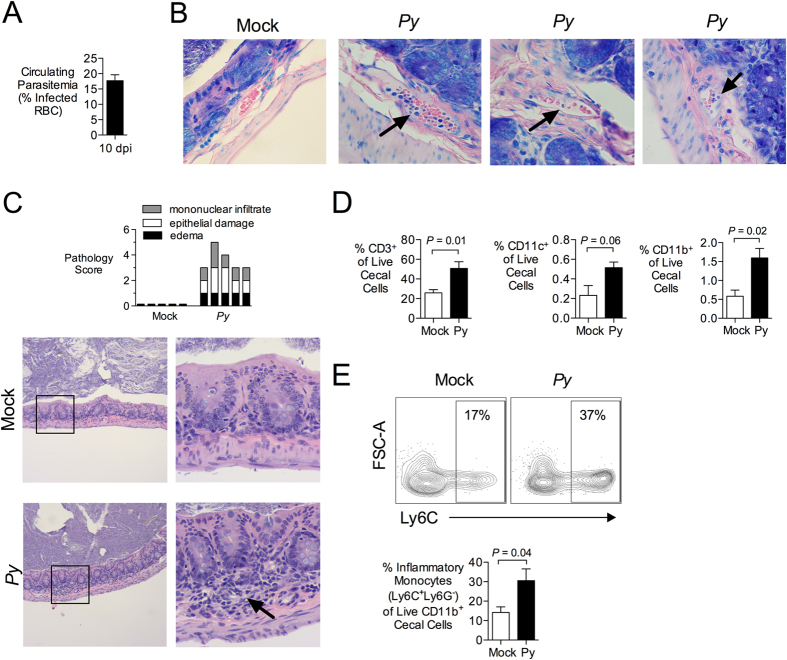
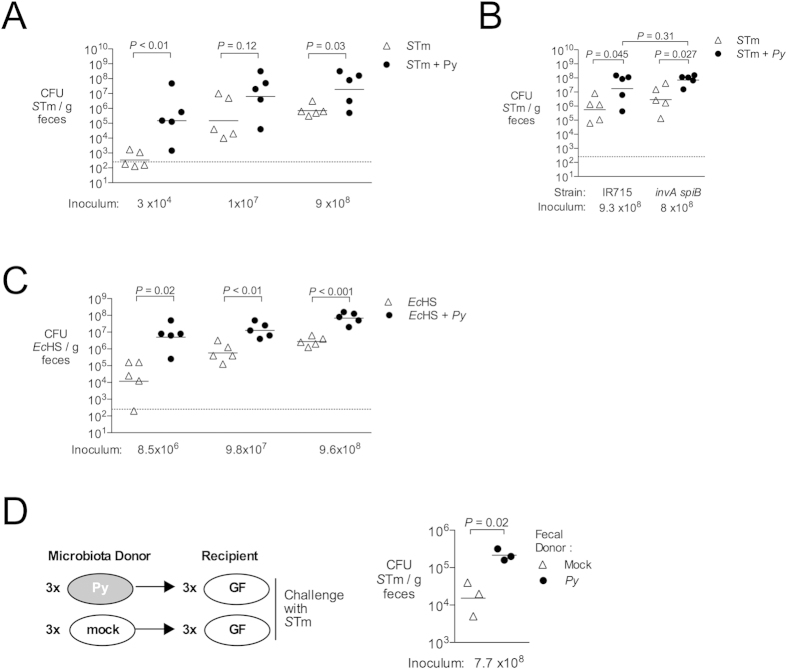
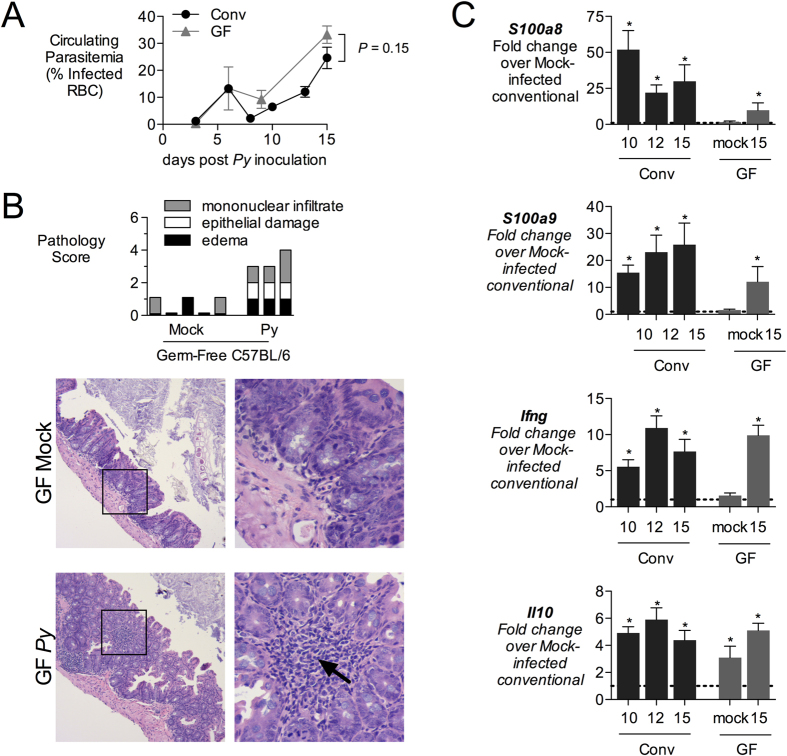
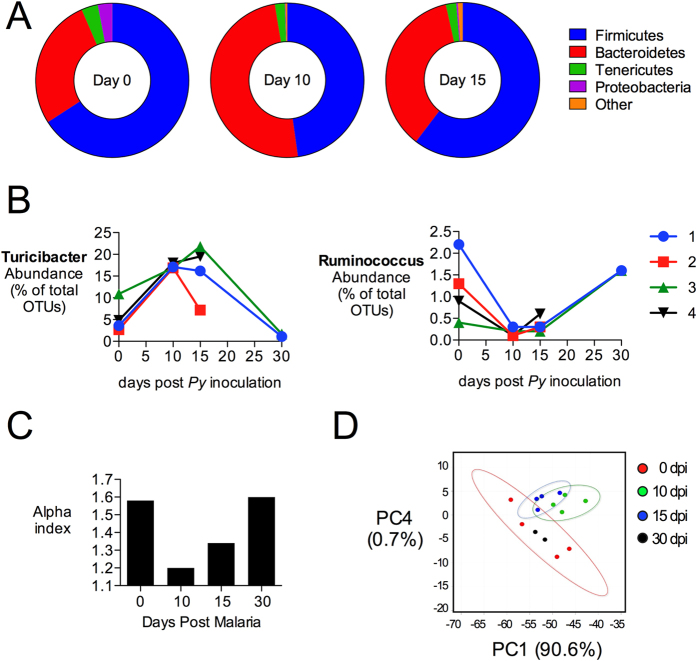
Childhood malaria is a risk factor for disseminated infections with non-typhoidal Salmonella (NTS) in sub-Saharan Africa. While hemolytic anemia and an altered cytokine environment have been implicated in increased susceptibility to NTS, it is not known whether malaria affects resistance to intestinal colonization with NTS. To address this question, we utilized a murine model of co-infection. Infection of mice with Plasmodium yoelii elicited infiltration of inflammatory macrophages and T cells into the intestinal mucosa and increased expression of inflammatory cytokines. These mucosal responses were also observed in germ-free mice, showing that they are independent of the resident microbiota. Remarkably, P. yoelii infection reduced colonization resistance of mice against S. enterica serotype Typhimurium. Further, 16S rRNA sequence analysis of the intestinal microbiota revealed marked changes in the community structure. Shifts in the microbiota increased susceptibility to intestinal colonization by S. Typhimurium, as demonstrated by microbiota reconstitution of germ-free mice. These results show that P. yoelii infection, via alterations to the microbial community in the intestine, decreases resistance to intestinal colonization with NTS. Further they raise the possibility that decreased colonization resistance may synergize with effects of malaria on systemic immunity to increase susceptibility to disseminated NTS infections.
在撒哈拉以南非洲地区,儿童疟疾是导致非伤寒沙门氏菌(NTS)播散性感染的一个风险因素。虽然溶血性贫血和细胞因子环境改变与NTS易感性增加有关,但尚不清楚疟疾是否会影响对NTS肠道定植的抵抗力。为了解决这个问题,我们使用了一种共感染小鼠模型。用约氏疟原虫感染小鼠会引发炎性巨噬细胞和T细胞浸润到肠道黏膜,并增加炎性细胞因子的表达。在无菌小鼠中也观察到了这些黏膜反应,表明它们独立于常驻微生物群。值得注意的是,约氏疟原虫感染降低了小鼠对肠炎沙门氏菌鼠伤寒血清型的定植抵抗力。此外,对肠道微生物群的16S rRNA序列分析揭示了群落结构的显著变化。微生物群的变化增加了对鼠伤寒沙门氏菌肠道定植的易感性,无菌小鼠的微生物群重建证明了这一点。这些结果表明,约氏疟原虫感染通过改变肠道微生物群落,降低了对NTS肠道定植的抵抗力。此外,它们还提出了一种可能性,即定植抵抗力下降可能与疟疾对全身免疫的影响协同作用,增加对播散性NTS感染的易感性。