Center for Infection and Immunity of Lille-CIIL, Centre National de la Recherche Scientifique-CNRS UMR 9017-Institut National de la Recherche Scientifique et Médicale-Inserm U1019, Institut Pasteur de Lille, Univ. Lille, Lille, France.
Front Immunol. 2022 Dec 8;13:1024998. doi: 10.3389/fimmu.2022.1024998. eCollection 2022.
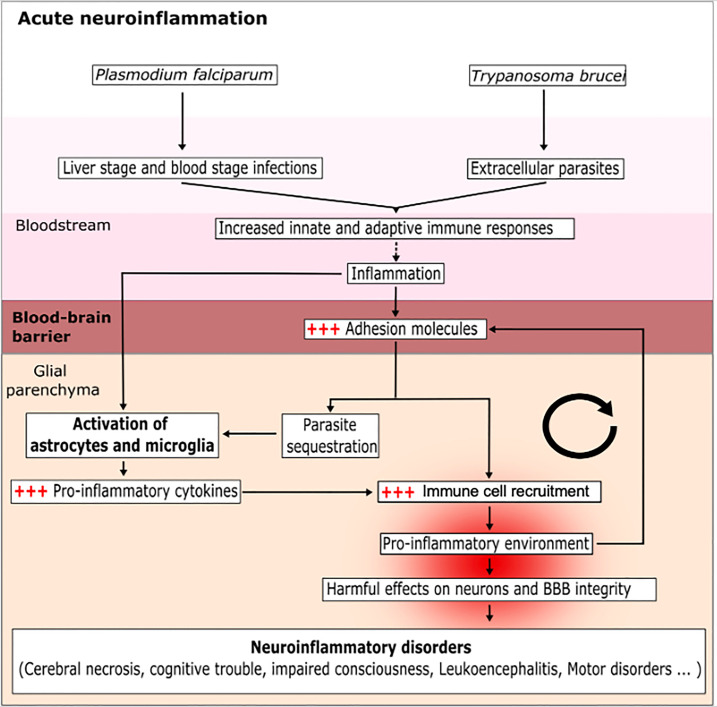
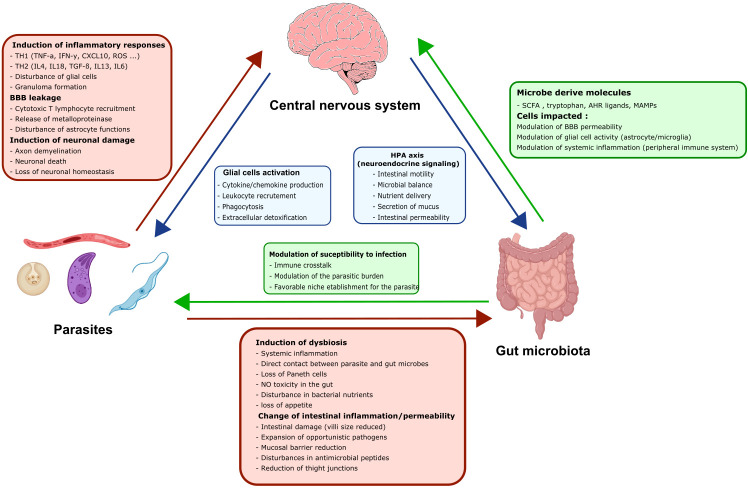
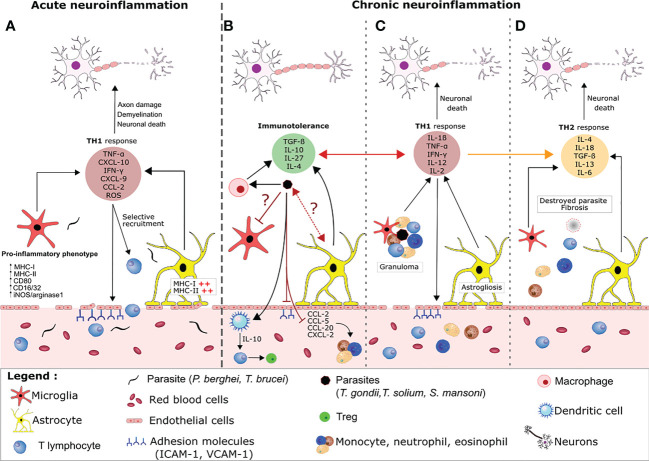
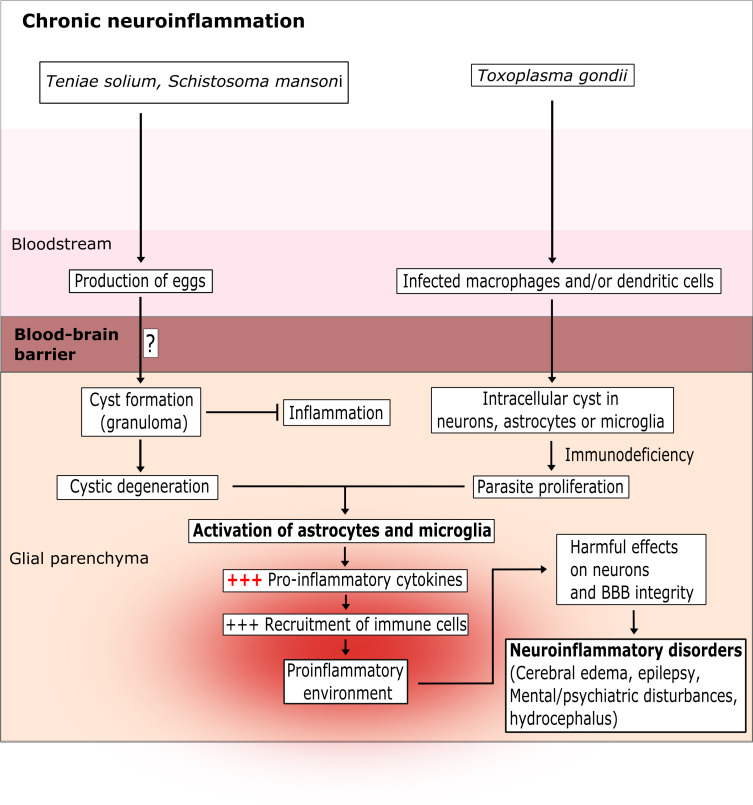
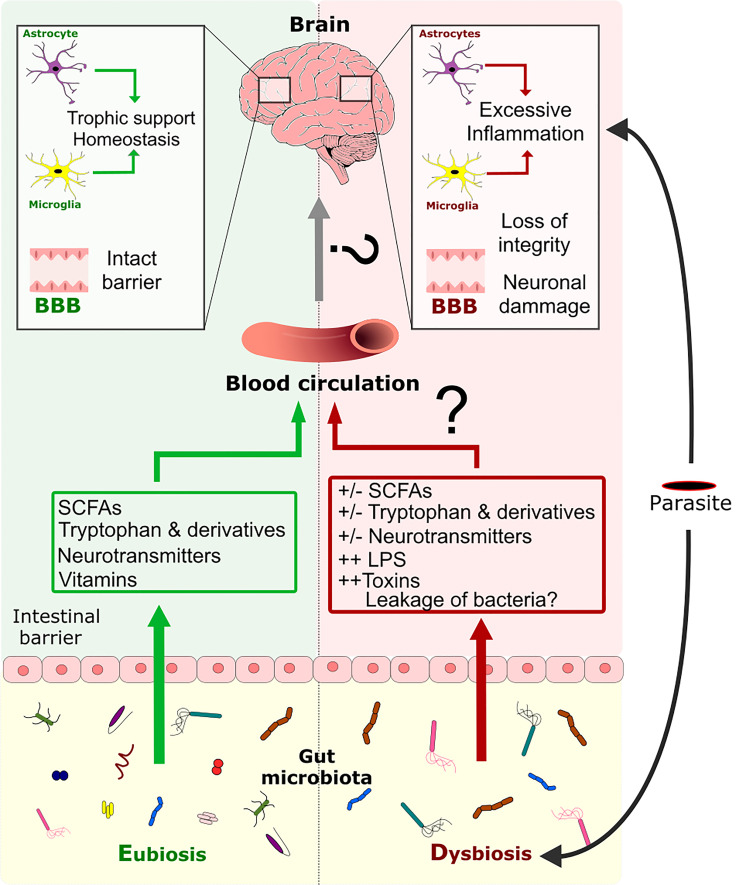
Many parasitic diseases (including cerebral malaria, human African trypanosomiasis, cerebral toxoplasmosis, neurocysticercosis and neuroschistosomiasis) feature acute or chronic brain inflammation processes, which are often associated with deregulation of glial cell activity and disruption of the brain blood barrier's intactness. The inflammatory responses of astrocytes and microglia during parasite infection are strongly influenced by a variety of environmental factors. Although it has recently been shown that the gut microbiota influences the physiology and immunomodulation of the central nervous system in neurodegenerative diseases like Alzheimer's disease and Parkinson's, the putative link in parasite-induced neuroinflammatory diseases has not been well characterized. Likewise, the central nervous system can influence the gut microbiota. In parasite infections, the gut microbiota is strongly perturbed and might influence the severity of the central nervous system inflammation response through changes in the production of bacterial metabolites. Here, we review the roles of astrocytes and microglial cells in the neuropathophysiological processes induced by parasite infections and their possible regulation by the gut microbiota.
许多寄生虫病(包括脑疟疾、非洲人类锥虫病、脑弓形虫病、脑囊虫病和脑血吸虫病)都具有急性或慢性脑炎症过程,这些过程通常与神经胶质细胞活性的失调和大脑血脑屏障完整性的破坏有关。寄生虫感染期间星形胶质细胞和小胶质细胞的炎症反应强烈受到多种环境因素的影响。尽管最近已经表明,肠道微生物群会影响阿尔茨海默病和帕金森病等神经退行性疾病的中枢神经系统的生理学和免疫调节,但寄生虫引起的神经炎症性疾病中的这种潜在联系尚未得到很好的描述。同样,中枢神经系统可以影响肠道微生物群。在寄生虫感染中,肠道微生物群受到强烈干扰,并可能通过改变细菌代谢产物的产生来影响中枢神经系统炎症反应的严重程度。在这里,我们回顾了寄生虫感染引起的神经病理生理过程中星形胶质细胞和小胶质细胞的作用及其可能受到肠道微生物群的调节。