Giannopoulou Evdokia-Anastasia, Emmanouilidis Leonidas, Sattler Michael, Dodt Gabriele, Wilmanns Matthias
EMBL Hamburg, c/o DESY, Building 25A, Notkestraße 85, 22603 Hamburg, Germany.
Institute of Structural Biology, Helmholtz Zentrum München, 85764 Neuherberg, Germany; Center for Integrated Protein Science Munich (CIPSM) at Department of Chemistry, Technische Universität München, Lichtenbergstr. 4, 85747 Garching, Germany.
Biochim Biophys Acta. 2016 May;1863(5):863-9. doi: 10.1016/j.bbamcr.2015.09.031. Epub 2015 Oct 3.
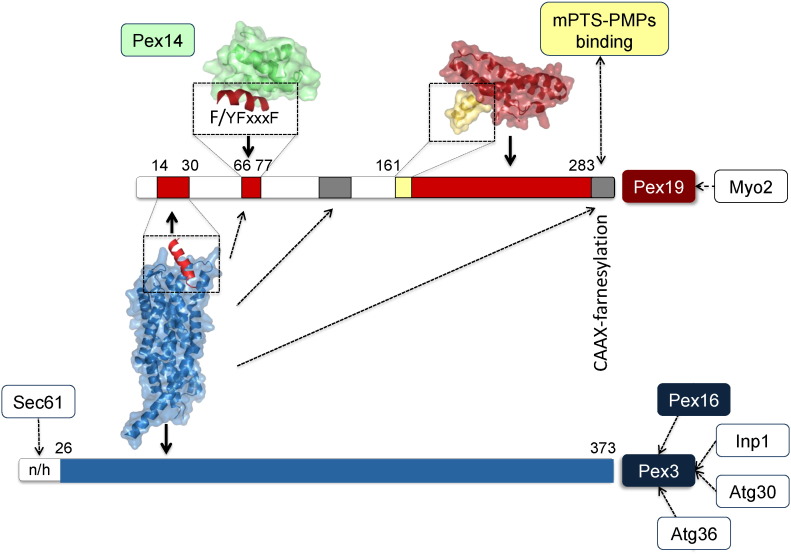
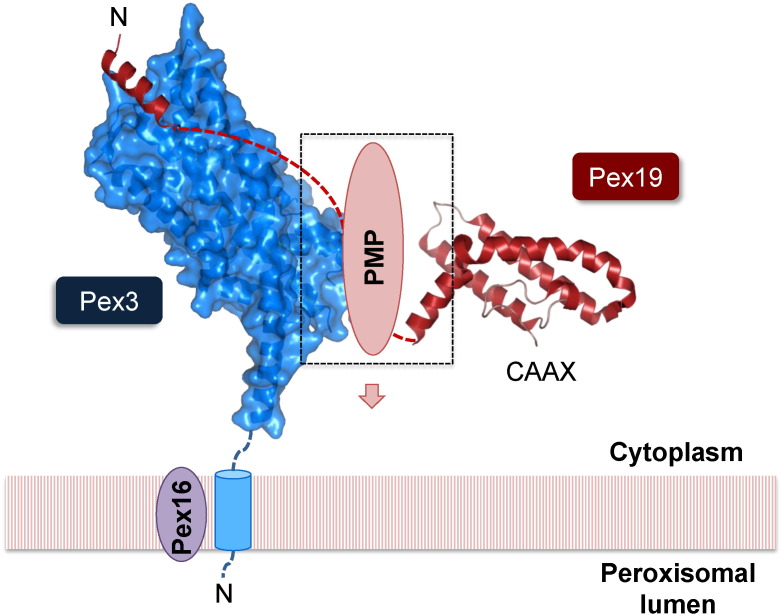
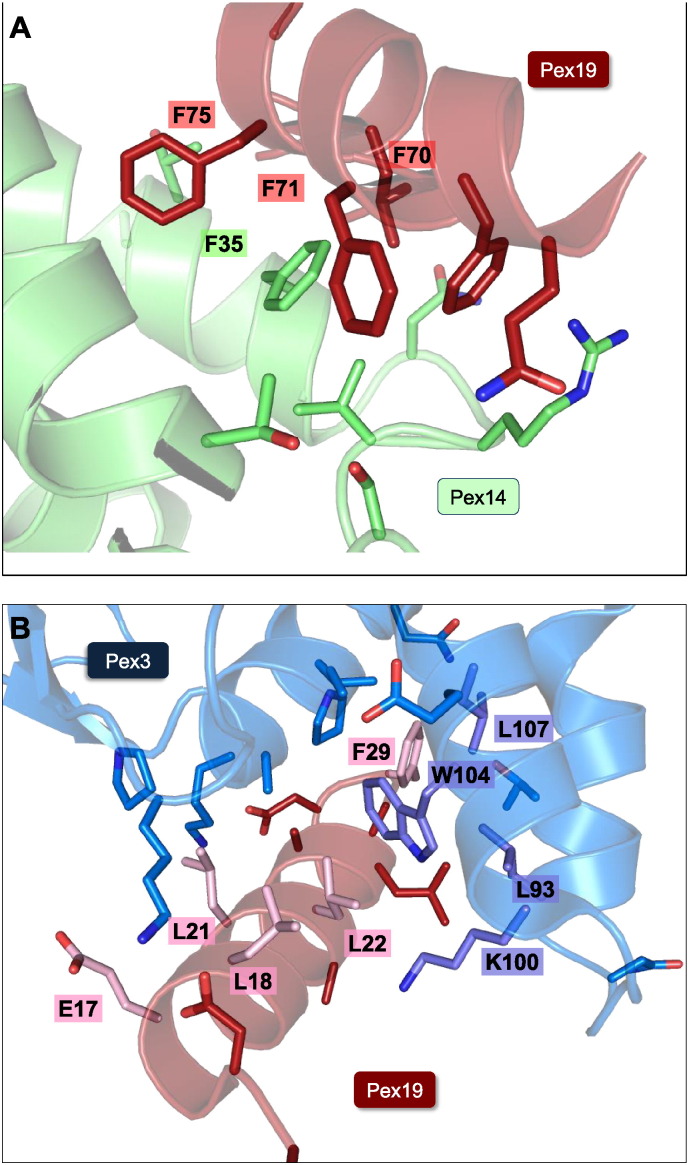
The correct topogenesis of peroxisomal membrane proteins is a crucial step for the formation of functioning peroxisomes. Although this process has been widely studied, the exact mechanism with which it occurs has not yet been fully characterized. Nevertheless, it is generally accepted that peroxisomes employ three proteins - Pex3, Pex19 and Pex16 in mammals - for the insertion of peroxisomal membrane proteins into the peroxisomal membrane. Structural biology approaches have been utilized for the elucidation of the mechanistic questions of peroxisome biogenesis, mainly by providing information on the architecture of the proteins significant for this process. This review aims to summarize, compare and put into perspective the structural knowledge that has been generated mainly for Pex3 and Pex19 and their interaction partners in recent years.
过氧化物酶体膜蛋白的正确拓扑结构形成是功能性过氧化物酶体形成的关键步骤。尽管这一过程已得到广泛研究,但其发生的确切机制尚未完全明确。然而,一般认为过氧化物酶体利用三种蛋白质——哺乳动物中的Pex3、Pex19和Pex16——将过氧化物酶体膜蛋白插入过氧化物酶体膜。结构生物学方法已被用于阐明过氧化物酶体生物发生的机制问题,主要是通过提供有关这一过程中重要蛋白质结构的信息。本综述旨在总结、比较并透视近年来主要针对Pex3和Pex19及其相互作用伙伴所产生的结构知识。