Lee Jeong Heon, Bao Kai, Frangioni John V, Choi Hak Soo
Division of Hematology/Oncology, Department of Medicine, Beth Israel Deaconess Medical Center and Harvard Medical School, Boston, MA 02215, USA.
Division of Hematology/Oncology, Department of Medicine, Beth Israel Deaconess Medical Center and Harvard Medical School, Boston, MA 02215, USA ; Curadel, LLC, 377 Plantation Street, Worcester, MA 01605, USA.
Microarrays (Basel). 2015;4(1):53-63. doi: 10.3390/microarrays4010053.
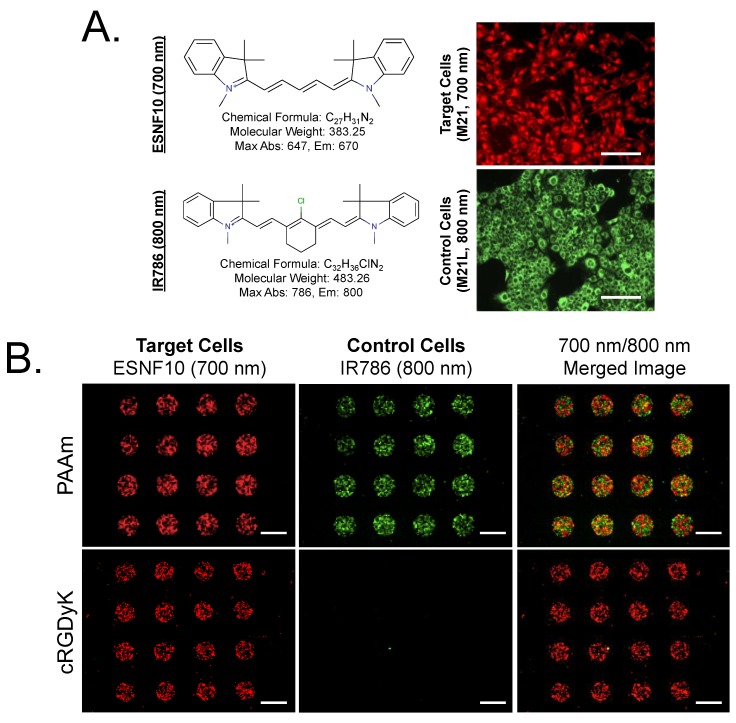
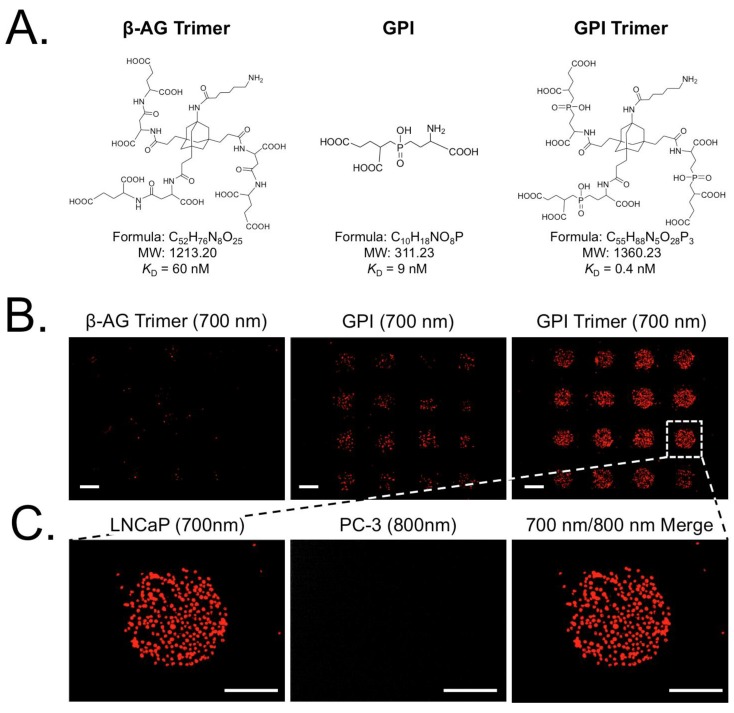
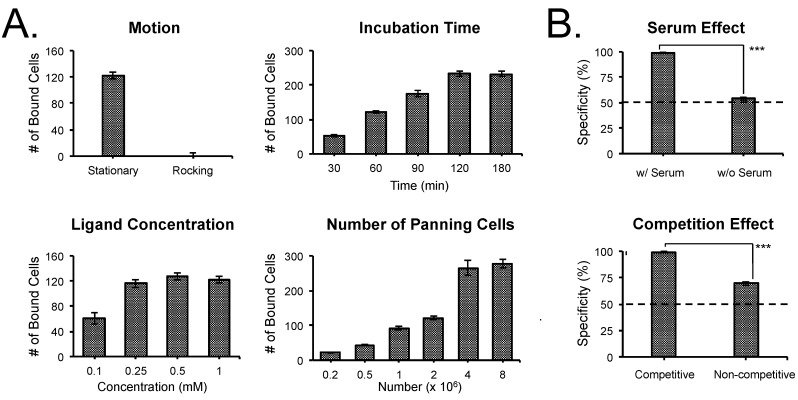
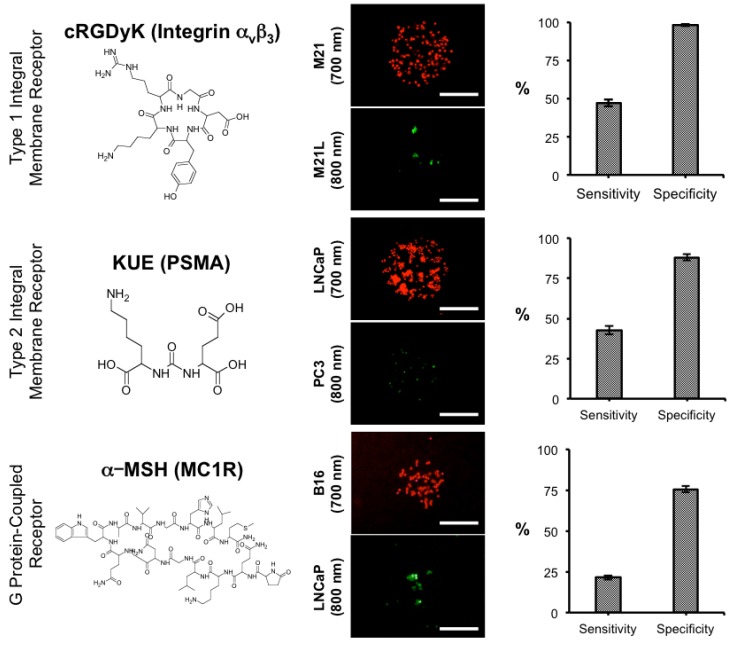
The screening of living cells using high-throughput microarrays is technically challenging. Great care must be taken in the chemical presentation of potential ligands and the number of collisions that cells make with them. To overcome these issues, we have developed a glass slide-based microarray system to discover small molecule ligands that preferentially bind to one cell type over another, including when the cells differ by only a single receptor. Chemical spots of 300 ± 10 μm in diameter are conjugated covalently to glass slides using an arraying robot, and novel near-infrared fluorophores with peak emission at 700 nm and 800 nm are used to label two different cell types. By carefully optimizing incubation conditions, including cell density, motion, kinetics, detection, etc. we demonstrate that cell-ligand binding occurs, and that the number of cells bound per chemical spot correlates with ligand affinity and specificity. This screening system lays the foundation for high-throughput discovery of novel ligands to the cell surface.
使用高通量微阵列对活细胞进行筛选在技术上具有挑战性。在潜在配体的化学呈现以及细胞与它们的碰撞次数方面必须格外小心。为了克服这些问题,我们开发了一种基于载玻片的微阵列系统,以发现优先与一种细胞类型而非另一种细胞类型结合的小分子配体,包括当细胞仅因单一受体而不同时。直径为300±10μm的化学斑点使用阵列机器人共价连接到载玻片上,并且使用在700nm和800nm处具有峰值发射的新型近红外荧光团来标记两种不同的细胞类型。通过仔细优化孵育条件,包括细胞密度、运动、动力学、检测等,我们证明了细胞 - 配体结合的发生,并且每个化学斑点结合的细胞数量与配体亲和力和特异性相关。该筛选系统为高通量发现细胞表面的新型配体奠定了基础。