Guardiola Magdalena, Uriz María Jesús, Taberlet Pierre, Coissac Eric, Wangensteen Owen Simon, Turon Xavier
Department of Marine Ecology, Center for Advanced Studies of Blanes (CEAB-CSIC), Girona, Spain.
Université Grenoble Alpes, Laboratoire d'Ecologie Alpine (LECA), F-38000, Grenoble, France; Centre National de la Recherche Scientifique (CNRS), Laboratoire d'Ecologie Alpine (LECA), F-38000, Grenoble, France.
PLoS One. 2015 Oct 5;10(10):e0139633. doi: 10.1371/journal.pone.0139633. eCollection 2015.
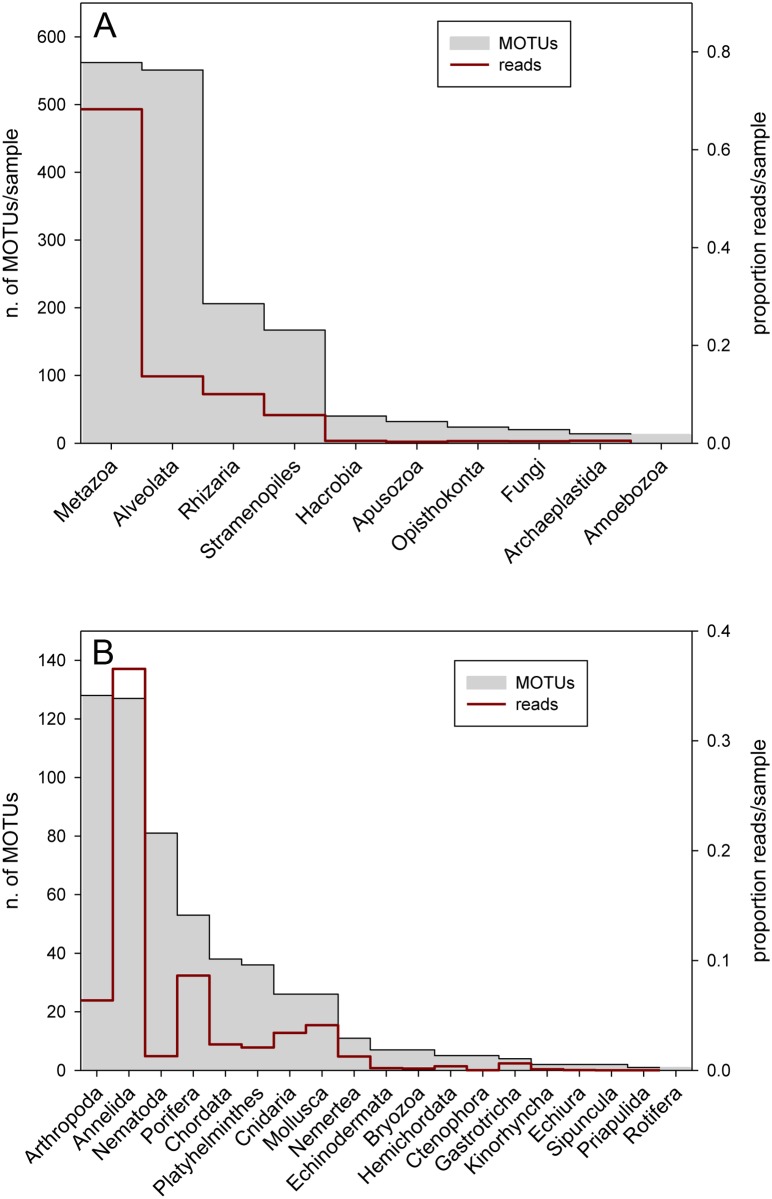
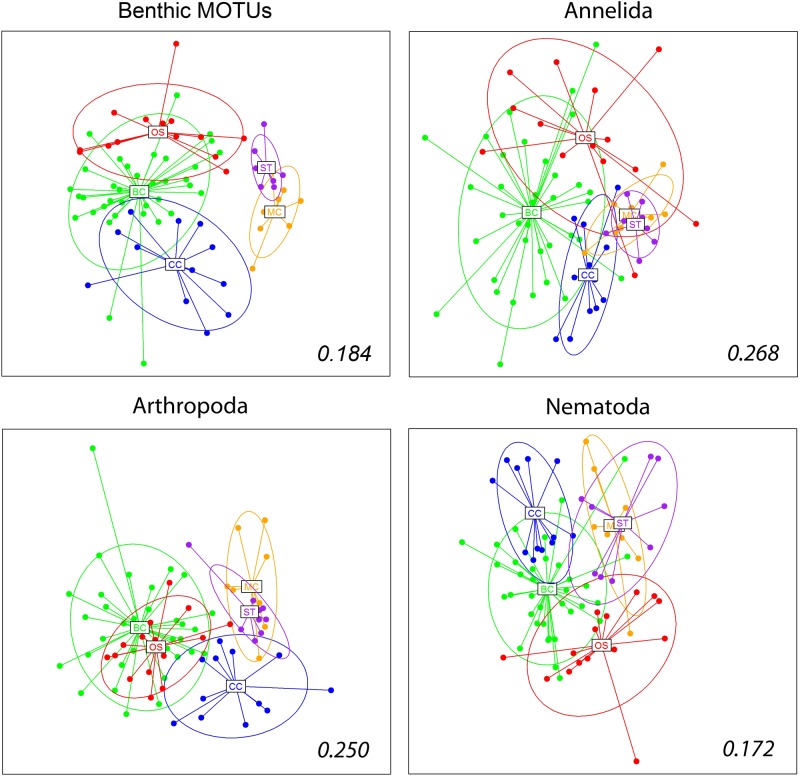
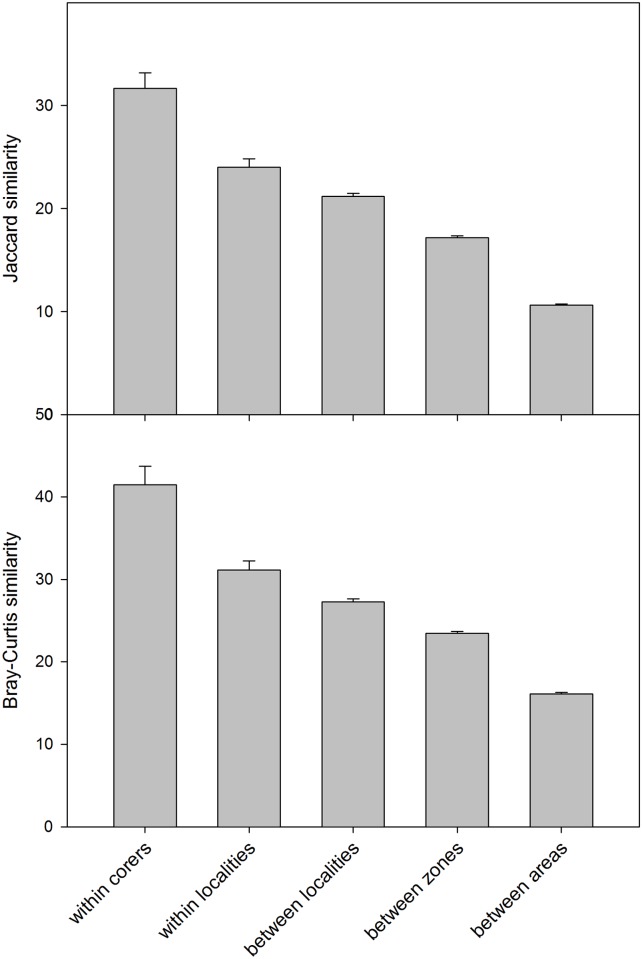
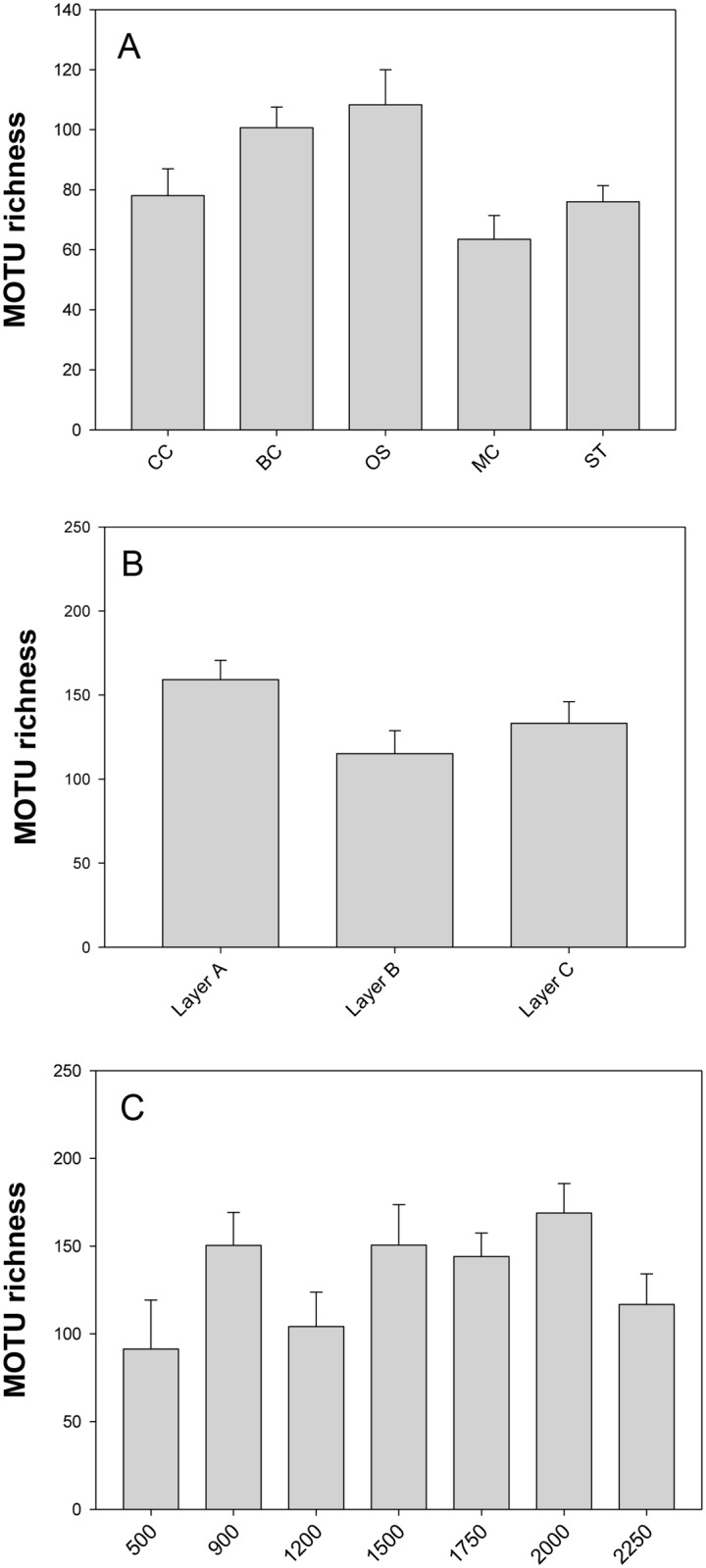
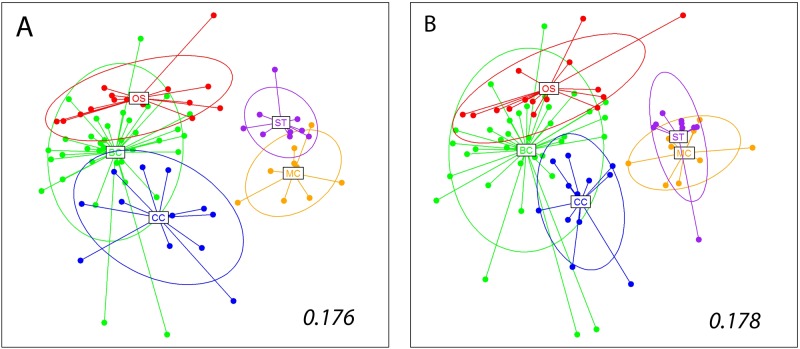
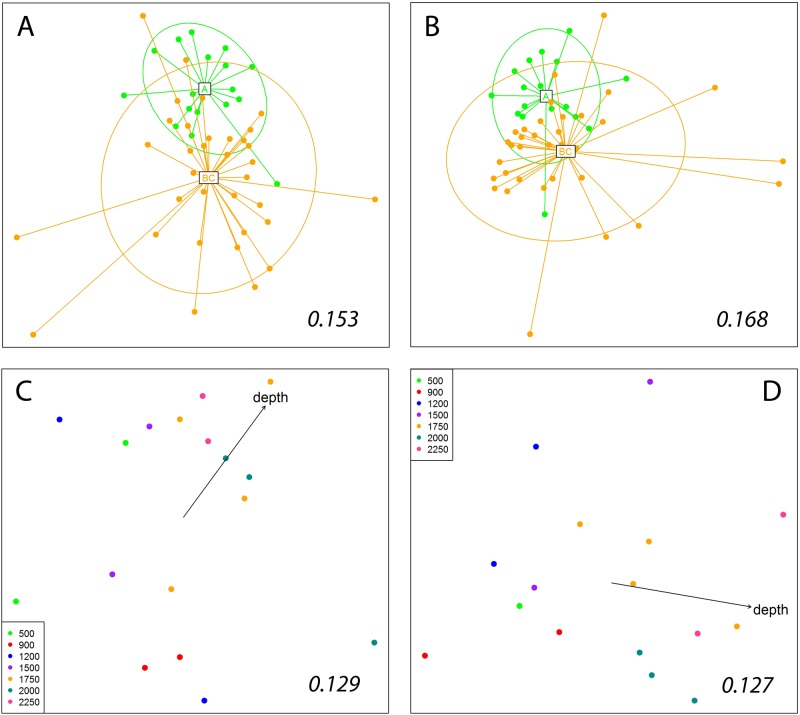
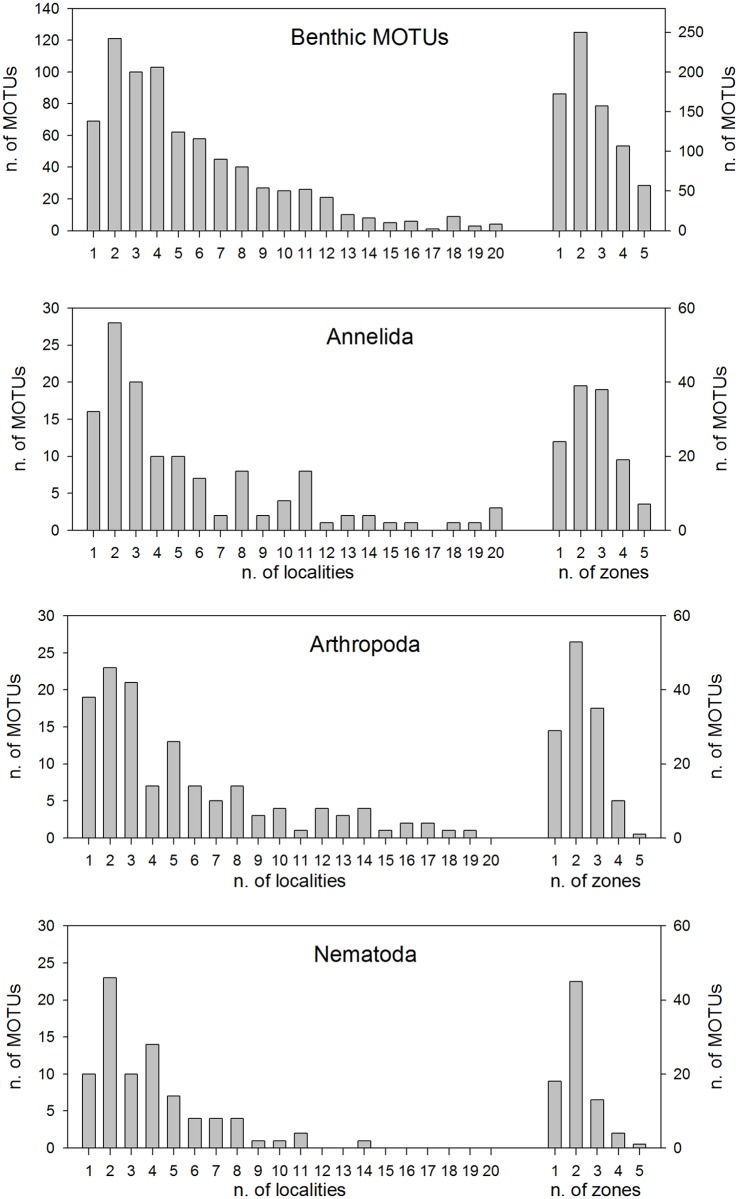
Marine sediments are home to one of the richest species pools on Earth, but logistics and a dearth of taxonomic work-force hinders the knowledge of their biodiversity. We characterized α- and β-diversity of deep-sea assemblages from submarine canyons in the western Mediterranean using an environmental DNA metabarcoding. We used a new primer set targeting a short eukaryotic 18S sequence (ca. 110 bp). We applied a protocol designed to obtain extractions enriched in extracellular DNA from replicated sediment corers. With this strategy we captured information from DNA (local or deposited from the water column) that persists adsorbed to inorganic particles and buffered short-term spatial and temporal heterogeneity. We analysed replicated samples from 20 localities including 2 deep-sea canyons, 1 shallower canal, and two open slopes (depth range 100-2,250 m). We identified 1,629 MOTUs, among which the dominant groups were Metazoa (with representatives of 19 phyla), Alveolata, Stramenopiles, and Rhizaria. There was a marked small-scale heterogeneity as shown by differences in replicates within corers and within localities. The spatial variability between canyons was significant, as was the depth component in one of the canyons where it was tested. Likewise, the composition of the first layer (1 cm) of sediment was significantly different from deeper layers. We found that qualitative (presence-absence) and quantitative (relative number of reads) data showed consistent trends of differentiation between samples and geographic areas. The subset of exclusively benthic MOTUs showed similar patterns of β-diversity and community structure as the whole dataset. Separate analyses of the main metazoan phyla (in number of MOTUs) showed some differences in distribution attributable to different lifestyles. Our results highlight the differentiation that can be found even between geographically close assemblages, and sets the ground for future monitoring and conservation efforts on these bottoms of ecological and economic importance.
海洋沉积物是地球上物种最丰富的群落之一的栖息地,但后勤保障和分类学劳动力的匮乏阻碍了我们对其生物多样性的了解。我们利用环境DNA宏条形码技术,对地中海西部海底峡谷深海群落的α多样性和β多样性进行了表征。我们使用了一套新的引物,靶向一个短的真核生物18S序列(约110碱基对)。我们应用了一种协议,旨在从重复的沉积物岩芯中获得富含细胞外DNA的提取物。通过这种策略,我们从吸附在无机颗粒上并缓冲短期空间和时间异质性的DNA(本地的或从水柱中沉积的)中获取了信息。我们分析了来自20个地点的重复样本,包括2个深海峡谷、1个较浅的海峡和两个开阔斜坡(深度范围为100 - 2250米)。我们鉴定出1629个分子操作分类单元(MOTUs),其中优势类群是后生动物(有19个门的代表)、囊泡虫、不等鞭毛类和根足虫。如岩芯内和地点内重复样本的差异所示,存在明显的小规模异质性。峡谷之间的空间变异性显著,在其中一个经过测试的峡谷中深度成分也是如此。同样,沉积物第一层(1厘米)的组成与较深层显著不同。我们发现定性(存在 - 缺失)和定量(读数相对数量)数据在样本和地理区域之间显示出一致的分化趋势。仅底栖MOTUs的子集显示出与整个数据集相似的β多样性和群落结构模式。对主要后生动物门(按MOTUs数量)的单独分析显示,由于不同的生活方式,分布存在一些差异。我们的结果突出了即使在地理上接近的群落之间也能发现的分化,并为未来对这些具有生态和经济重要性的海底进行监测和保护工作奠定了基础。