Dobigny Gauthier, Garba Madougou, Tatard Caroline, Loiseau Anne, Galan Max, Kadaouré Ibrahima, Rossi Jean-Pierre, Picardeau Mathieu, Bertherat Eric
Institut de Recherche pour le Développement, Centre de Biologie pour la Gestion des Populations (UMR IRD-INRA-CIRAD-SupAgro Montpellier), Campus International de Baillarguet CS30016, Montferrier-sur-Lez, France.
Direction Générale de la Protection des Végétaux, Ministère de l'Agriculture, Niamey, Niger.
PLoS Negl Trop Dis. 2015 Oct 5;9(10):e0004097. doi: 10.1371/journal.pntd.0004097. eCollection 2015.
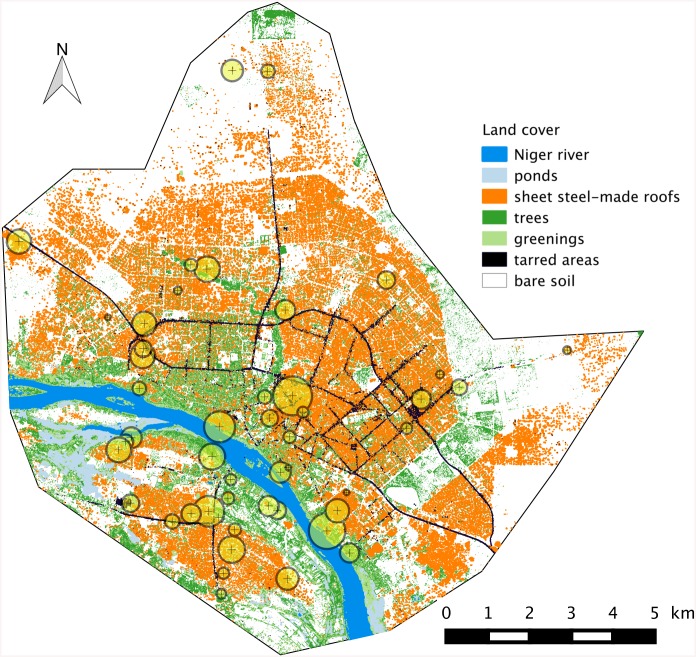
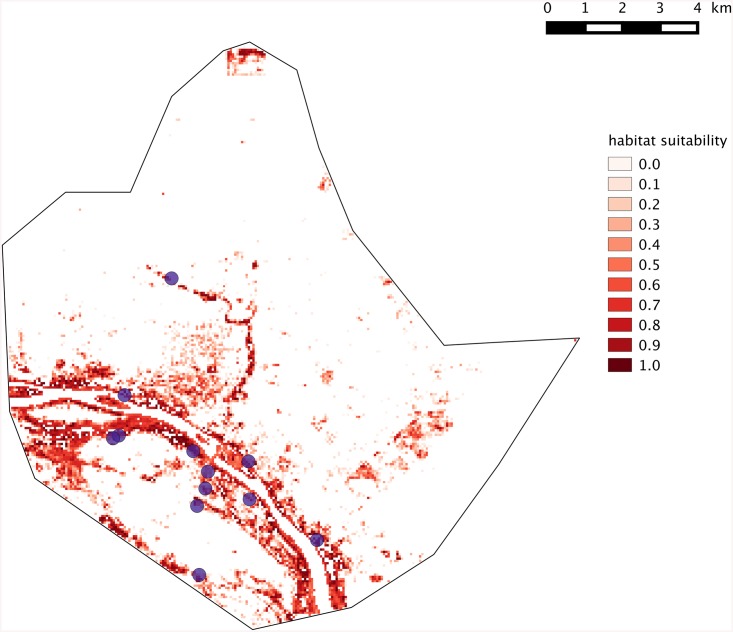
Leptospirosis essentially affects human following contact with rodent urine-contaminated water. As such, it was mainly found associated with rice culture, recreational activities and flooding. This is also the reason why it has mainly been investigated in temperate as well as warm and humid regions, while arid zones have been only very occasionally monitored for this disease. In particular, data for West African countries are extremely scarce. Here, we took advantage of an extensive survey of urban rodents in Niamey, Niger, in order to look for rodent-borne pathogenic Leptospira species presence and distribution across the city. To do so, we used high throughput bacterial 16S-based metabarcoding, lipL32 gene-targeting RT-PCR, rrs gene sequencing and VNTR typing as well as GIS-based multivariate spatial analysis. Our results show that leptospires seem absent from the core city where usual Leptospira reservoir rodent species (namely R. rattus and M. natalensis) are yet abundant. On the contrary, L. kirschneri was detected in Arvicanthis niloticus and Cricetomys gambianus, two rodent species that are restricted to irrigated cultures within the city. Moreover, the VNTR profiles showed that rodent-borne leptospires in Niamey belong to previously undescribed serovars. Altogether, our study points towards the importance of market gardening in maintain and circulation of leptospirosis within Sahelian cities. In Africa, irrigated urban agriculture constitutes a pivotal source of food supply, especially in the context of the ongoing extensive urbanization of the continent. With this in mind, we speculate that leptospirosis may represent a zoonotic disease of concern also in arid regions that would deserve to be more rigorously surveyed, especially in urban agricultural settings.
钩端螺旋体病主要在人类接触受啮齿动物尿液污染的水后感染。因此,它主要与水稻种植、娱乐活动和洪水有关。这也是为什么主要在温带以及温暖潮湿地区对其进行调查,而干旱地区仅偶尔对这种疾病进行监测。特别是,西非国家的数据极其匮乏。在此,我们利用对尼日尔尼亚美城市啮齿动物的广泛调查,来寻找啮齿动物传播的致病性钩端螺旋体物种在全市的存在情况和分布。为此,我们使用了基于高通量细菌16S的宏条形码技术、靶向lipL32基因的逆转录聚合酶链反应、rrs基因测序和可变数目串联重复序列分型以及基于地理信息系统的多变量空间分析。我们的结果表明,在核心城区似乎没有钩端螺旋体,而常见的钩端螺旋体储存宿主啮齿动物物种(即黑家鼠和南非小鼠)在那里仍然很多。相反,在尼罗多齿鼩和冈比亚巨囊鼠中检测到了克氏钩端螺旋体,这两种啮齿动物物种仅限于城区内的灌溉种植区。此外,可变数目串联重复序列图谱显示,尼亚美的啮齿动物传播的钩端螺旋体属于以前未描述过的血清型。总之,我们的研究指出了城市园艺在萨赫勒地区城市钩端螺旋体病的维持和传播中的重要性。在非洲,灌溉型城市农业是食物供应的关键来源,尤其是在非洲大陆正在进行大规模城市化的背景下。考虑到这一点,我们推测钩端螺旋体病在干旱地区也可能是一种值得关注的人畜共患病,值得更严格地进行调查,特别是在城市农业环境中。