Dmochowska-Boguta Marta, Alaba Sylwia, Yanushevska Yuliya, Piechota Urszula, Lasota Elzbieta, Nadolska-Orczyk Anna, Karlowski Wojciech M, Orczyk Waclaw
Department of Genetic Engineering, Plant Breeding and Acclimatization, Institute - National Research Institute, Radzikow, 05-870, Blonie, Poland.
Department of Computational Biology, Institute of Molecular Biology and Biotechnology, Faculty of Biology, Adam Mickiewicz University, Umultowska 89, 61-614, Poznan, Poland.
BMC Genomics. 2015 Oct 5;16:742. doi: 10.1186/s12864-015-1932-3.
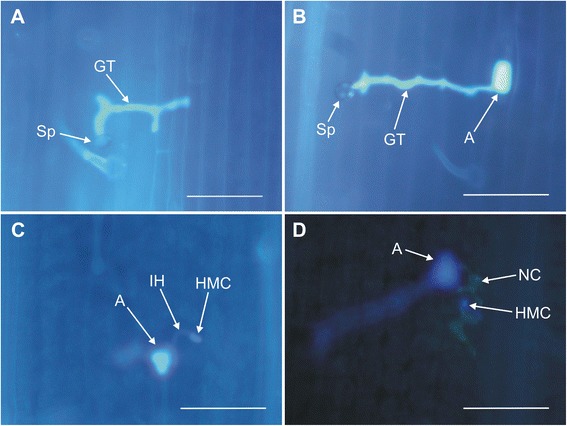
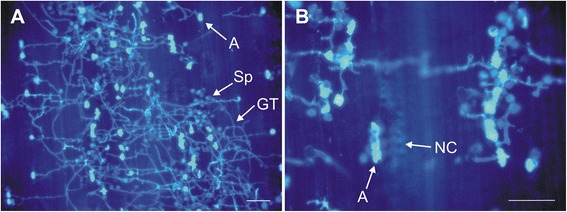
Inoculation of wheat plants with Puccinia triticina (Pt) spores activates a wide range of host responses. Compatible Pt interaction with susceptible Thatcher plants supports all stages of the pathogen life cycle. Incompatible interaction with TcLr9 activates defense responses including oxidative burst and micronecrotic reactions associated with the pathogen's infection structures and leads to complete termination of pathogen development. These two contrasting host-pathogen interactions were a foundation for transcriptome analysis of incompatible wheat-Pt interaction.
A suppression subtractive hybridization (SSH) library was constructed using cDNA from pathogen-inoculated susceptible Thatcher and resistant TcLr9 isogenic lines. cDNA represented steps of wheat-brown rust interactions: spore germination, haustorium mother cell (HMC) formation and micronecrotic reactions. All ESTs were clustered and validated by similarity search to wheat genome using BLASTn and sim4db tools. qRT-PCR was used to determine transcript levels of selected ESTs after inoculation in both lines.
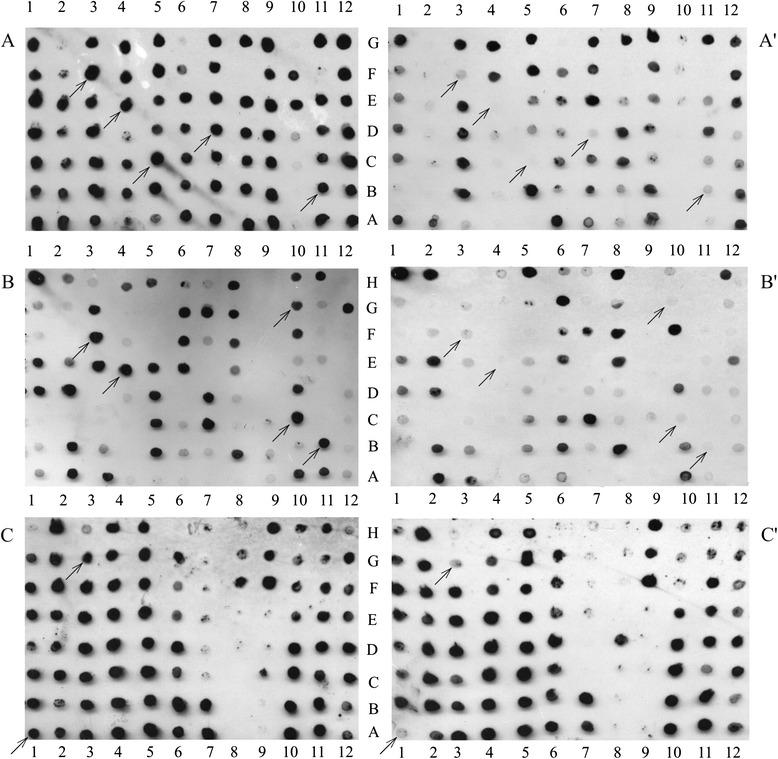
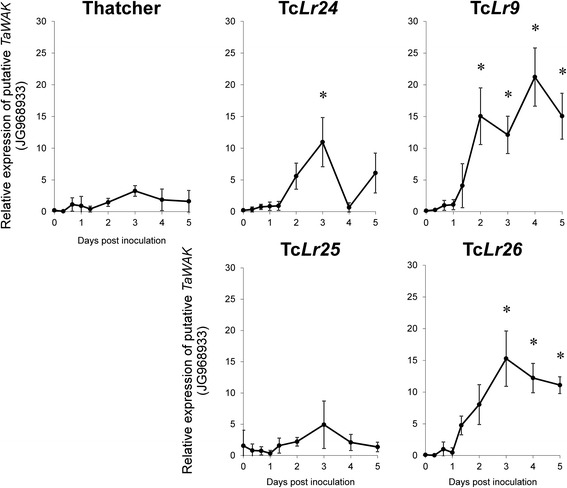
Out of 793 isolated cDNA clones, 183 were classified into 152 contigs. 89 cDNA clones and encoded proteins were functionally annotated and assigned to 5 Gene Ontology categories: catalytic activity 48 clones (54 %), binding 32 clones (36 %), transporter activity 6 clones (7 %), structural molecule activity 2 clones (2 %) and molecular transducer activity 1 clone (1 %). Detailed expression profiles of 8 selected clones were analyzed using the same plant-pathogen system. The strongest induction after pathogen infection and the biggest differences between resistant and susceptible interactions were detected for clones encoding wall-associated kinase (GenBank accession number JG969003), receptor with leucine-rich repeat domain (JG968955), putative serine/threonine protein kinase (JG968944), calcium-mediated signaling protein (JG968925) and 14-3-3 protein (JG968969).
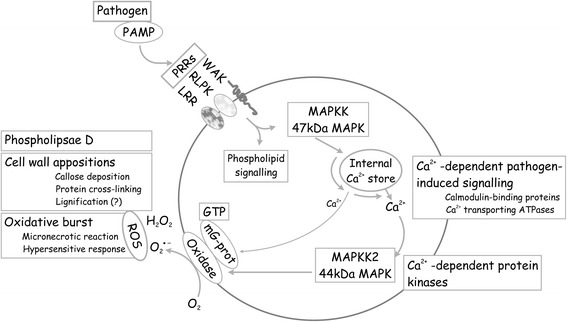
The SSH library represents transcripts regulated by pathogen infection during compatible and incompatible interactions of wheat with P. triticina. Annotation of selected clones confirms their putative roles in successive steps of plant-pathogen interactions. The transcripts can be categorized as defense-related due to their involvement in either basal defense or resistance through an R-gene mediated reaction. The possible involvement of selected clones in pathogen recognition and pathogen-induced signaling as well as resistance mechanisms such as cell wall enforcement, oxidative burst and micronecrotic reactions is discussed.
用小麦叶锈菌(Pt)孢子接种小麦植株会激活多种宿主反应。Pt与感病品种“撒切尔”的亲和互作支持病原体生命周期的各个阶段。与TcLr9的非亲和互作会激活防御反应,包括氧化爆发以及与病原体侵染结构相关的微坏死反应,并导致病原体发育完全终止。这两种截然不同的宿主-病原体互作是小麦与Pt非亲和互作转录组分析的基础。
利用接种病原体后的感病品种“撒切尔”和抗病的TcLr9近等基因系的cDNA构建抑制性消减杂交(SSH)文库。cDNA代表小麦-叶锈菌互作的各个阶段:孢子萌发、吸器母细胞(HMC)形成和微坏死反应。所有EST通过使用BLASTn和sim4db工具与小麦基因组进行相似性搜索进行聚类和验证。采用qRT-PCR测定接种后两个品系中选定EST的转录水平。
在793个分离的cDNA克隆中,183个被归类为152个重叠群。89个cDNA克隆及其编码的蛋白质被进行了功能注释,并归入5个基因本体类别:催化活性48个克隆(54%)、结合32个克隆(36%)、转运活性6个克隆(7%)、结构分子活性2个克隆(2%)和分子传感器活性1个克隆(1%)。使用相同的植物-病原体系统分析了8个选定克隆的详细表达谱。对于编码壁相关激酶(GenBank登录号JG969003)、富含亮氨酸重复结构域的受体(JG968955)、假定的丝氨酸/苏氨酸蛋白激酶(JG968944)、钙介导的信号蛋白(JG968925)和14-3-3蛋白(JG968969)的克隆,检测到病原体感染后诱导最强,且抗病与感病互作之间差异最大。
SSH文库代表了小麦与小麦叶锈菌亲和与非亲和互作过程中受病原体感染调控的转录本。对选定克隆的注释证实了它们在植物-病原体互作连续步骤中的假定作用。由于这些转录本参与基础防御或通过R基因介导的反应产生抗性,因此可归类为与防御相关。讨论了选定克隆可能参与病原体识别、病原体诱导的信号传导以及诸如细胞壁强化、氧化爆发和微坏死反应等抗性机制。