Wright Laurel D, Johnson Christopher M, Grossman Alan D
Department of Biology, Massachusetts Institute of Technology, Cambridge, Massachusetts, United States of America.
PLoS Genet. 2015 Oct 6;11(10):e1005556. doi: 10.1371/journal.pgen.1005556. eCollection 2015 Oct.
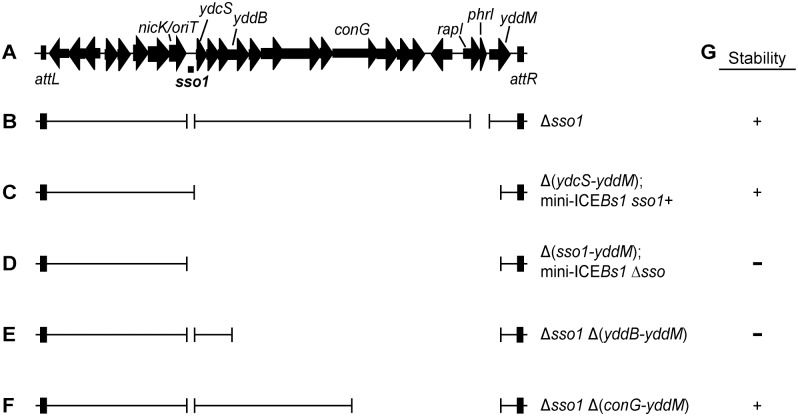
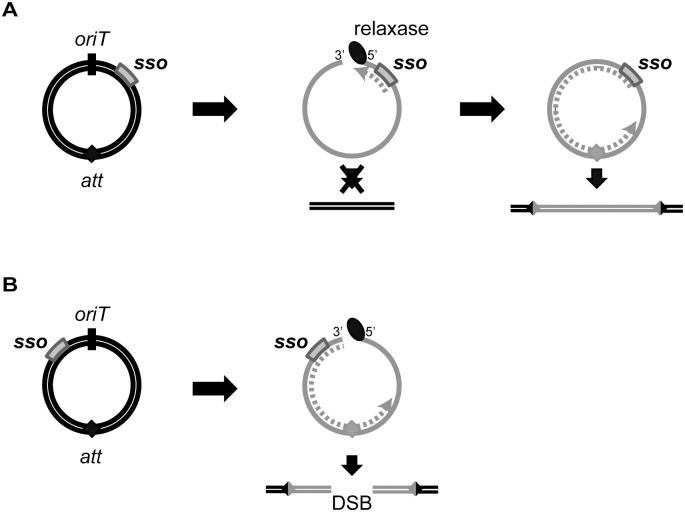
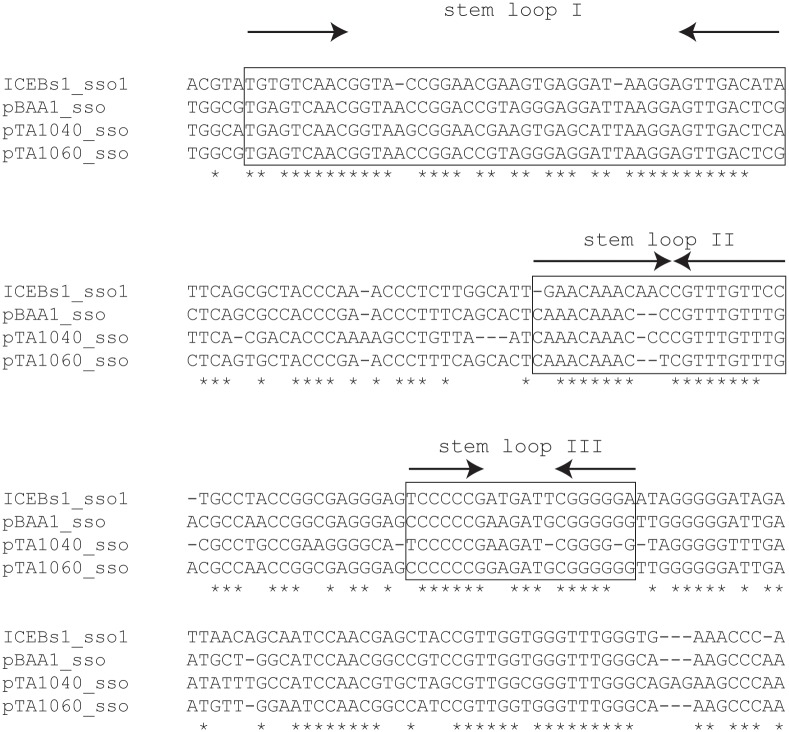
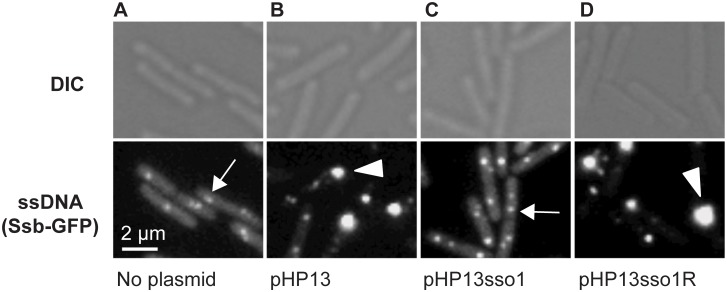
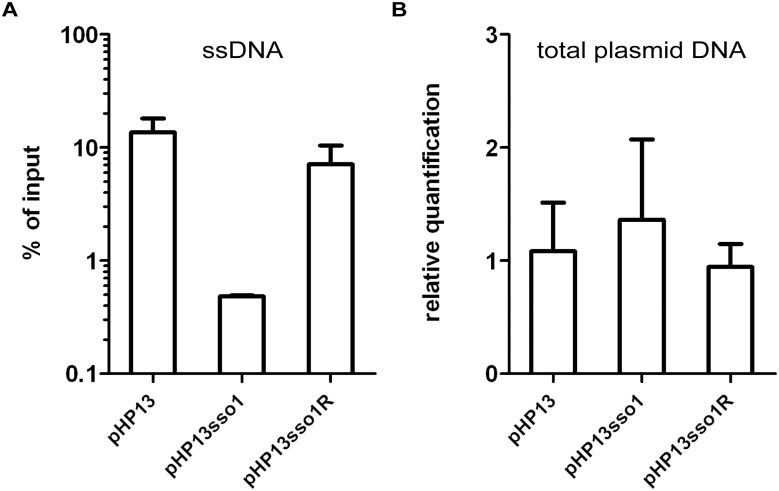
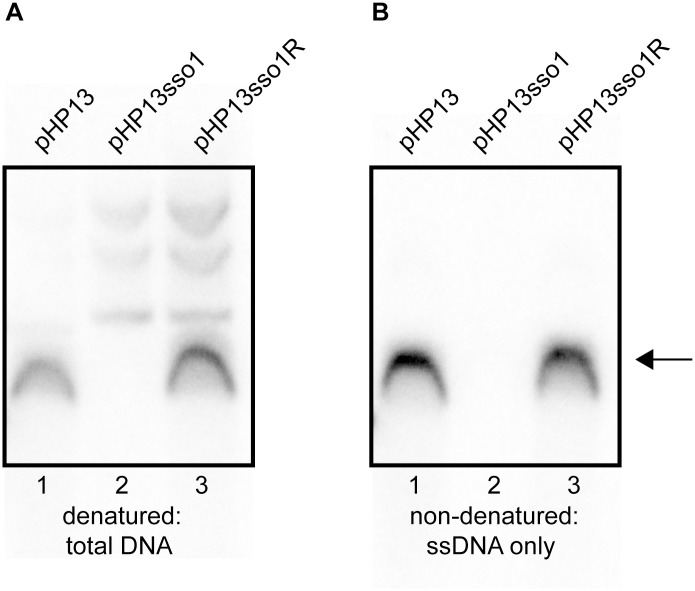
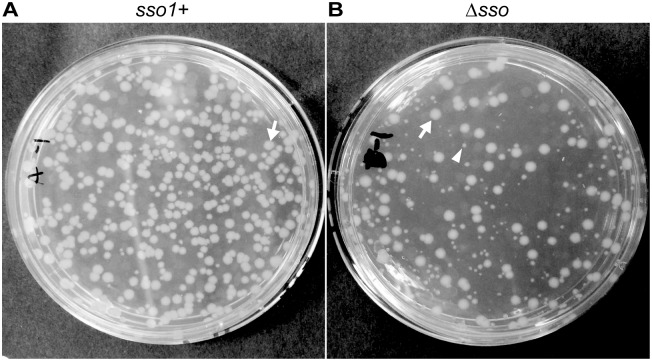
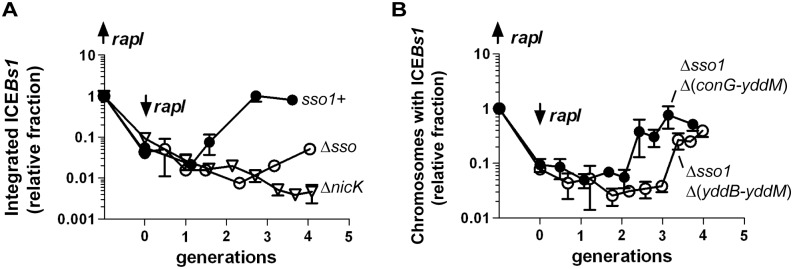
We identified a functional single strand origin of replication (sso) in the integrative and conjugative element ICEBs1 of Bacillus subtilis. Integrative and conjugative elements (ICEs, also known as conjugative transposons) are DNA elements typically found integrated into a bacterial chromosome where they are transmitted to daughter cells by chromosomal replication and cell division. Under certain conditions, ICEs become activated and excise from the host chromosome and can transfer to neighboring cells via the element-encoded conjugation machinery. Activated ICEBs1 undergoes autonomous rolling circle replication that is needed for the maintenance of the excised element in growing and dividing cells. Rolling circle replication, used by many plasmids and phages, generates single-stranded DNA (ssDNA). In many cases, the presence of an sso enhances the conversion of the ssDNA to double-stranded DNA (dsDNA) by enabling priming of synthesis of the second DNA strand. We initially identified sso1 in ICEBs1 based on sequence similarity to the sso of an RCR plasmid. Several functional assays confirmed Sso activity. Genetic analyses indicated that ICEBs1 uses sso1 and at least one other region for second strand DNA synthesis. We found that Sso activity was important for two key aspects of the ICEBs1 lifecycle: 1) maintenance of the plasmid form of ICEBs1 in cells after excision from the chromosome, and 2) stable acquisition of ICEBs1 following transfer to a new host. We identified sequences similar to known plasmid sso's in several other ICEs. Together, our results indicate that many other ICEs contain at least one single strand origin of replication, that these ICEs likely undergo autonomous replication, and that replication contributes to the stability and spread of these elements.
我们在枯草芽孢杆菌的整合性接合元件ICEBs1中鉴定出一个功能性单链复制起点(sso)。整合性接合元件(ICEs,也称为接合转座子)是通常整合到细菌染色体中的DNA元件,它们通过染色体复制和细胞分裂传递给子代细胞。在某些条件下,ICEs被激活并从宿主染色体上切除,然后可以通过元件编码的接合机制转移到邻近细胞。激活后的ICEBs1会进行自主滚环复制,这对于在生长和分裂的细胞中维持切除后的元件是必需的。许多质粒和噬菌体都采用滚环复制来产生单链DNA(ssDNA)。在许多情况下,sso的存在通过启动第二条DNA链的合成来增强ssDNA向双链DNA(dsDNA)的转化。我们最初基于与RCR质粒的sso的序列相似性在ICEBs1中鉴定出sso1。多项功能分析证实了Sso的活性。遗传分析表明,ICEBs1使用sso1和至少一个其他区域进行第二条链的DNA合成。我们发现Sso活性对于ICEBs1生命周期的两个关键方面很重要:1)ICEBs1从染色体上切除后在细胞中以质粒形式的维持,以及2)转移到新宿主后ICEBs1的稳定获得。我们在其他几个ICEs中鉴定出了与已知质粒sso相似的序列。总之,我们的结果表明,许多其他ICEs至少包含一个单链复制起点,这些ICEs可能进行自主复制,并且复制有助于这些元件的稳定性和传播。