Hardin Dana S, Anderson Wesley, Cattet Jennifer
Eli Lilly, Corp 225 S. Delaware, Indianapolis, USA.
Medical Mutts, Indianapolis, Indiana, USA.
Diabetes Ther. 2015 Dec;6(4):509-517. doi: 10.1007/s13300-015-0135-x. Epub 2015 Oct 6.
Hypoglycemia (Hypo) is the most common side effect of insulin therapy in people with type 1 diabetes (T1D). Over time, patients with T1D become unaware of signs and symptoms of Hypo. Hypo unawareness leads to morbidity and mortality. Diabetes alert dogs (DADs) represent a unique way to help patients with Hypo unawareness. Our group has previously presented data in abstract form which demonstrates the sensitivity and specificity of DADS. The purpose of our current study is to expand evaluation of DAD sensitivity and specificity using a method that reduces the possibility of trainer bias.
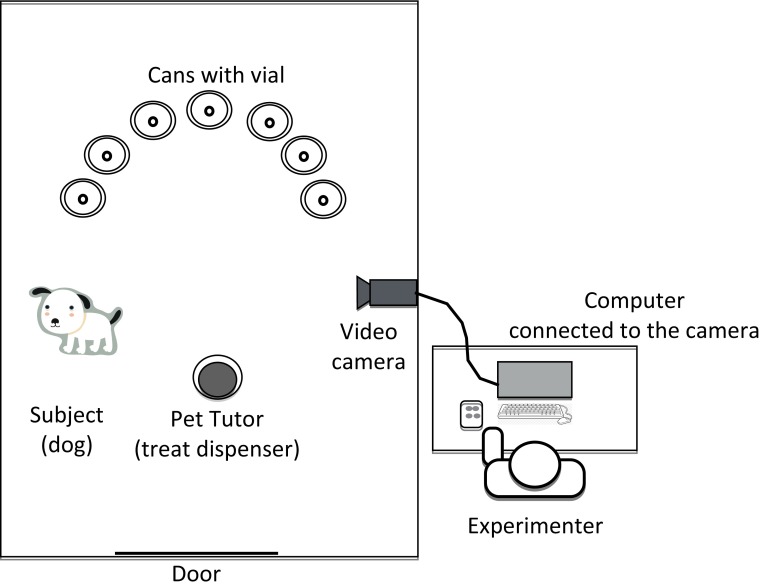
We evaluated 6 dogs aging 1-10 years old who had received an average of 6 months of training for Hypo alert using positive training methods. Perspiration samples were collected from patients during Hypo (BG 46-65 mg/dL) and normoglycemia (BG 85-136 mg/dl) and were used in training. These samples were placed in glass vials which were then placed into 7 steel cans (1 Hypo, 2 normal, 4 blank) randomly placed by roll of a dice. The dogs alerted by either sitting in front of, or pushing, the can containing the Hypo sample. Dogs were rewarded for appropriate recognition of the Hypo samples using a food treat via a remote control dispenser. The results were videotaped and statistically evaluated for sensitivity (proportion of lows correctly alerted, "true positive rate") and specificity (proportion of blanks + normal samples not alerted, "true negative rate") calculated after pooling data across all trials for all dogs.
All DADs displayed statistically significant (p value <0.05) greater sensitivity (min 50.0%-max 87.5%) to detect the Hypo sample than the expected random correct alert of 14%. Specificity ranged from a min of 89.6% to a max of 97.9% (expected rate is not defined in this scenario).
Our results suggest that properly trained DADs can successfully recognize and alert to Hypo in an in vitro setting using smell alone.
低血糖是1型糖尿病(T1D)患者胰岛素治疗最常见的副作用。随着时间的推移,1型糖尿病患者会对低血糖的体征和症状失去感知。低血糖无感知会导致发病和死亡。糖尿病警报犬是帮助低血糖无感知患者的一种独特方式。我们团队之前已以摘要形式展示了数据,证明了糖尿病警报犬的敏感性和特异性。我们当前研究的目的是使用一种减少训练者偏差可能性的方法,扩大对糖尿病警报犬敏感性和特异性的评估。
我们评估了6只年龄在1至10岁的犬,它们平均接受了6个月使用正向训练方法的低血糖警报训练。在患者处于低血糖(血糖46 - 65mg/dL)和正常血糖(血糖85 - 136mg/dl)状态时采集汗液样本用于训练。这些样本被放置在玻璃瓶中,然后放入7个铁罐中(1个低血糖样本、2个正常样本、4个空白样本),通过掷骰子随机放置。犬通过坐在装有低血糖样本的罐子前或推动罐子来发出警报。通过遥控分配器用食物奖励犬对低血糖样本的正确识别。结果被录像,并对所有犬在所有试验中汇总数据后计算的敏感性(正确警报低血糖的比例,“真阳性率”)和特异性(未警报的空白样本 + 正常样本的比例,“真阴性率”)进行统计评估。
所有糖尿病警报犬在检测低血糖样本时显示出统计学显著(p值 <0.05)更高的敏感性(最低50.0% - 最高87.5%),高于预期的随机正确警报率14%。特异性范围从最低89.6%到最高97.9%(在此情况下未定义预期率)。
我们的结果表明,经过适当训练的糖尿病警报犬仅通过嗅觉就能在体外环境中成功识别并对低血糖发出警报。