Song Yuanyuan, Chen Dongmei, Lu Kai, Sun Zhongxiang, Zeng Rensen
College of Life Sciences, Fujian Agriculture and Forestry University, Fuzhou China ; State Key Laboratory of Conservation and Utilization of Subtropical Agro-Bioresources, College of Agriculture, South China Agricultural University, Guangzhou China.
College of Life Sciences, Fujian Agriculture and Forestry University, Fuzhou China.
Front Plant Sci. 2015 Sep 28;6:786. doi: 10.3389/fpls.2015.00786. eCollection 2015.
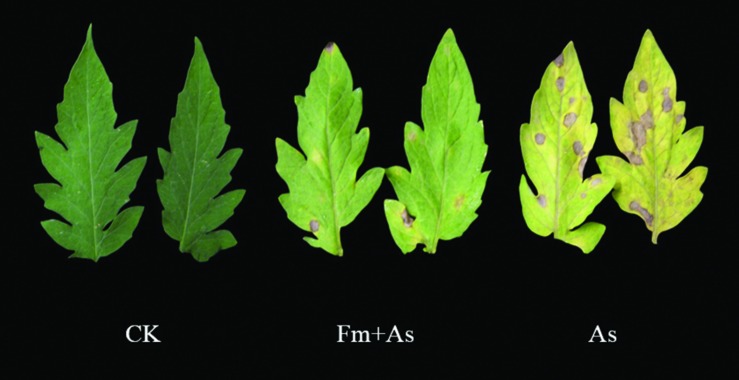
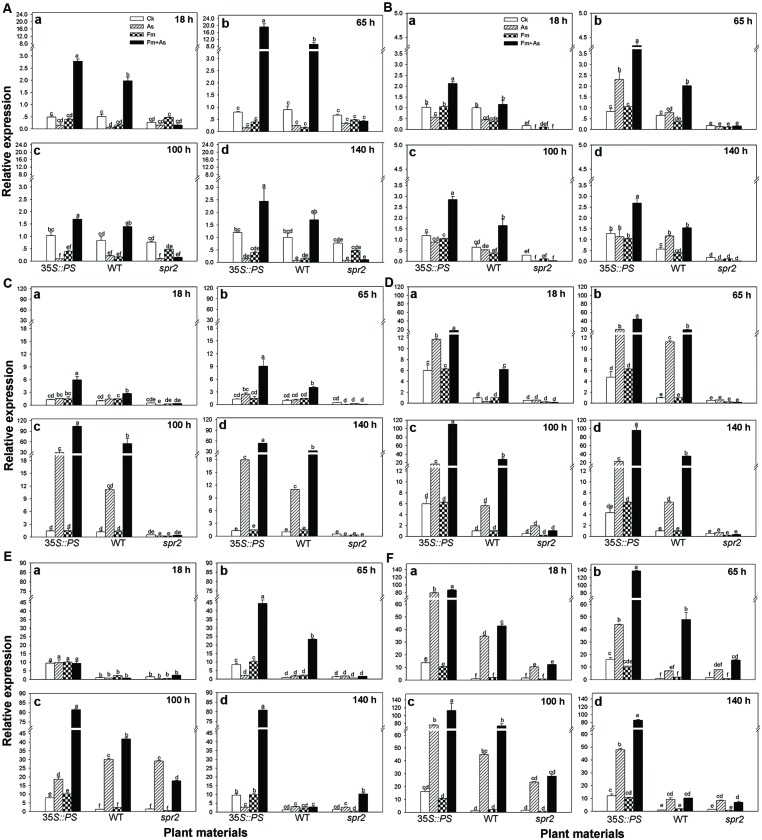
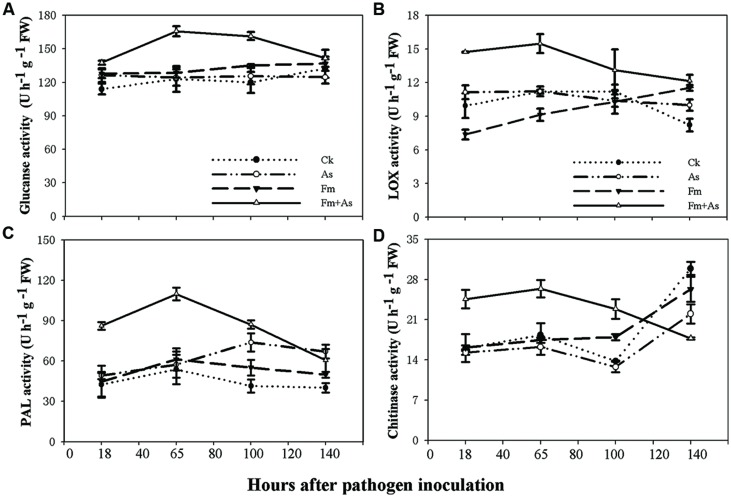
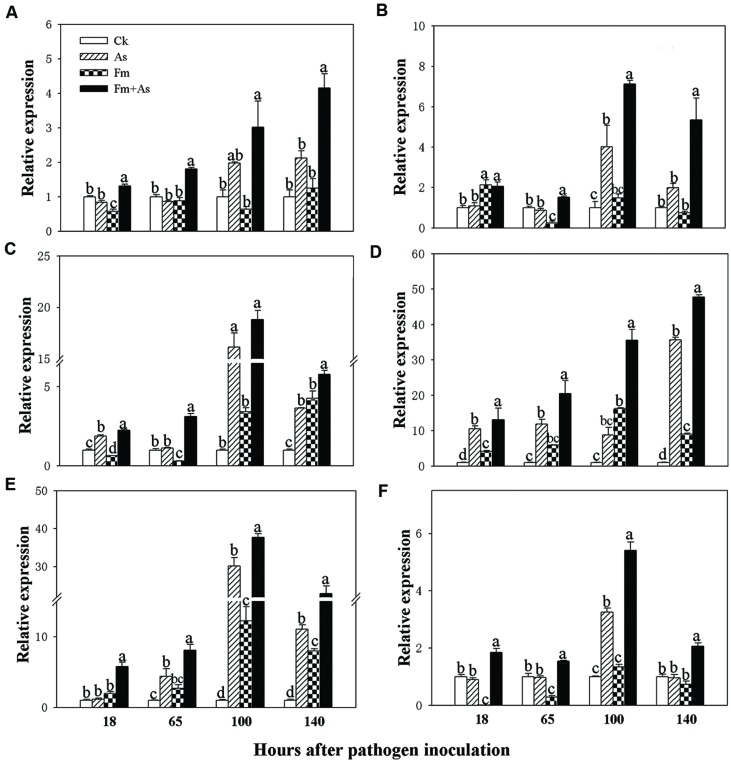
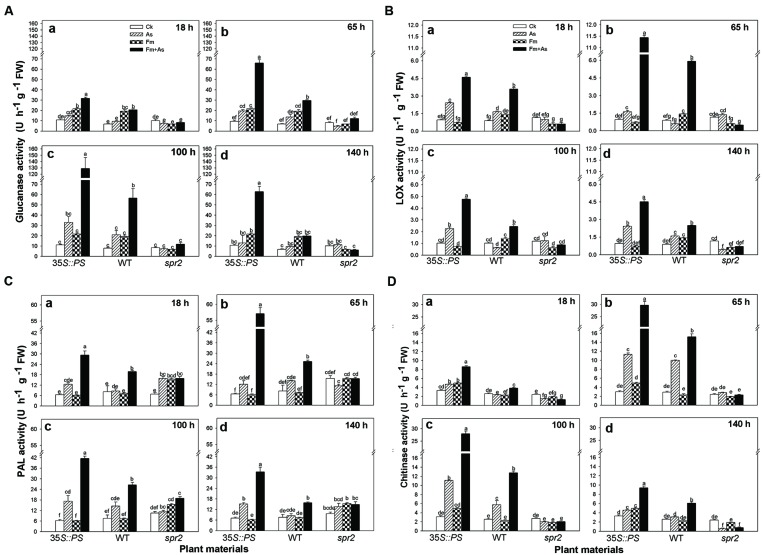
Roots of most terrestrial plants form symbiotic associations (mycorrhiza) with soil- borne arbuscular mycorrhizal fungi (AMF). Many studies show that mycorrhizal colonization enhances plant resistance against pathogenic fungi. However, the mechanism of mycorrhiza-induced disease resistance remains equivocal. In this study, we found that mycorrhizal inoculation with AMF Funneliformis mosseae significantly alleviated tomato (Solanum lycopersicum Mill.) early blight disease caused by Alternaria solani Sorauer. AMF pre-inoculation led to significant increases in activities of β-1,3-glucanase, chitinase, phenylalanine ammonia-lyase (PAL) and lipoxygenase (LOX) in tomato leaves upon pathogen inoculation. Mycorrhizal inoculation alone did not influence the transcripts of most genes tested. However, pathogen attack on AMF-inoculated plants provoked strong defense responses of three genes encoding pathogenesis-related proteins, PR1, PR2, and PR3, as well as defense-related genes LOX, AOC, and PAL, in tomato leaves. The induction of defense responses in AMF pre-inoculated plants was much higher and more rapid than that in un-inoculated plants in present of pathogen infection. Three tomato genotypes: a Castlemart wild-type (WT) plant, a jasmonate (JA) biosynthesis mutant (spr2), and a prosystemin-overexpressing 35S::PS plant were used to examine the role of the JA signaling pathway in AMF-primed disease defense. Pathogen infection on mycorrhizal 35S::PS plants led to higher induction of defense-related genes and enzymes relative to WT plants. However, pathogen infection did not induce these genes and enzymes in mycorrhizal spr2 mutant plants. Bioassays showed that 35S::PS plants were more resistant and spr2 plants were more susceptible to early blight compared with WT plants. Our finding indicates that mycorrhizal colonization enhances tomato resistance to early blight by priming systemic defense response, and the JA signaling pathway is essential for mycorrhiza-primed disease resistance.
大多数陆生植物的根系与土壤中的丛枝菌根真菌(AMF)形成共生关系(菌根)。许多研究表明,菌根定殖可增强植物对病原真菌的抗性。然而,菌根诱导的抗病机制仍不明确。在本研究中,我们发现用AMF摩西管柄囊霉进行菌根接种可显著减轻由链格孢引起的番茄早疫病。AMF预接种导致接种病原菌后番茄叶片中β-1,3-葡聚糖酶、几丁质酶、苯丙氨酸解氨酶(PAL)和脂氧合酶(LOX)的活性显著增加。单独进行菌根接种对大多数检测基因的转录本没有影响。然而,病原菌侵袭接种了AMF的植物会引发番茄叶片中三个编码病程相关蛋白PR1、PR2和PR3的基因以及防御相关基因LOX、AOC和PAL的强烈防御反应。在病原菌感染的情况下,AMF预接种植物中防御反应的诱导比未接种植物更高且更迅速。使用三种番茄基因型:卡斯玛特野生型(WT)植株、茉莉酸(JA)生物合成突变体(spr2)和过表达系统素的35S::PS植株,来研究JA信号通路在AMF引发的病害防御中的作用。与WT植株相比,病原菌感染菌根化的35S::PS植株会导致防御相关基因和酶的诱导更高。然而,病原菌感染并未在菌根化的spr2突变体植株中诱导这些基因和酶。生物测定表明,与WT植株相比,35S::PS植株对早疫病更具抗性,而spr2植株更易感病。我们的研究结果表明,菌根定殖通过引发系统防御反应增强番茄对早疫病的抗性,并且JA信号通路对于菌根引发的抗病性至关重要。