Mohsenipour Zeinab, Hassanshahian Mehdi
Department of Biology, Faculty of Sciences, Shahid Bahonar University of Kerman, Kerman, IR Iran.
Jundishapur J Microbiol. 2015 Aug 25;8(8):e18971. doi: 10.5812/jjm.18971v2. eCollection 2015 Aug.
Garlic is considered a rich source of many compounds, which shows antimicrobial effects. The ability of microorganisms to adhere to both biotic and abiotic surfaces and to form biofilm is responsible for a number of diseases of chronic nature, demonstrating extremely high resistance to antibiotics. Bacterial biofilms are complex communities of sessile microorganisms, embedded in an extracellular matrix and irreversibly attached to various surfaces.
The present study evaluated the antimicrobial activity of Allium sativum extract against the biofilms of six pathogenic bacteria and their free-living forms. The clinical isolates in this study had not been studied in any other studies, especially in regard to biofilm disruption and inhibition of biofilm cell metabolic activity.
Antimicrobial activities of A. sativum L. extracts (methanol and ethanol extracts) against planktonic forms of bacteria were determined using the disc diffusion method. The minimum inhibitory concentration (MIC) and the minimum bactericidal concentration (MBC) values were evaluated by a macrobroth dilution technique. The anti-biofilm effects were assessed by microtiter plate method.
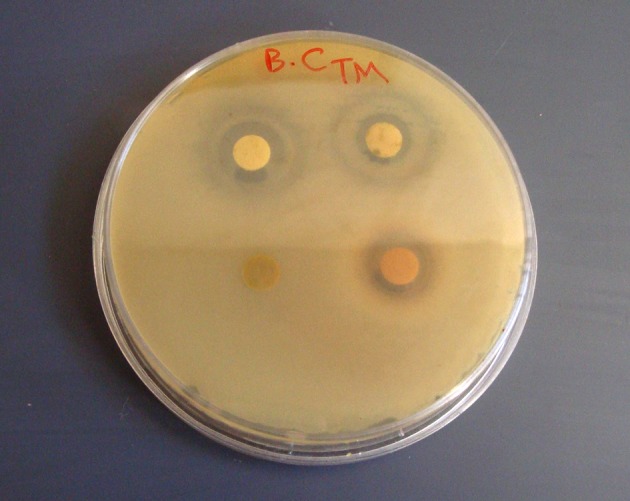
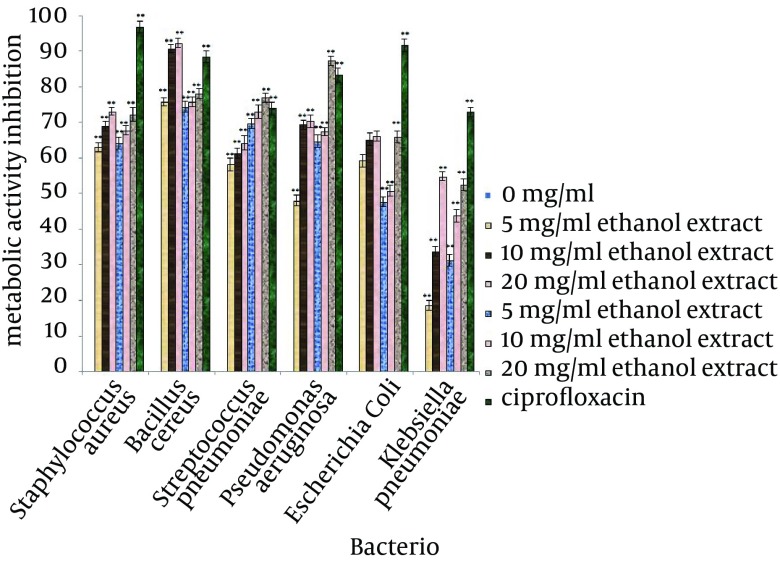
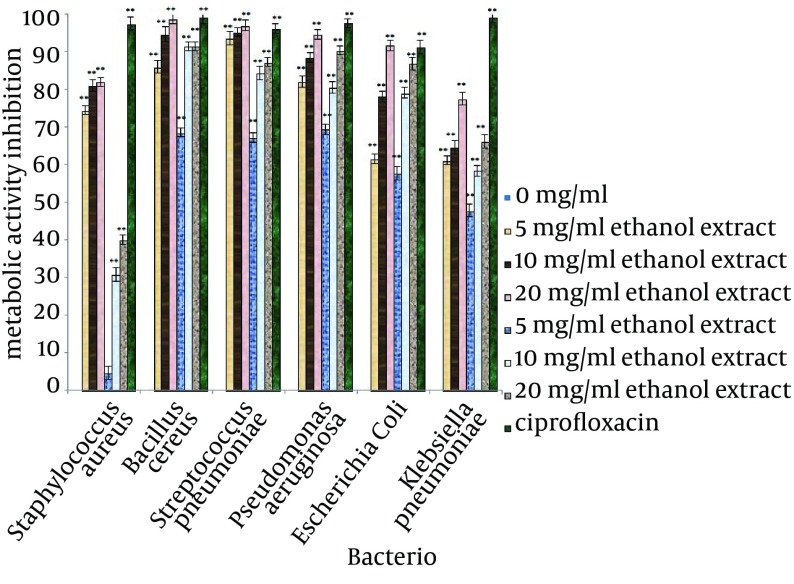
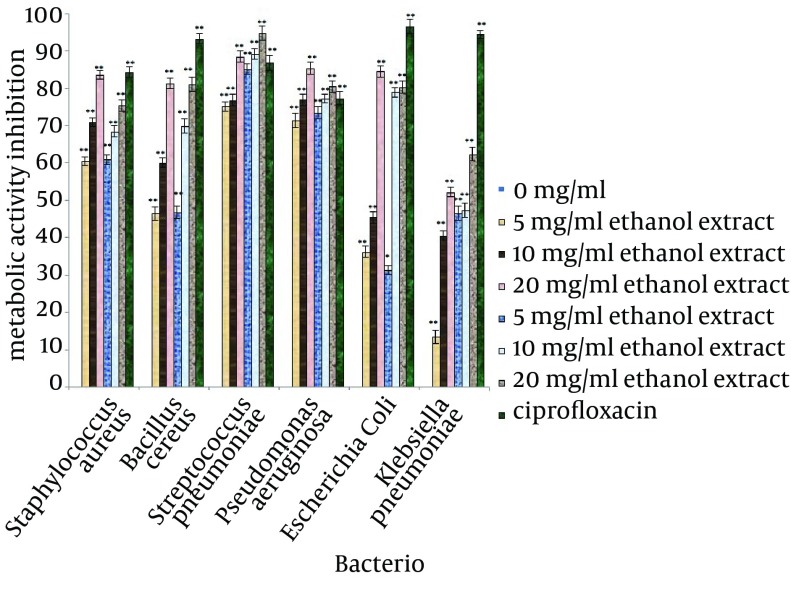
The results showed that the A. sativum L. extract discs did not have any zone of inhibition for the tested bacteria. However, The MIC values of A. sativum L. extracts (0.078 - 2.5 mg/mL) confirmed the high ability of these extracts for inhibition of planktonic bacteria. A. sativum L. extracts were efficient to inhibit biofilm structures and the concentration of each extract had a direct relation with the inhibitory effect.
Finally, it can be suggested that the extracts of this plant be applied as antimicrobial agents against these pathogens, particularly in biofilm forms.
大蒜被认为是多种具有抗菌作用的化合物的丰富来源。微生物附着于生物和非生物表面并形成生物膜的能力是许多慢性疾病的病因,这些微生物对抗生素表现出极高的抗性。细菌生物膜是固着微生物的复杂群落,嵌入细胞外基质并不可逆地附着于各种表面。
本研究评估了大蒜提取物对六种病原菌生物膜及其游离态的抗菌活性。本研究中的临床分离株尚未在其他任何研究中进行过研究,特别是在生物膜破坏和生物膜细胞代谢活性抑制方面。
采用纸片扩散法测定大蒜提取物(甲醇提取物和乙醇提取物)对浮游态细菌的抗菌活性。通过常量肉汤稀释技术评估最低抑菌浓度(MIC)和最低杀菌浓度(MBC)值。采用微量滴定板法评估抗生物膜效果。
结果表明,大蒜提取物纸片对受试细菌没有抑菌圈。然而,大蒜提取物的MIC值(0.078 - 2.5 mg/mL)证实了这些提取物对浮游细菌具有较高的抑制能力。大蒜提取物能有效抑制生物膜结构,且每种提取物的浓度与抑制效果呈直接关系。
最后,可以建议将这种植物的提取物用作针对这些病原体的抗菌剂,特别是针对生物膜形式的病原体。