Yang Xiaofei, Wang Changyou, Li Xin, Chen Chunhuan, Tian Zengrong, Wang Yajuan, Ji Wanquan
College of Agronomy, State Key Laboratory of Crop Stress Biology for Arid Areas, Northwest A & F University, Yangling, Shaanxi, 712100, China.
PLoS One. 2015 Oct 14;10(10):e0140227. doi: 10.1371/journal.pone.0140227. eCollection 2015.
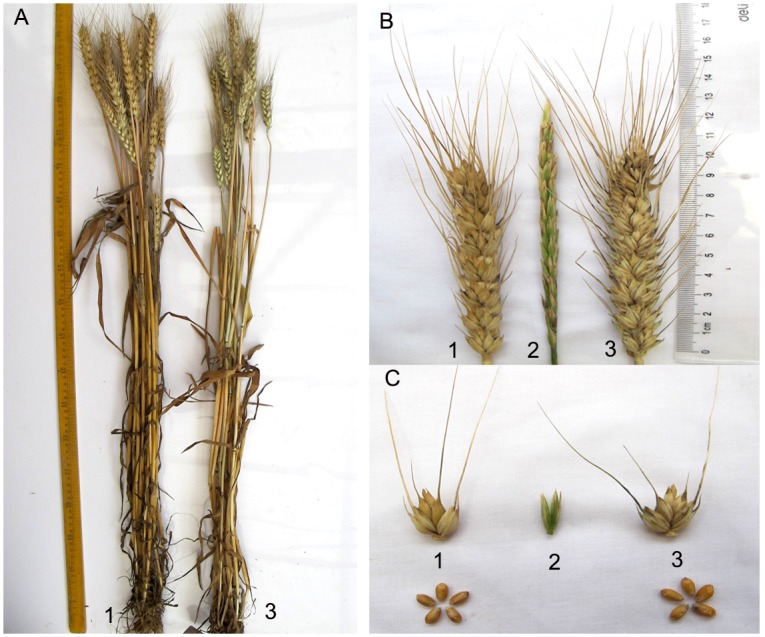
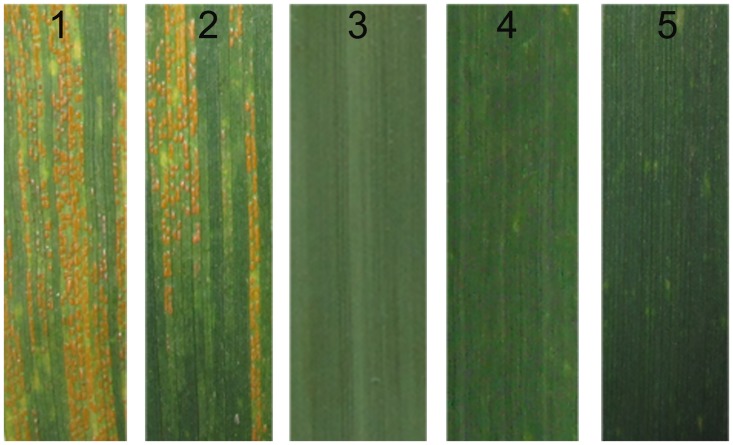
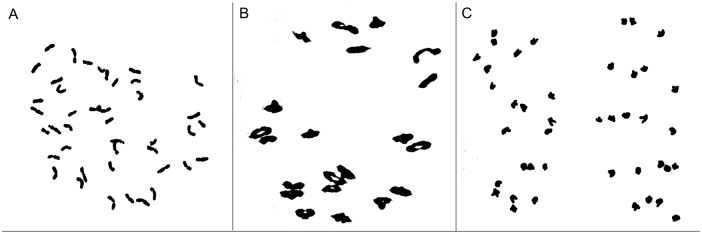
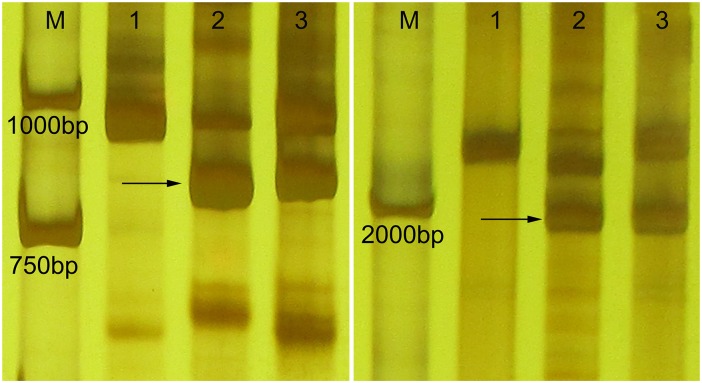
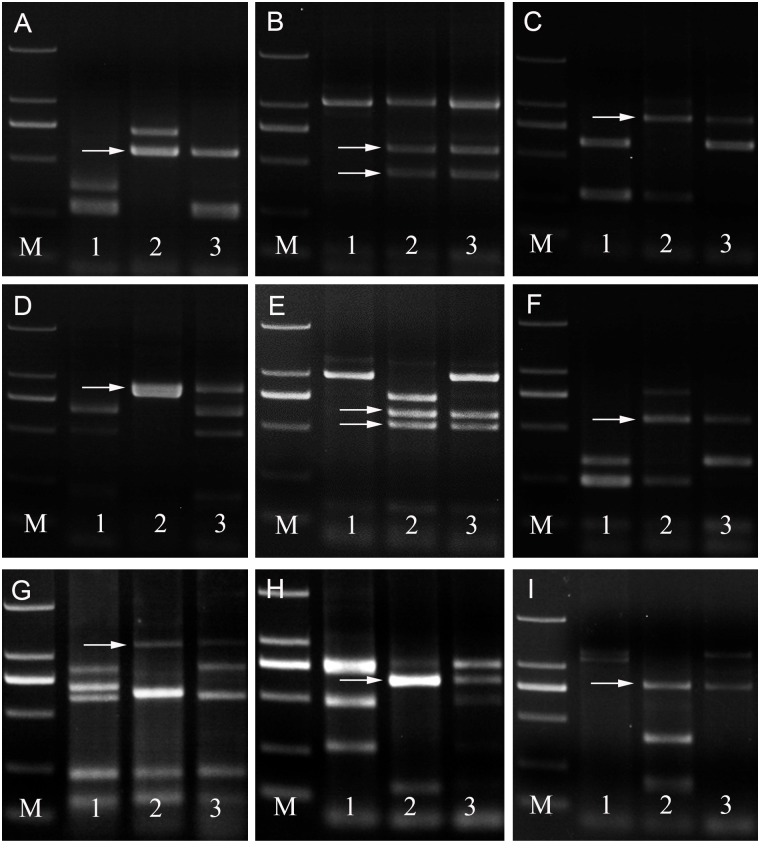
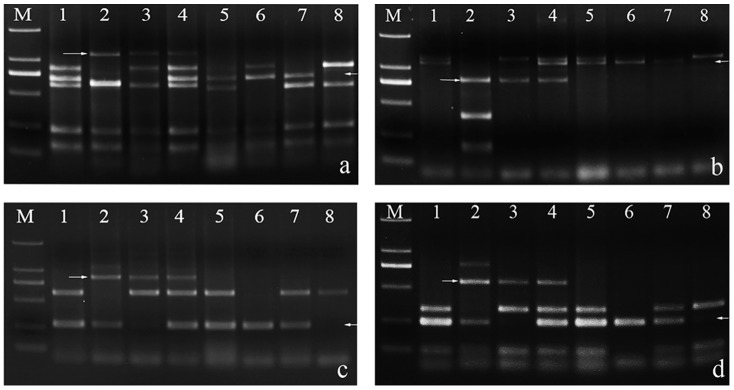
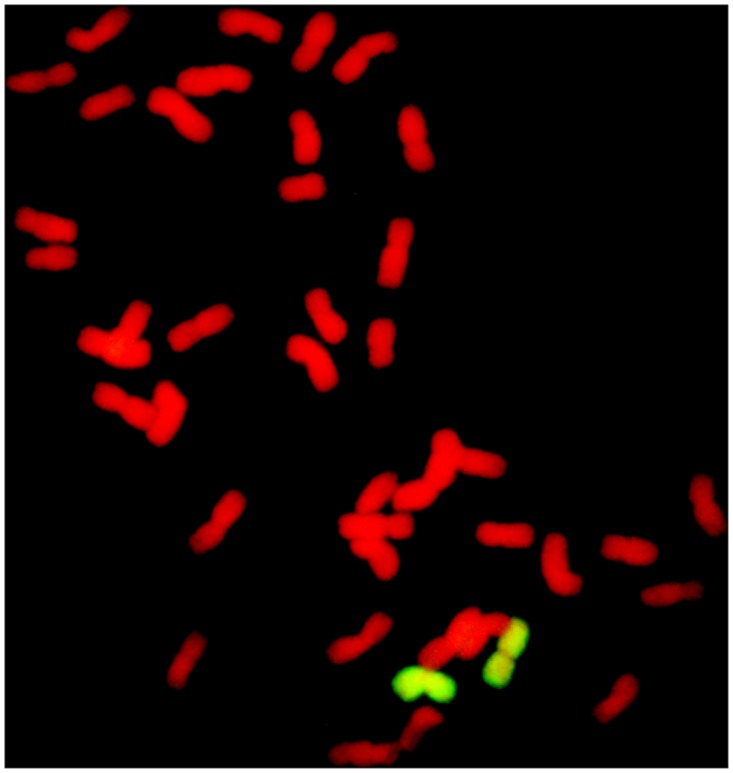
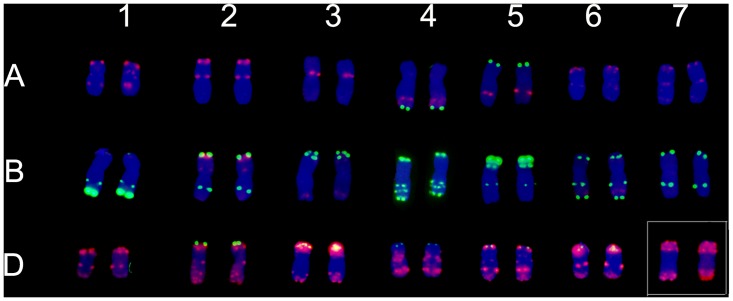
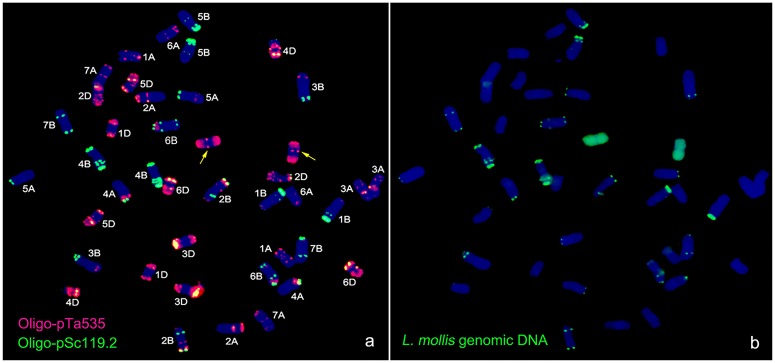
Leymus mollis (2n = 4x = 28, NsNsXmXm) possesses novel and important genes for resistance against multi-fungal diseases. The development of new wheat-L. mollis introgression lines is of great significance for wheat disease resistance breeding. M11003-3-1-15-8, a novel disomic substitution line of common wheat cv. 7182 -L. mollis, developed and selected from the BC1F5 progeny between wheat cv. 7182 and octoploid Tritileymus M47 (2n = 8x = 56, AABBDDNsNs), was characterized by morphological and cytogenetic identification, analysis of functional molecular markers, genomic in situ hybridization (GISH), sequential fluorescence in situ hybridization (FISH)-genomic in situ hybridization (GISH) and disease resistance evaluation. Cytological observations suggested that M11003-3-1-15-8 contained 42 chromosomes and formed 21 bivalents at meiotic metaphase I. The GISH investigations showed that line contained 40 wheat chromosomes and a pair of L. mollis chromosomes. EST-STS multiple loci markers and PLUG (PCR-based Landmark Unique Gene) markers confirmed that the introduced L. mollis chromosomes belonged to homoeologous group 7, it was designated as Lm#7Ns. While nulli-tetrasomic and sequential FISH-GISH analysis using the oligonucleotide Oligo-pSc119.2 and Oligo-pTa535 as probes revealed that the wheat 7D chromosomes were absent in M11003-3-1-15-8. Therefore, it was deduced that M11003-3-1-15-8 was a wheat-L. mollis Lm#7Ns (7D) disomic substitution line. Field disease resistance demonstrated that the introduced L. mollis chromosomes Lm#7Ns were responsible for the stripe rust resistance at the adult stage. Moreover, M11003-3-1-15-8 had a superior numbers of florets. The novel disomic substitution line M11003-3-1-15-8, could be exploited as an important genetic material in wheat resistance breeding programs and genetic resources.
滨麦(2n = 4x = 28,NsNsXmXm)拥有抗多种真菌病害的新的重要基因。培育新的小麦-滨麦渐渗系对小麦抗病育种具有重要意义。M11003-3-1-15-8是普通小麦品种7182-滨麦的一个新型二体代换系,它是从小麦品种7182与八倍体小滨麦M47(2n = 8x = 56,AABBDDNsNs)的BC1F5后代中选育出来的,通过形态学和细胞遗传学鉴定、功能分子标记分析、基因组原位杂交(GISH)、顺序荧光原位杂交(FISH)-基因组原位杂交(GISH)以及抗病性评价对其进行了特征描述。细胞学观察表明,M11003-3-1-15-8含有42条染色体,在减数分裂中期I形成21个二价体。GISH研究表明,该品系含有40条小麦染色体和一对滨麦染色体。EST-STS多位点标记和PLUG(基于PCR的地标独特基因)标记证实,导入的滨麦染色体属于第7同源群,被命名为Lm#7Ns。而使用寡核苷酸Oligo-pSc119.2和Oligo-pTa535作为探针的缺体-四体和顺序FISH-GISH分析表明,M11003-3-1-15-8中没有小麦7D染色体。因此,推断M11003-3-1-15-8是一个小麦-滨麦Lm#7Ns(7D)二体代换系。田间抗病性表明,导入的滨麦染色体Lm#7Ns对成株期条锈病具有抗性。此外,M11003-3-1-15-8的小花数量较多。新型二体代换系M11003-3-1-15-8可作为小麦抗病育种项目中的重要遗传材料和遗传资源加以利用。