Shabangu Kholiwe, Suleman Fatima
Discipline of Pharmaceutical Sciences, School of Health Sciences, Westville Campus, University of KwaZulu-Natal.
Afr J Prim Health Care Fam Med. 2015;7(1):e1-e6. doi: 10.4102/phcfm.v7i1.829. Epub 2015 Sep 14.
The burden of non-communicable diseases (NCDs) in low- and middle-income countries is increasing. Where patients are expected to make increased out-of-pocket payments this can lead to treatment interruptions or non-adherence. Swaziland is no exception in this regard.
The aim of the study was to investigate the availability of medicines for NCDs in a hospital and the impact of out-of-pocket spending by patients for medicines not available at the hospital.
The study was conducted at Raleigh Fitkin Memorial Hospital in Manzini, Swaziland.
Exit interviews to assess availability of a selected basket of medicines were conducted with 300 patients diagnosed with diabetes, hypertension or asthma. The stock status record of a basket of medicines for these conditions in 2012 was assessed at the Central Medical Stores. Results were analysed using the Statistical Package for Social Sciences version 20.0.
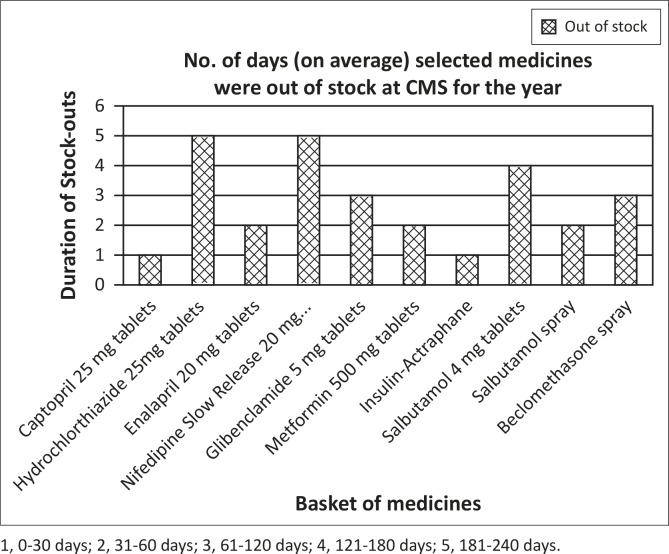
Most of the patients (n = 213; 71%) confirmed not receiving all of their prescribed medicines at each visit to the hospital in the past six months. On average patients spent 10–50 times more on their medicines at private pharmacies compared to user fees in the health facility. Stock-outs at the Central Medical Stores ranging from 30 days to over 180 days were recorded during the course of the assessment period (12 months), and were found to contribute to inconsistent availability of medicines in the health facility.
Out-of-pocket expenditure is common for patients with chronic conditions using this health facility, which suggests the possibility of patients defaulting on treatment due to lack of affordability.
低收入和中等收入国家的非传染性疾病负担正在增加。在患者需要增加自付费用的情况下,这可能导致治疗中断或不依从。斯威士兰在这方面也不例外。
本研究的目的是调查一家医院中用于治疗非传染性疾病的药品的可获得性,以及患者自掏腰包购买医院没有的药品所产生的影响。
该研究在斯威士兰曼齐尼的罗利·菲特金纪念医院进行。
对300名被诊断患有糖尿病、高血压或哮喘的患者进行出院访谈,以评估一组选定药品的可获得性。2012年对这些病症的一组药品在中央医疗商店的库存状况记录进行了评估。使用社会科学统计软件包第20.0版对结果进行分析。
大多数患者(n = 213;71%)确认在过去六个月每次去医院就诊时都没有拿到所有的处方药。与医疗机构的使用费相比,患者在私人药店购买药品的花费平均高出10至50倍。在评估期(12个月)内,中央医疗商店记录了30天至180多天的缺货情况,发现这导致了医疗机构药品供应的不稳定。
使用该医疗机构的慢性病患者自掏腰包支出很常见,这表明患者可能因负担不起而拖欠治疗费用。